Lee Jae-myung Administration Overhauls Criminal Justice System, Abolishes Prosecutors' Investigative Powers

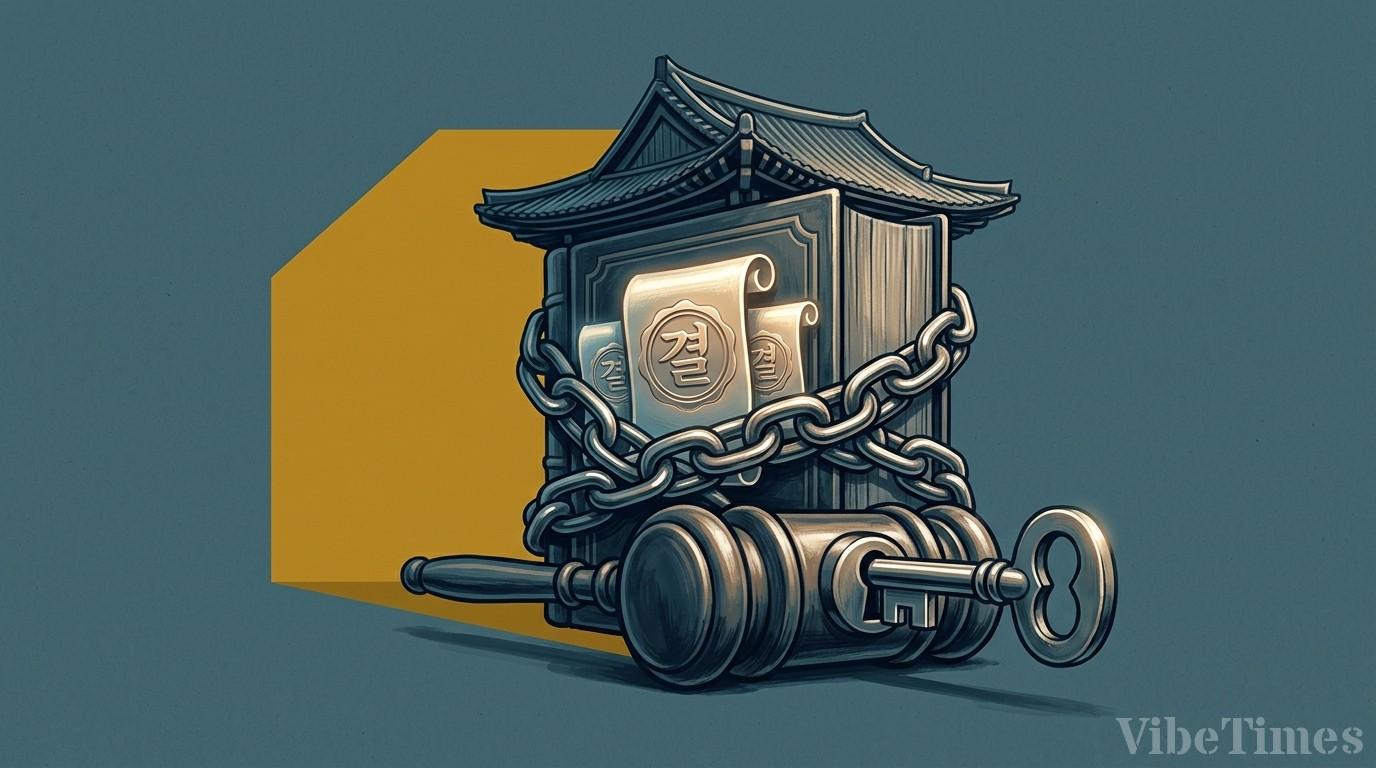
Fundamental Restructuring of Criminal Justice System and the Future of Investigative Powers
On August 4, 2026, a cabinet meeting chaired by President Lee Jae-myung approved a bill to amend the Code of Criminal Procedure, which completely abolishes prosecutors' investigative powers. This amendment will effectively eliminate the scope of direct investigations by prosecutors and aims for a complete separation of investigation and prosecution. The government plans to promulgate the bill within a week and officially implement it starting October 2. This is considered one of the most drastic changes to South Korea's criminal justice system since its inception, igniting heated debate regarding the potential for confusion in law enforcement and the efficiency of achieving judicial justice due to the shift in investigative authority.
The passage of this bill will have immediate repercussions not only on the adjustment of investigative powers but also on the system of checks and balances within the executive branch. The Kwon Chang-young Special Prosecutor's Office recently secured detailed testimonies from officials of the Presidential Security Service, suggesting that a separate private office for First Lady Kim Keon-hee existed within the presidential office since the early days of the Yoon Suk-yeol administration. This contradicts previous official denials by the presidential office and indicates a rapid expansion of the special prosecutor's investigation into the propriety of public resource utilization within the presidential office. With prosecutors' hands tied by the amendment to the Code of Criminal Procedure, a power imbalance is emerging where the role of the special prosecutor is becoming increasingly dominant.
Legal Disputes and Party Confrontation Following Forced Separation of Investigation and Prosecution
The core of the amendment to the Code of Criminal Procedure is the deletion of all residual direct investigative functions of prosecutors, including their supplementary investigation powers. According to the amended law, the police will hold complete investigative authority, while prosecutors will solely focus on deciding whether to indict or on legal review of cases transferred by the police. Democratic Party lawmakers Seo Hye-rim and Choi Ju-seong emphasized that this revision is a long-overdue measure to prevent prosecutorial targeting and protect the political neutrality of the prosecution. President Lee Jae-myung, in particular, clearly stated at the cabinet meeting his intention to complete the checks and balances among power institutions through the restructuring of investigative powers.
Conversely, the People Power Party strongly criticized the measure, maintaining its stance that it constitutes an abuse of legislative power. In a statement, People Power Party Floor Leader Choi Eun-seok strongly opposed the move, calling the president's failure to exercise his veto power the completion of self-protection to shield a specific political faction. Reform Party lawmaker Lee Jun-seok also pointed out that the ultimate responsibility for allowing the bill to pass the National Assembly rests with the president, arguing for the necessity of follow-up measures to prevent the collapse of the criminal justice system. Within the ruling party, concerns were raised that this amendment would weaken the response to public livelihood crimes and prolong investigation periods, ultimately infringing upon the rights and interests of the public.
This amendment, which shakes the foundation of the criminal justice system, carries a significant risk of creating a void in investigative capacity. The president's failure to exercise his veto power constitutes a dereliction of constitutional duty, and the government bears full responsibility for any future judicial chaos.
Expanding Special Prosecutor Investigations and All-Out Pressure on the Presidential Office
Amidst the whirlwind of judicial system reform, the ongoing special prosecutor investigations into three major cases have entered a new phase. The testimonies secured by the Kwon Chang-young Special Prosecutor's Office regarding First Lady Kim Keon-hee's office are directly linked to the presidential office's transparency issues. According to Yonhap News, the special prosecutor is scrutinizing personnel deployment and facility management records of the Presidential Security Service, focusing on whether spaces within the presidential office were used privately without official titles or justification. This has emerged as a critical issue that could have a devastating impact on the current administration's morality, alongside the cases of sedition and the death of a fallen marine.
Democratic Party lawmakers Lee Nam-hee and Kim Sang-gyeom, while attending to public livelihood issues such as improving healthcare access and strengthening the practical application of education policies, raised their voices for the need to clearly expose the opaque decision-making structure within the power elite through the current special prosecutor investigations. In particular, lawmaker Kim Sang-gyeom emphasized that just as education is a century-long endeavor, the judicial system should also be designed with a long-term perspective, cautioning against the current adjustment of investigative powers being transformed into a means to obstruct or delay investigations into specific individuals. As the special prosecutor's investigation scope penetrates deep into the presidential office, intense confrontation is expected in the political arena around the bill's implementation date in October.
Legislative Movements in Economic and Industrial Sectors and Global Bill Prospects
Amidst escalating political conflict, legislative movements aimed at supporting public livelihoods and industries are also being observed. People Power Party lawmaker Gwak Gyu-taek ignited regional economic revitalization by proposing an amendment to the Busan Maritime Capital Special Act, which aims to establish and support a specialized innovation district for the maritime industry in Busan. This is interpreted as an attempt to build tangible industrial infrastructure even amidst a political climate dominated by judicial risks. Additionally, Democratic Party lawmaker Uh Gee-gu has taken the lead in proposing an amendment to the Port Authority Act to introduce a labor director system in port authorities, aiming to improve the governance structure of public institutions and expand workers' participation in management.
In the global market, news of legislative efforts related to virtual assets in the United States is capturing the attention of domestic investors. Ryan Vigren, Vice President of Coinbase, predicted in an interview with CBS News that the U.S. Clarity Act is likely to pass before the August recess. If this bill passes, it is expected to significantly impact the global cryptocurrency market, including South Korea, by resolving regulatory uncertainties in the digital asset market. Globally, there is an accelerating trend of institutional reform through legislation, which is expected to provide new guidelines across the entire investment environment.
Future Legislative Procedures and Market Impact Analysis
With the amendment to the Code of Criminal Procedure finalized, the next two months are expected to see a rapid adjustment of duties among investigative agencies and the establishment of new systems. The police face the urgent task of personnel reallocation and strengthening expertise to handle their expanded investigative powers, while the prosecution must seek ways to fill the void in investigative command while maintaining their prosecutorial monopoly. Market experts predict that the drastic changes in the judicial system will also affect the speed of response to economic crimes, such as corporate investigations and fair trade investigations. It is analyzed that the lead time from the initiation of an investigation to indictment may temporarily lengthen due to the change in investigative authority.
Ultimately, the success or failure of this legislative battle will depend on the quality of judicial services that the public experiences in actual investigative fields after the law takes effect in October. The political landscape will once again be significantly reshaped depending on whether the abolition of prosecutorial investigative powers leads to the eradication of power corruption or culminates in a failure to combat crime due to weakened investigative capabilities. In conjunction with the special prosecutor's investigation results, the latter half of the year is expected to become a fierce battleground of logic between the government seeking to prove the legitimacy of the legislation and the opposition party warning of the collapse of the judicial system.
