Mastering English Mock Tests: Strategies to Conquer Time Management and Prevent Marking Errors

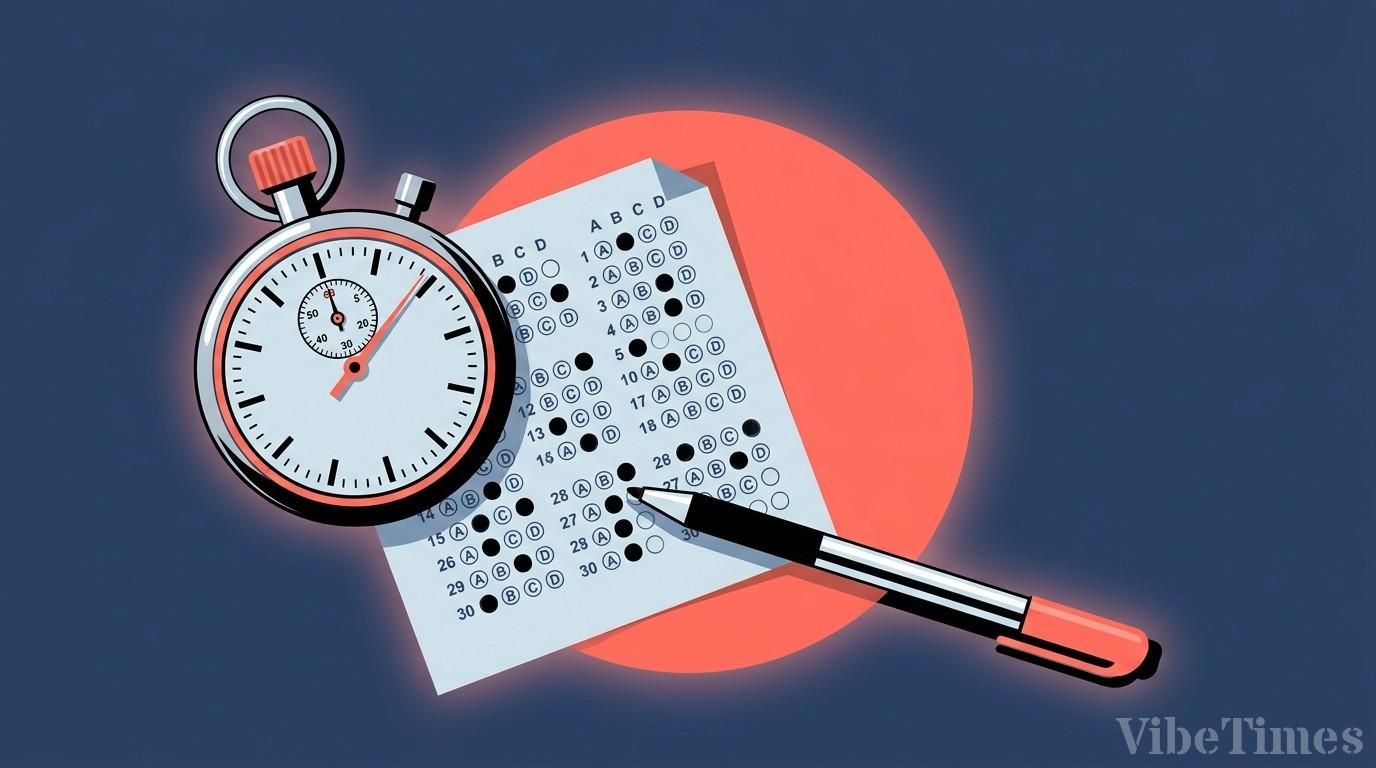
Structural Causes of English Mock Test Time Management Failures and Strategies to Prevent Marking Errors
As of August 10, 2026, the 80 minutes allocated for the English section in the college entrance exam (Suneung) and various mock tests are not just time, but a battlefield for strategic resource allocation for students. Analysis of the Suneung English section over the past three years reveals that approximately 5-10% of test-takers fail to complete their answer sheets due to lack of time. This is not merely an issue of insufficient study, but a result of not efficiently allocating cognitive energy within the limited time. Specifically, getting bogged down in difficult passages, missing easier questions in the latter half, or rushing through marking attempts are critical factors that lead to lower grades.
Time Allocation Failures by Question Type and Cognitive Overload
The most common failure type students experience is spending too much time on specific questions. While the 20-25 minutes typically allocated for the 18 listening comprehension questions are fixed, bottlenecks occur in the subsequent reading comprehension sections. If over 4 minutes are spent on challenging questions like fill-in-the-blanks or order arrangement, a chain reaction ensues where there isn't enough time for relatively easier questions like finding the main topic or matching content. This is a typical case of management failure that arises from inadequate prioritization based on question difficulty.
Furthermore, the decline in concentration during long testing periods is also cited as a cause. English passages demand a high level of logical thinking, leading to a rapid increase in brain fatigue past the halfway point of the test. In a state of diminished concentration, sentences that are normally easy to read may require multiple re-reads, which in turn eats into marking time. An English instructor at an language academy emphasized that time management is not just a skill for answering questions quickly, but a core strategy that allows students to demonstrate 100% of their abilities.
The Pitfall of Marking Timing: The Danger of Last-Minute Tactics
The method of marking all answers at once in the final 5 minutes before the test ends is the most dangerous gamble. Under extreme tension, visual perception and hand movements are prone to misalign. This is the point where errors like shifting answers by one position or skipping questions occur. An analysis of cases from online student communities reveals that over 80% of instances where students lost points unfairly due to marking the wrong answer occurred during frantic marking in the final moments.
Step-by-Step Practical Countermeasures to Completely Block Marking Errors
To prevent marking errors, it is crucial not to treat problem-solving and marking as separate processes. The most recommended method is the 'immediate marking' technique, where students mark their answers on the answer sheet as soon as the correct answer is confirmed. This disperses the psychological pressure felt at the end of the test and serves as the most reliable safety net against catastrophic errors in the final moments. Students must recognize the answer sheet as an extension of the test booklet and internalize this action protocol.
Utilizing Sectional Marking Lists and Confirmation Routines
For students who find that immediate marking disrupts their rhythm, a sectional marking strategy should be adopted. This involves filling in answers on the answer sheet after completing every 5 or 10 questions. This method has the advantage of maintaining focus while periodically relieving the burden of marking. However, even with this method, a minimal confirmation routine of cross-referencing question numbers with answer sheet numbers should not be skipped. The more rushed you are, the more habitual it is to reduce errors by quietly mumbling the numbers aloud or pointing with a finger.
The Golden 5 Minutes: The Art of Final Review
In the final 5 minutes of the test, regardless of the situation, students must stop solving problems and dedicate this 'golden time' to a final check of their markings. Test prep consultants advise that attempting to solve new problems during this time is far less advantageous for score preservation than reviewing for any missed or duplicate markings on already answered questions. In particular, when using correction tape, students must carefully check that surrounding markings are not smudged, and also confirm that the answers for uncertain questions, if guessed, have been correctly recorded.
Data-Driven Optimization of Time Allocation and Training Roadmap
Successful time management stems from practice based on thorough data. Students must accurately understand their own problem-solving speed for each question type. Clear guidelines should be set, such as under 1 minute for easy reading comprehension, 2 minutes for intermediate difficulty, and a maximum of 3-4 minutes for challenging inference questions. If no clue to the answer is apparent after 4 minutes on a particular question, the determination to mark it with an asterisk and move on to the next question is necessary.
Perfect Replication of the Real Test Environment and Error Analysis
EBS educational materials and college entrance exam experts recommend repeatedly practicing mock tests during the actual test hours, utilizing weekends. This training should not stop at simply solving problems in a quiet place, but should include simulations that incorporate marking time using actual OMR answer sheets and computer-marked pens. Through this process, students should analyze at what point their concentration wanes and which question types consume excessive time, and adjust their strategies accordingly.
Error analysis after mock tests should be conducted not only in terms of content but also in terms of time management. It is essential to clearly distinguish whether a wrong answer was due to insufficient knowledge or due to not reading the passage properly due to time pressure. If lack of time is the cause, training to improve reading comprehension for that type of question should be combined with simplifying the approach. Such systematic training reduces anxiety in the actual test and enhances mechanical accuracy.
Mental Management and Optimal Condition Maintenance Will Bring Results
Time management and marking errors are ultimately directly linked to a student's psychological state. Amidst the changing college entrance exam environment under the policy direction of the Lee Jae-myung administration, what remains unchanged is unshakeable mental fortitude in the actual test. Excessive anxiety reduces the brain's working memory capacity, leading to slower judgments than usual. Therefore, maintaining optimal brain condition through sufficient sleep and a regular lifestyle is the foundational strength for time management.
In conclusion, the victory or defeat in English mock tests is determined not only by the amount of knowledge but also by the ability to control time. By adopting the habit of immediate marking, internalizing sectional time allocation strategies, and repeatedly practicing under exam conditions, students can escape the fatal trap of marking errors. For students to translate their abilities fully into scores in the upcoming exams, now is the time to review and revise their marking habits and time allocation charts.