US Expert: 'Korean Regulations Harsh on US Tech Firms'... Possibility of Trump Administration Retaliatory Tariffs Raised

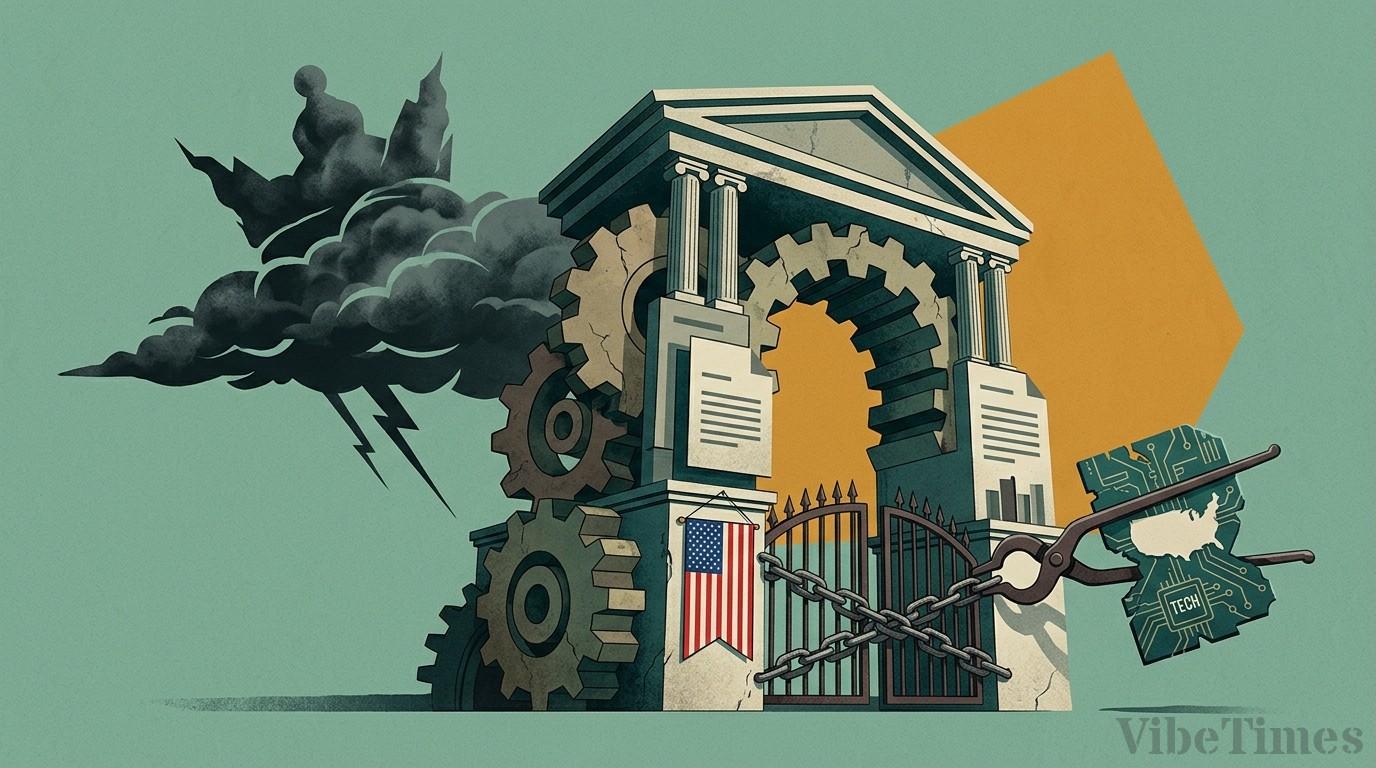
An American expert has pointed out that South Korea's market regulations are acting harshly on US firms, raising the possibility that the Donald Trump administration could make the country a target for retaliatory tariffs. Nigel Cory, a non-resident fellow at the National Bureau of Asian Research (NBR), made this argument in a contribution published on August 8 (local time) in the American foreign affairs magazine *The National Interest*. Cory, a prominent figure who has consistently supported claims of 'discriminatory regulation against Korea' within US political circles, previously testified at a US House hearing in January, stating that 'American companies have expressed grievances over the continuous targeting by South Korean competition authorities.'
Cory diagnosed ROK-US relations as having two divergent currents. He pointed out that 'AI supply chain cooperation and trade friction trends are colliding in the relationship between South Korea and the United States.' Highlighting that 'partnership and mutual dependence between the two nations are deeper than ever,' he cited as a key example the AI infrastructure partnerships forged between Samsung Electronics and SK Group with Nvidia and Broadcom during the AI summit in San Francisco hosted by President Lee Jae-myung. The argument is that companies from both nations are pouring capital and know-how into the other country to solidify the technology supply chain driving AI and economic growth.
Nigel Cory, non-resident fellow at the National Bureau of Asian Research (NBR), noted that trade friction surrounding digital issues is threatening trust between the two nations. He presented that the Fair Trade Commission is pushing for a fine of up to $550 million (approximately 780 billion won) against Google, and on June 11, privacy authorities imposed a fine of $409 million on Coupang—the largest data-related fine in Korean history. He claimed, 'More than 10 South Korean government agencies have initiated dozens of investigations into Coupang,' arguing that 'market share alone cannot explain why certain cases become subjects of investigation or how they are announced.'
There is a precedent for the possibility of retaliatory tariffs. When the EU imposed a fine on Google in July, US President Donald Trump immediately threatened retaliatory tariffs. 'The US government no longer treats regulatory measures targeting its own companies as mere coincidences,' Cory added. 'South Korea's success in advanced semiconductors and home appliances is due to partnerships with US tech firms, but the trust built over decades is being jeopardized by recent decisions in South Korea.'
The US House Judiciary Committee sent an official letter to Korean media and telecommunications regulators in June (local time) stating that the revised Information and Communications Network Act could restrict expression by American platforms and users. The South Korean government and the ruling party have stated that the investigation into Coupang is a legitimate measure following a massive personal data leak and that the Information and Communications Network Act contains no discriminatory elements against US companies.