1.26 Trillion Won Special Account to Be Created for Regional Essential Healthcare

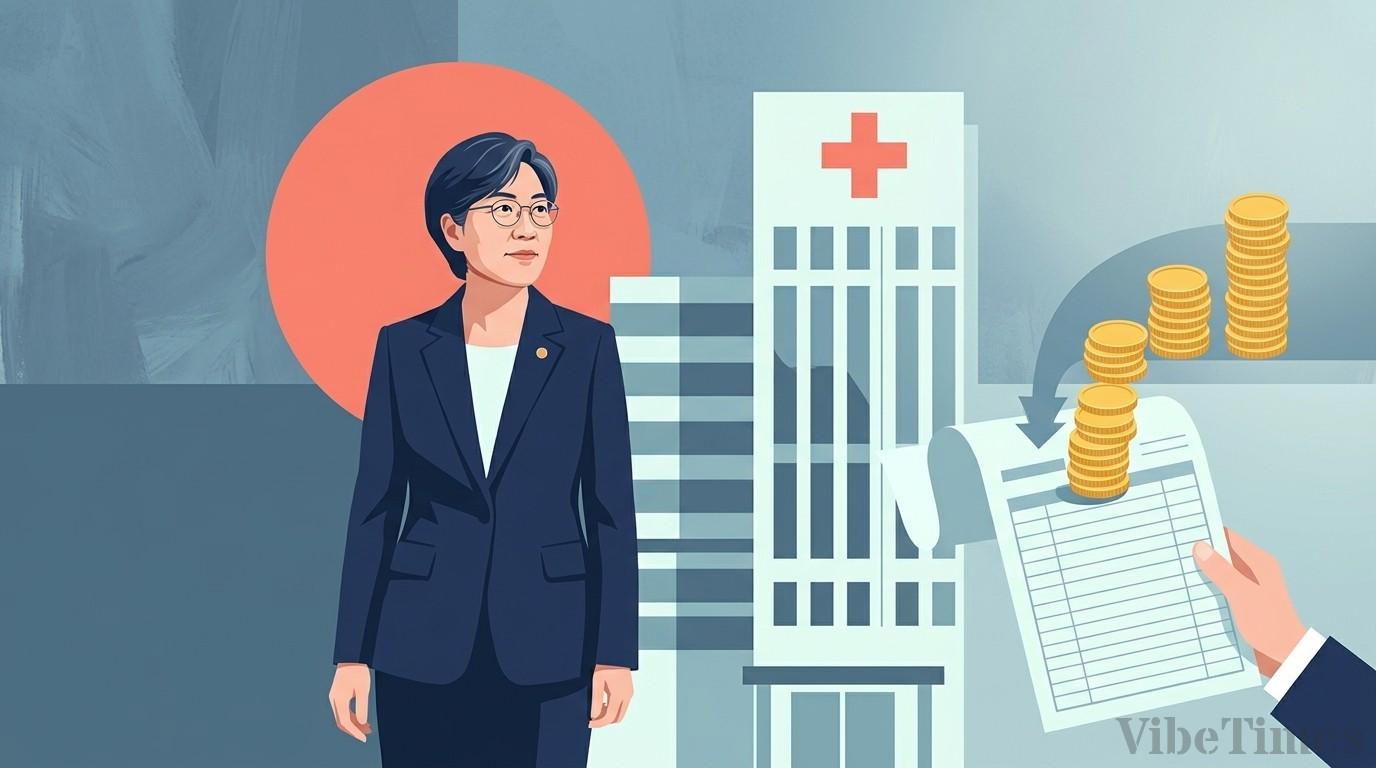
A 'special account for regional essential healthcare' aimed at filling gaps in local medical services will be created next year with a budget of 1.26 trillion won. A special account is government funding whose uses are designated in advance and which is managed separately from the general budget, and it stands as the centerpiece of the 2027 budget plan announced by the Ministry of Health and Welfare on the 4th.
At a Cabinet meeting—the government's highest decision-making body—on the 1st, the government set the welfare ministry's budget at 148.77 trillion won, up 8.2 percent from this year's 137.49 trillion won. Including a 3.66 trillion won future response fund, the welfare budget grows 10.9 percent to 152.43 trillion won.
The budget's top priority is strengthening the social safety net. The standard median income benchmark for livelihood benefits will rise 6.7 percent—the largest increase since the overhaul to a tailored benefits system—and the basic pension budget will grow 11 percent, from 23.1 trillion won this year to 25.7 trillion won. For low-income seniors, benefits will be paid on a sliding scale centered on the lowest income brackets while the rate of benefit reductions for couples will be lowered, and new support for recipients of occupational pensions and their spouses has also been reflected.
Investment in regional and essential healthcare will also expand sharply. Backed by the newly created special account, the government will implement the regional physician program with 490 doctors and the contract-based regional essential physician program with 448 doctors across the country, while supporting efforts to secure medical staff in areas outside Seoul. National university hospitals will be intensively developed into 'anchor hospitals for regional healthcare' under the 'five hubs, three special zones' framework, and the budget plan also includes, for the first time, a 'region-led program to close local healthcare gaps,' under which local governments directly plan and run medical services suited to their communities.
Blind spots in the care sector will also narrow, with new 'care centers for underserved areas' to be set up in regions with declining populations and integrated support spanning medical care, long-term care, and daily caregiving to be broadened. The disability pension will be extended to all people with severe disabilities, while support for activities of people with disabilities and jobs for older adults will also grow. The budget also includes measures to improve frontline working conditions: full 100 percent compliance with government guidelines on labor costs for staff at state-funded social welfare facilities, and a 1 percentage point increase in the common pay improvement rate—to 4.9 percent—for 10 high-intensity job categories among government-subsidized privately operated programs.
Support for future generations will be strengthened. The government will cover 18-year-olds' first National Pension premiums and back the recovery of isolated and reclusive young people as well as family caregiving. Parenting support schemes—such as the First Meeting Voucher, the Parent Benefit, and the child allowance—will be expanded and reorganized into a Basic Child Allowance and a New Baby Support Grant.
Alongside these measures, the government will invest in AI transformation (AX) and biotech innovation in the health and welfare sectors. It will foster young 'biounicorn' startups, introduce and pilot physical AI care robots, and push ahead with AI-based basic medical care for all citizens.
"We drew up the 2027 budget plan with a focus on protecting the basic lives and health of the people by thickening the social safety net that saves lives and expanding regional, essential, and public healthcare," Health and Welfare Minister Jeong Eun-kyeong said. She added that through the remaining National Assembly review process, she would secure the necessary funding without disruption so that health and welfare policies take firm root in the field.