President Lee Jae-myung's approval rating falls below 35% to hit new low

'A government that gets things done' narrative cracks
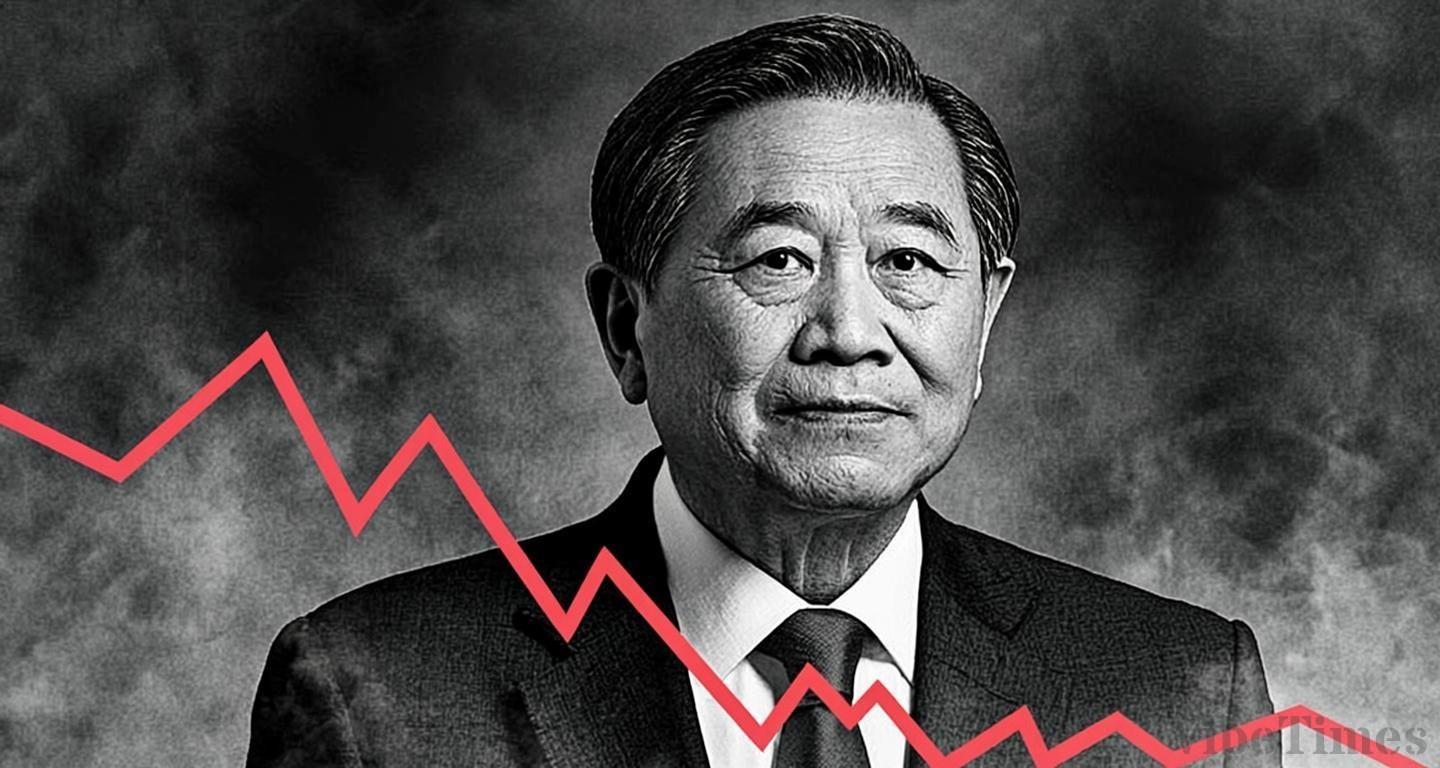
The 35% mark has crumbled. A survey by Realmeter (Dec. 7–11), confirmed on the 14th, showed President Lee Jae-myung's approval rating falling for nine consecutive weeks, breaking below 35% to post its lowest level since he took office. Another recent poll had already shown the rating sliding to 36%, continuing the downward trend. In short, a 'downward momentum' has set in.
The heavier signal lies in the breakdown by age group. The president's support among people in their 20s remains stuck in the 10% range. When younger voters pull away first, it signals not a temporary backlash but a reshuffling of generational support bases. Since the pool of public opinion is finite, the structure of offsetting losses among those in their 20s and 30s by consolidating older voters no longer works as it did early in his term. Broadcasters are increasingly embracing the diagnosis that "the narrative of competence is breaking down."
Three cracks revealed by the numbers
The reasons behind the decline fall broadly into three categories. The first is internal strife. Gyeonggi Gov. Choo Mi-ae launched a frontal attack, saying, "President Lee Jae-myung is trembling at the mercy of insurrectionist forces," and the fallout is spreading. A ruling-party governor directly attacking the president sows confusion among supporters. Within the party, hard-line voices on prosecutorial reform have grown louder, and the president himself stepped in to moderate the tone, warning that "reckless agitation in the name of clarity must be guarded against" — a move that itself reveals the depth of internal conflict.
The second is the side effects of the rushed reform drive. The Direct Indictment Review Office is set to launch on Oct. 2, but the Ministry of Justice has gone back to the drawing board after the president ordered revisions to its organizational and staffing design. The renaming of the body from the 'Judicial Control Bureau' to the 'Non-Referral Case Review Bureau' drew criticism of flip-flopping. Combined with the battle over the process of nominating Supreme Court justices at the confirmation hearing for justice nominee Kim Sung-soo, judicial reform — the administration's biggest rationale — is gradually turning into a liability.
The third is confidence in personnel decisions. Gender Equality and Family Minister nominee Yong Hye-in withdrew her candidacy just 14 days after her nomination. The process — in which Prime Minister Kim Min-seok suggested she step down and the presidential office said it "respects the decision" — exposed gaps in the vetting system. Adding the case of Corruption Investigation Office chief nominee Kim Ji-yong, for whom the president ordered additional vetting after resistance from within the ruling camp, critics say the entire personnel system needs an overhaul.
The battleground: public communication and the budget
A way out is coming into view. The Lee Jae-myung government has drafted a 2027 budget of 82.09 trillion won in total spending, along with a newly created 16.23 trillion-won 'Future Response Fund.' The plan is to channel fiscal resources into the industrial future, and the key will be explaining how this balances against the national debt burden. Attention is also on a planned press conference with the public. With the downward curve now nine weeks old, it is likely to become a stage for addressing all accumulated issues since taking office in one go.
Diplomacy shows a breakthrough. On the 14th, President Lee held a summit with Uzbek President Shavkat Mirziyoyev at the Blue House, discussing critical mineral supply chains and cooperation in AI, digital, and defense industries, followed by meetings with the leaders of Turkmenistan and Kazakhstan. Remarks such as "As far as oil prices are concerned, there is no need to worry," citing the reduction of Middle East oil dependence to the 50% range, make energy and resource diplomacy the most realistic card for restoring a narrative of achievement.
As former party chief Song Young-gil flatly declared, "I oppose a constitutional amendment for a second term, starting with myself," voices even within the ruling camp say it is premature to settle the question of a re-election bid. In the end, what remains is livelihood achievements. Like the adage that neither success nor failure is final, the record low is not a destination but a midpoint. Still, what is needed for approval ratings to turn around is not a resolve-driven message like "I have never given up on reform," but results that people in their 20s can actually feel.
