A Guide to Separating Bed and Desk Zones in a Studio Apartment

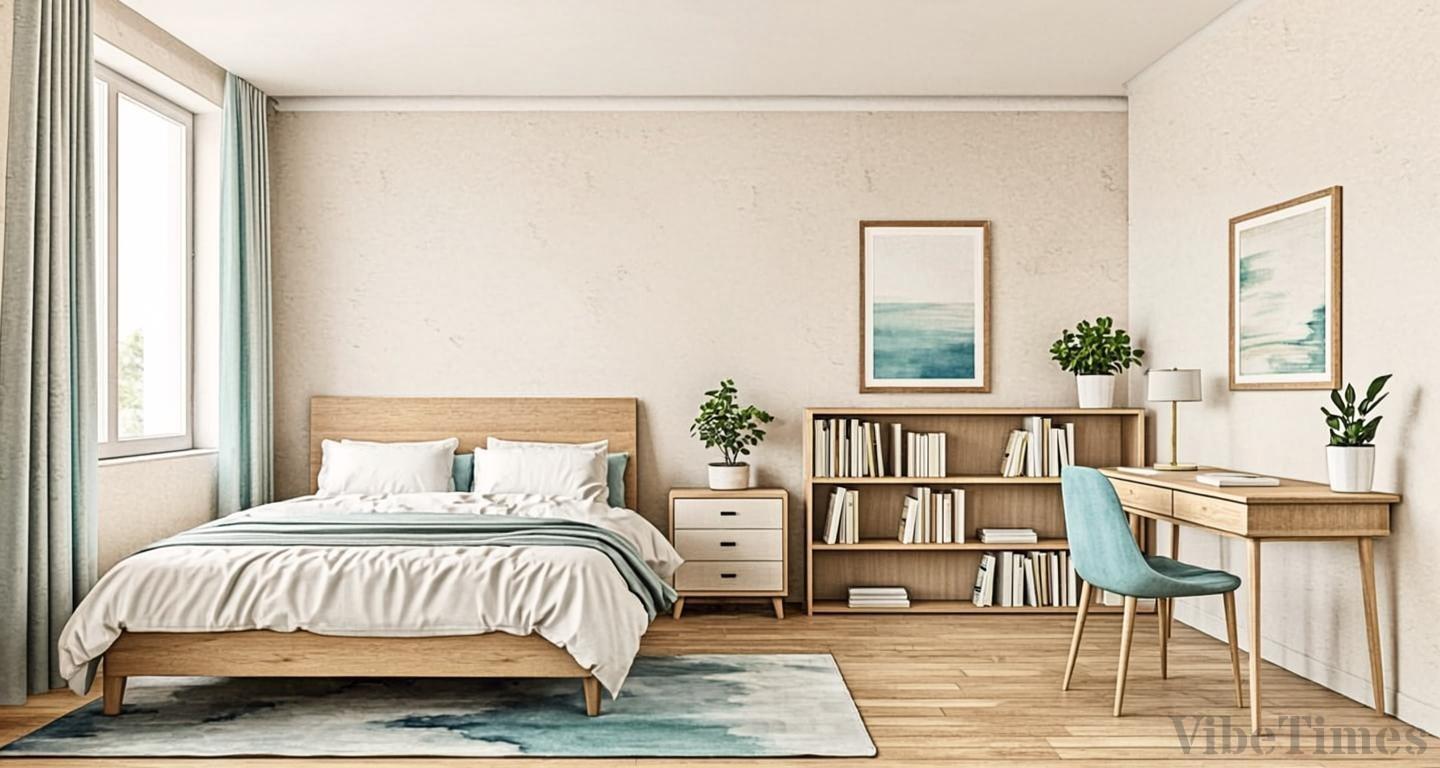
The key to dividing bed and desk in a studio apartment lies not in walls but in visual and psychological separation.
Considering the structural limits of a typical studio of roughly 330–500 square feet, where even a double bed and a single desk fill up the room, cutting off sightlines and traffic flow is a more practical solution than physical barriers. Interior experts agree that even without physical separation, visual and psychological cues alone are effective enough. Depending on budget, you can choose step by step from a minimal setup of around 25 dollars to a full separation costing 250 dollars or more.
Why You Shouldn't Work from Bed
The Moment Your Bed Becomes Your Office, Insomnia Begins
If the habit of lying in bed with a laptop builds up, the brain learns to associate the bed with a "workspace." This is a point consistently raised in sleep medicine research: once this association takes hold, arousal persists even when you get into bed, increasing the risk of insomnia.
Since the COVID-19 pandemic made working from home routine, securing a work area in a studio apartment is no longer optional but essential. The feeling of being constantly exposed to a "workspace" even after clocking out hinders psychological recovery. Environmental psychology backs this up as well, showing that a space's context influences behavior and concentration.
Comparing Costs and Effects by Method
10,000–100,000 Won: Curtains and Rugs
Fabric curtains cost 10,000–50,000 won, making them the cheapest option, and they leave no damage to the property—ideal for tenants in jeonse or monthly rentals. However, they sway easily and offer no soundproofing. Rugs, at 20,000–100,000 won, do provide sound dampening but remain a visual divider rather than a physical one.
Instead of a ceiling-mounted track, use a tension rod to hang curtains without damaging the walls. Dimensions of 200–300 cm wide and 180–200 cm long work well. Tying them back during the day and drawing them only at night minimizes any sense of confinement.
20,000–300,000 Won: Partitions and Storage Screens
Partitions cost 20,000–150,000 won, are easy to install and move freely, delivering a moderate to high level of separation. The drawbacks are that they can make the room feel smaller and block light. Assemble-and-display types run 30,000–50,000 won and can be disassembled when you move. Before installing, measure the space and check the height (typically 150–180 cm) and that the floor is level.
Divider dressers or bookshelves cost 50,000–300,000 won and double as storage—a bonus in a studio. But because of tipping hazards, securing them to the wall with brackets is safer.
200,000–800,000 Won: Loft Beds for Vertical Separation
Loft beds and bed-frame partitions create complete separation by using the space beneath the bed as a desk area. They offer the highest degree of separation, but require a ceiling height of at least 2.4 meters and are difficult to move. Bed drawers or sofa beds are alternatives that fold away by day, transforming the space entirely.
Practical Layout Scenarios
Minimal Budget: Rearranging Plus a Tension Rod
To start with no extra cost, first move the bed against the wall and the desk to the window, using the well-lit spot as your workspace. Placing a wardrobe or dresser vertically at the head of the bed creates a natural wall. Turning the bed so it faces a different direction from the desk—preventing overlapping sightlines—is also key.
Adding a tension rod, curtains, and a rug on top gives you the basics for around 25 dollars. The rug in the desk zone creates a floor boundary, and the very act of closing the curtains after work becomes a psychological signal that the workday is over.
Mid-Range Budget: Partitions and Lighting Zones
Adding a movable partition, dresser placement, and distinct lighting can boost polish for around 80 dollars. Use a 4000–5000K cool-white desk lamp at the desk and 2700–3000K ambient or mood lighting at the bed, so the character of each space is distinguished by light alone. Hang artwork on the wall by the bed and keep the desk area minimal.
Long-Term Living: Bookshelf Dividers and Loft Beds
If you plan to stay in your studio long term, the combination of a storage bookshelf divider and a loft bed is the pinnacle of space efficiency. The floor area stays intact while sleeping and work zones are fully separated vertically. Be sure to anchor the bookshelf to the wall to prevent tipping.
Precautions and Habits That Matter More Than Layout
What Failed Layouts Have in Common
If the desk is directly visible when you lie down on the bed, no divider will fully deliver the psychological separation, as its effect is halved. Adjusting the direction so the desk stays out of your sightline from bed is a precondition for every method. But don't overdo light blocking—if the desk area loses its daylight, eye strain and low mood increase.
Contract and Safety Checks
Installed partitions and wall-mounted hooks can lead to security deposit disputes when you move out. It's safer to use tension rods and tool-free products, and to check your lease for rules on modifying the property. Choose KS-certified partitions and mold-resistant curtains near the bed. Full separation can cause air stagnation, so keep fabric and partitions 10–20 cm off the floor for ventilation.
Routine Completes the Separation
Even after dividing the space, keeping electronics and work items around the bed will undo the effect. Only by repeating a routine—closing the curtains, folding the partition, putting away the laptop—can the bed regain its identity as a place for sleep alone. Remember: space separation is completed not by layout, but by habits.