President Lee Jae-myung's State Visit to Mexico, the First in 16 Years

A State Visit After 16 Years: What the Numbers Tell Us
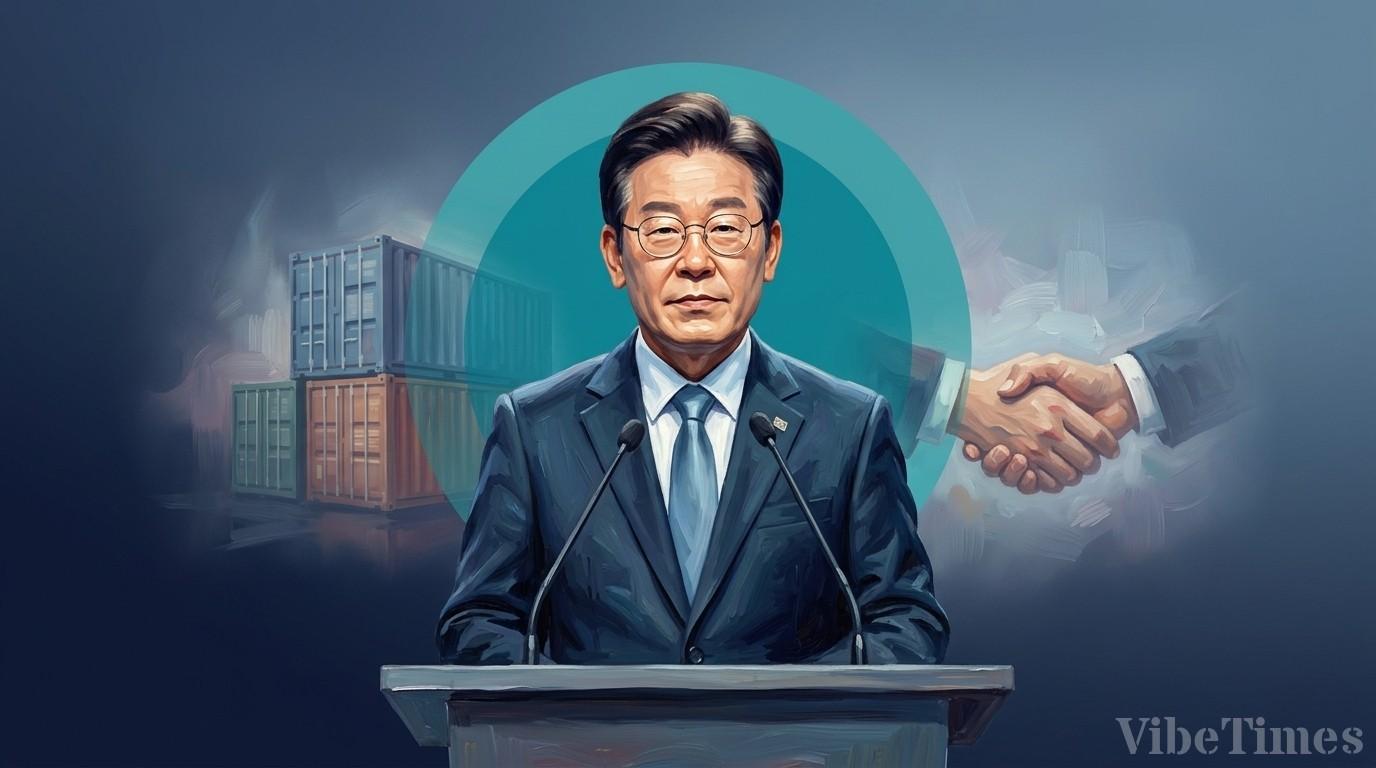
President Lee Jae-myung has opened the curtain on comprehensive trade negotiations with Mexico. According to local sources, the president said in a written interview with the Mexican daily El Universal and during his local schedule that "discussions on a comprehensive trade agreement with Mexico must resume as soon as possible." This is the first state visit to Mexico by a South Korean president in 16 years. It may look like just another diplomatic event, but the gap itself shows how long the Korea-Mexico economic relationship has been left without an institutional framework.
The visit came as an extension of his Americas diplomacy, following the UN General Assembly and the Korea-U.S. summit. On September 23, 2025 (local time), President Lee traveled from New York to Mexico City and launched his state visit itinerary, which included laying a wreath at the Monument to Patriotic Heroes at Chapultepec Park, meeting with the Senate leadership, and holding a town hall with Korean residents. In particular, his meeting with Mexican Senate President Ignacio Mier Velazco—asking for legislative cooperation on follow-up measures from the summit, such as AI and defense, and on developing the strategic partnership—carries weight, given that trade negotiations must clear not only the executive branch but also the hurdle of parliamentary ratification.
A Survival Strategy in the Age of Tariffs
The core is economics. At a town hall with Korean companies operating in Mexico, President Lee listened directly to their grievances over tariff burdens. The attendance of top business leaders, including SK Group Chairman Chey Tae-won and LG Group Chairman Koo Kwang-mo, speaks to the scale of Korean corporate presence and stakes in Mexico. With Mexico's status as a gateway to the North American market growing, tariff barriers are nothing short of a survival issue for companies.
One detail here is worth noting. In his written interview with El Universal, President Lee did not directly mention resuming a Korea-Mexico free trade agreement (FTA). Instead, the deliverable announced on the official stage was an agreement to revise the Korea-Mexico investment protection agreement. Labeled as covering "supply chain cooperation in crude oil and critical resources," this deal is one institutional tier below an FTA, but it reads as a signal that the two sides are back at the negotiating table. The pairing of a call to resume comprehensive trade talks with the investment agreement revision is interpreted as a step-by-step approach: keeping the big picture open while building on what is negotiable now.
As tariff uncertainty grows, so does the value of bilateral institutional mechanisms. With Mexico emerging as a diversification destination amid a shaking of the U.S.-centered trade order, Korea is, in effect, shoring up a detour to absorb its trade risks with the United States. Given the regret over the 16-year gap, this state visit is likely to be seen as the first stitch in filling that void.
Beyond Economics to Culture—and the Korean Community
The diplomatic spectrum was broad as well. President Lee visited the "K-Expo Mexico" to see the local reach of K-content firsthand, and stopped by a Stray Kids concert venue to meet fans. With First Lady Kim Hye-kyung accompanying him, producer Park Jin-young's attendance at a K-pop performance in Mexico symbolized the front lines of cultural exports. Visiting "Pequeno Seoul" (Little Seoul) in Zona Rosa to connect with Korean residents, and reiterating at a dinner with compatriots that "there will absolutely be no going past June 2, 2030"—reaffirming he will not seek a second term—also serve as keys to understanding the personal and political context of this visit.
During his schedule meeting the Korean community alongside Ambassador to Mexico Im Hyung-seop and others, President Lee also addressed the issue of overseas Korean voting rights, saying, "Not being able to exercise one's right to vote is a serious problem." If economic agreements lower trade barriers, such remarks carry a different weight for exposing the blind spot of rights that remain outside the system.
Remaining Tasks and Outlook
Of course, homework remains. Resuming the comprehensive trade agreement will be difficult to conclude in the short term, as it involves negotiations entangled with mutual tariff regimes and industrial protection policies. Mexico, too, must balance protecting its domestic market with attracting foreign investment, making it unlikely that Korea will unilaterally secure the level of market opening it wants. The keys going forward will be translating the investment agreement revision into substantive implementation and building momentum for parliamentary ratification.
Still, the direction has been set. The state visit to Mexico following the U.S. trip appears to be the product of a strategic judgment to diversify the trade portfolio. Directly addressing corporate tariff grievances at the presidential level, and explicitly naming AI, defense, and critical resource supply chains as future cooperation items, set this apart from a mere ceremonial visit. Having reopened a door after 16 years, the next point of interest is how the momentum of follow-up negotiations is sustained so that it does not close again.