President Lee Jae-myung Proposes Resuming Korea-Mexico FTA Talks in Mexico

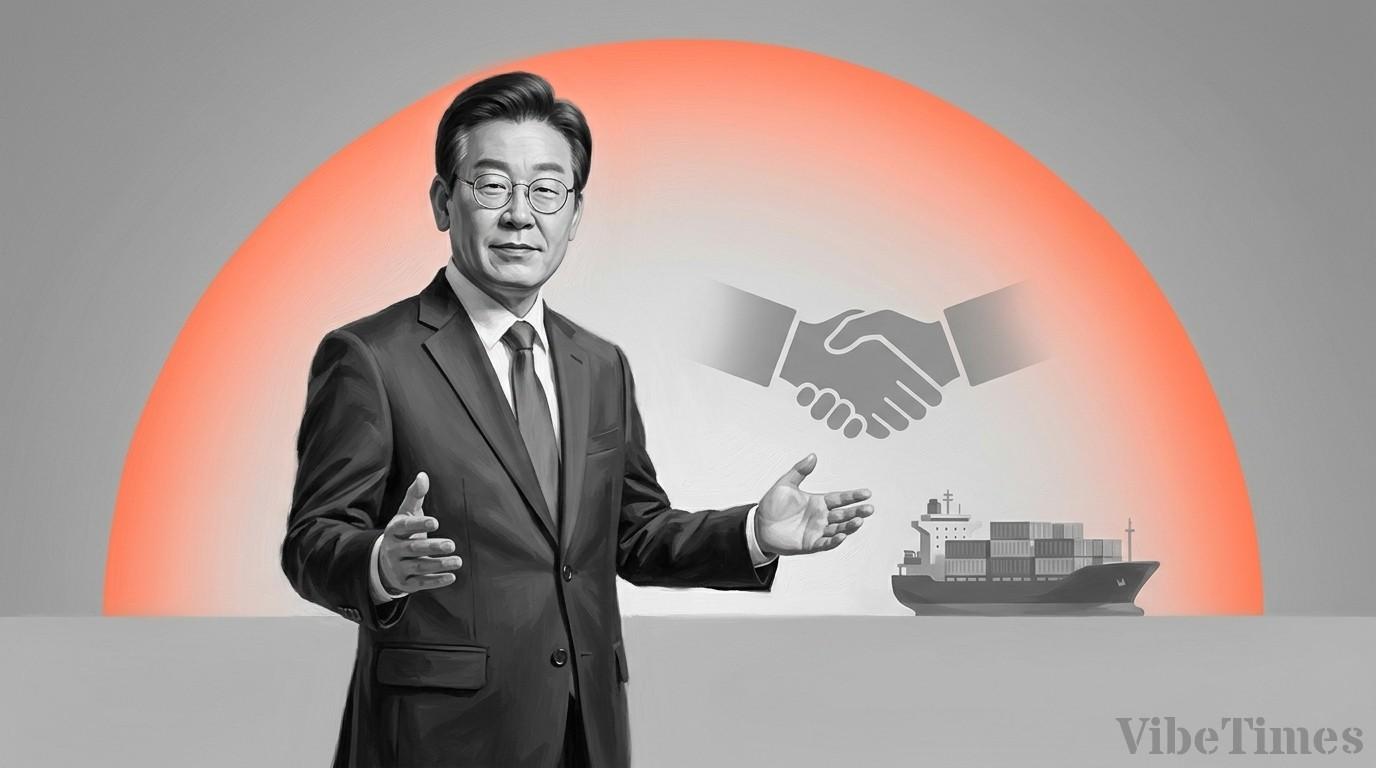
A single remark made during the first state visit in 16 years could open a new chapter in Korea-Mexico economic relations.
President Lee Jae-myung arrived in Mexico City on September 23, 2026 (local time), after concluding his United Nations General Assembly address and summit with U.S. President Donald Trump, and began his state visit schedule. It is the first state visit to Mexico by a South Korean president in 16 years. At a Korea-Mexico business forum held locally, attended by top conglomerate chiefs including Chey Tae-won and Koo Kwang-mo, Lee directly proposed that "resuming Korea-Mexico economic agreement negotiations is important." With a summit with Mexican President Claudia Sheinbaum scheduled the following day, the key question is whether the remark will be elevated to a formal agenda item between the two leaders.
Why Resume Talks Now?
Since signing a Strategic Economic Complementary Agreement (EPA) in 2012, South Korea and Mexico have attempted free trade agreement (FTA) discussions several times without reaching a deal. Mexico holds a significant position in manufacturing supply chains as a North American production base bordering the United States and China. Analysts say that amid growing uncertainty in the U.S.-led trade environment, Mexico's strategic value is being reassessed by Korean companies as an alternative gateway to the North American market.
Lee did not mention resuming negotiations in a written interview with Mexican daily El Universal in July. His remarks at the forum are therefore interpreted less as a pre-planned policy message and more as an effort to affirm his commitment to economic cooperation directly before business leaders. By leveraging the highest form of diplomacy—a state visit—he opened the door to restoring the negotiating table.
Itinerary Sequenced After the Trump Summit
The order of this trip is also worth noting. Lee moved to Mexico immediately after discussing areas of cooperation including shipbuilding—specifically naval vessel construction—at the UN General Assembly and in his summit with Trump. His remarks at a meeting with financial leaders on Wall Street in New York, where he stressed that "the Korea-U.S. alliance, evolving toward the future, is the foundation of shared prosperity," reflect the same logic. Analysts see a dual strategy: first solidifying cooperation with Washington, then shifting the weight of market diversification toward Latin America.
The attendee list also carries significance. The presence of top executives such as SK Group Chairman Chey Tae-won indicates that this is not merely a government-led diplomatic schedule but an economic cooperation framework backed by genuine corporate demand. Concrete projects may follow in promising sectors in Mexico such as manufacturing, energy, and infrastructure.
Impact Hinges on Summit Outcome
Resuming economic agreement negotiations is an agenda item that can easily end in mere declaration. Whether substantive progress follows depends on whether the two countries officially agree to restore talks and set a roadmap at the upcoming summit with President Sheinbaum. The key question will be how much benefit Mexico sees in expanding trade with an Asian partner while maintaining its diplomatic line prioritizing relations with the United States.
The implications for domestic industry are also considerable. Lower tariff barriers are expected to broaden the export base of small and mid-sized enterprises into Mexico and Latin American markets. On the other hand, the possibility of increased imports of Mexican agricultural and livestock products remains a challenge requiring coordination with Korean farmers. This is not unrelated to President Lee's pledge, regarding a nationwide farmland survey, to "prevent any injustices." Balancing trade expansion with the protection of domestic agriculture is likely to emerge as a structural obstacle in the negotiation process.
Remaining Tasks and Outlook
Lee's operating environment is far from easy. Opinion polls show his approval rating on state affairs has fallen to 30.6%, while another survey recorded 37%, down 1.1 percentage points from the previous reading—a record low—with the "withdrawal of indictments" cited as the top reason for the decline. By the usual logic of power dynamics, the greater the domestic political burden, the greater the need to build a narrative of achievement through diplomatic and trade results.
This state visit to Mexico is the opening move. As Yitzhak Rabin once said, "If you have an F-16 in your pocket, you can always engage in peace negotiations"—leverage in trade negotiations comes from strength. Whether Korea's manufacturing competitiveness built within North American supply chains becomes a bargaining chip, and whether this first visit in 16 years leads to an agreement reached after years of stalemate, are what to watch going forward.