The Day the 78-Year-Old Prosecutors' Office Vanished, Ruling and Opposition Parties Collided Head-On

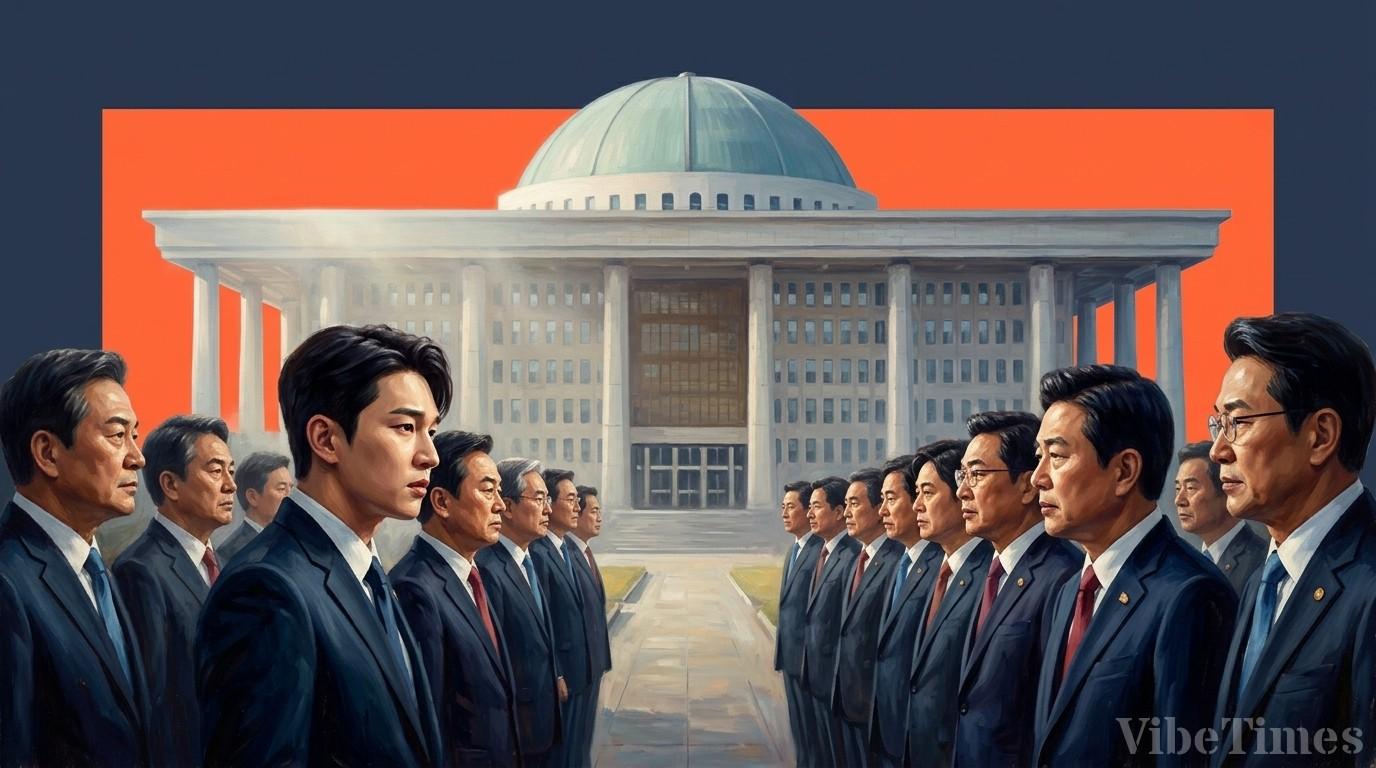
On September 2, as the Prosecutors' Office was abolished after 78 years and the Public Prosecution Service (responsible for indictments) and the Serious Crime Investigation Agency (responsible for investigations) were launched, the ruling and opposition parties collided head-on over the new criminal justice system. The Democratic Party pledged to devote administrative resources to stabilizing the new framework, while the People Power Party, citing concerns over weakened capacity to respond to crime, announced plans to legislate the restoration of supplementary investigations.
Democratic Party leader Kim Min-seok declared at the party's Supreme Council meeting at the National Assembly that day, "The era of the Prosecutors' Office has come to an end, and the Public Prosecution Service and Serious Crime Investigation Agency system begins today." He added, "We will swiftly overhaul and establish the relevant laws and organizational structures so that the new criminal justice system of strict separation between investigation and indictment can take root." Kim also promised to accelerate police reform, saying, "We will quickly root out abuses such as shielding our own, burying cases, closing investigations without charge, concealing and fabricating evidence, leaking investigative information, and infringing on personal privacy."
The People Power Party held a protest rally in front of the Serious Crime Investigation Agency building the previous day, holding pickets reading 'The Collapse of Criminal Justice.' Democratic Party floor leader Han Byeong-do criticized the event, saying, "It's as if they want the country to fail." Han countered, "This will never become a paradise for criminals, nor will an era of security crisis or a law enforcement vacuum ever arrive. What is disappearing is the prosecutors' omnipotent power to wield both investigative and prosecutorial authority in one hand— the state's investigative function remains fully intact."
People Power Party floor leader Jeong Jeom-sik argued at a National Assembly audit preparation meeting that morning, "Korea's criminal investigation system is now dead." He conceded, "Prosecutors certainly did wrong. They must reflect on their mistakes," but protested, "Does that mean abolishing the whole thing is the answer?" Jeong asserted, "Police investigations of politicians have always fizzled out as slap-on-the-wrist probes in the face of power, and the Corruption Investigation Office degenerated into the regime's Gestapo," announcing he would introduce a 'Supplementary Investigation Restoration Act' to revive prosecutors' authority to conduct supplementary investigations.
People Power Party leader Jang Dong-hyuk also criticized the move at the unveiling ceremony for the National Assembly audit situation room that day, saying, "The abolition of the Prosecutors' Office after 78 years means the livelihoods of the people have shut their doors and public safety has taken down its sign. In just a year and a half of the Lee Jae-myung administration, not only a public safety hell but a national security hell and a real estate hell have opened their gates."
Coinciding with the launch of the Serious Crime Investigation Agency, the presidential office submitted on September 2 a motion to the National Assembly for a confirmation hearing on Kim Ji-yong, the agency's first chief nominee. It came 25 days after President Lee Jae-myung nominated the candidate. Disagreement over the nomination emerged even within the ruling party. Democratic Party deputy spokesperson Lee Joo-hee said, "We respect and support the presidential office's decision made after careful deliberation," while Rep. Kim Yong-min protested at a press conference in front of the Public Prosecution Service, saying, "The first chief nominee of the Serious Crime Investigation Agency is someone who opposed prosecutorial reform."
Rep. Jung Chung-rae of the Democratic Party, who served as the first justice minister of the Lee Jae-myung government, wrote on Facebook that day, "Irreversible prosecutorial reform is not achieved by fragmenting the prosecution into nano-sized pieces or cutting its staff through legal engineering. It only succeeds when the majority of citizens feel the fruits of reform in their daily lives and lend it overwhelming support."