When U.S. Treasury Yields Rise, Korea's Loan Rates Follow

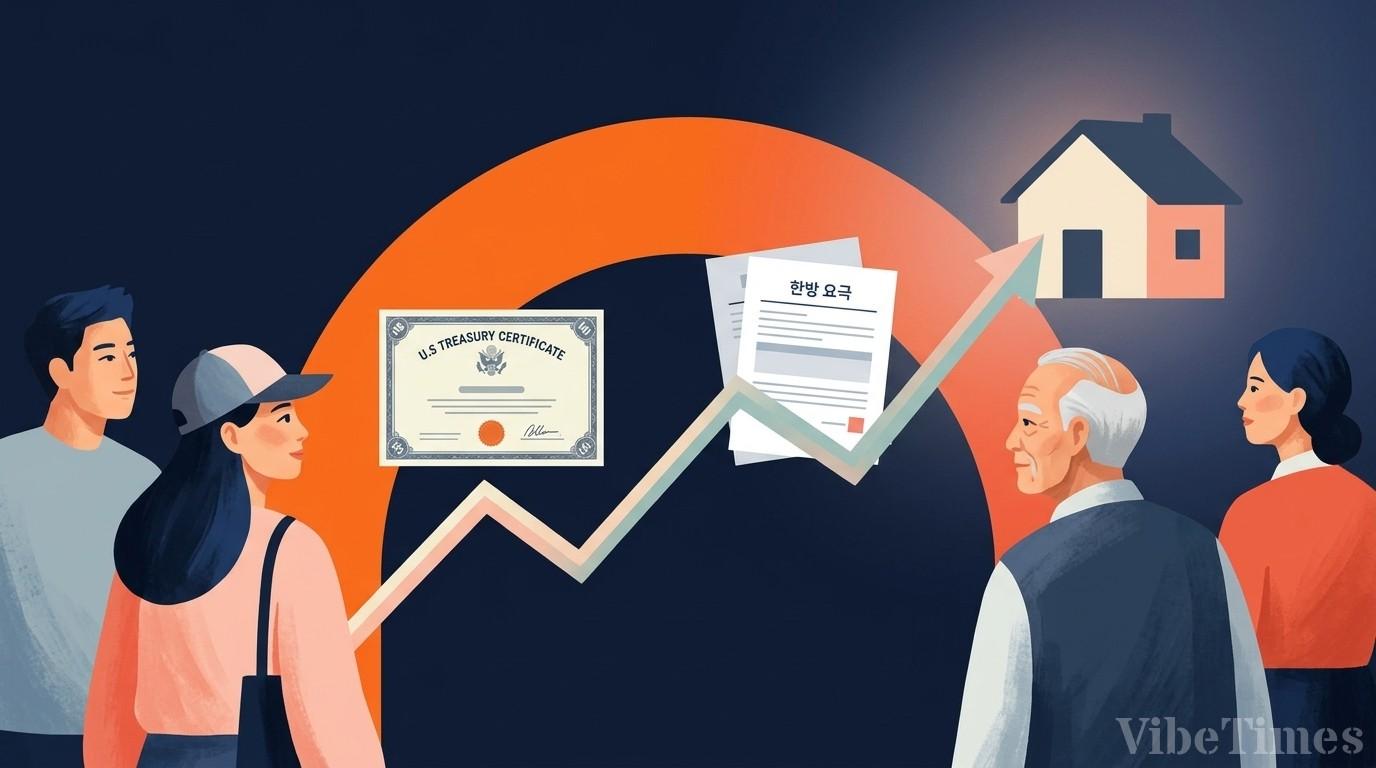
When the yield on 10-year U.S. Treasuries (the interest rate the U.S. government pays on 10-year debt) rises, Korean loan rates can go up even if the Bank of Korea does not raise its base rate. That is because banks that borrow money in U.S. dollars face higher funding costs. Companies approaching loan maturities and households paying mortgage interest feel the impact directly. That is why U.S. Treasury yields appear so frequently in economic news.
U.S. Treasuries are treated as the quintessential safe asset in global financial markets. Their yields serve as a yardstick for government bond rates around the world, corporate funding costs, and the valuation of stocks and real estate.
The reasons behind rising rates differ each time. If inflation proves stubborn and the Federal Reserve is expected to keep its base rate high for longer, long-term Treasury yields can rise. Increased Treasury issuance to cover fiscal deficits, as well as investors demanding higher returns, push yields in the same direction.
The currency channel must also be considered separately. When yields rise on expectations of Fed tightening, dollar assets become more attractive, creating upward pressure on the dollar. But if the rise stems from doubts about U.S. fiscal health or policy, the dollar can weaken even as Treasury yields climb.
The burden is greatest when rising U.S. rates coincide with a strong dollar. Higher U.S. bond yields make emerging-market assets relatively less attractive, prompting capital outflows. If a local currency weakens at the same time, more of it is needed to repay dollar-denominated debt, and companies with floating-rate loans or maturing debt to refinance face added interest costs. Indeed, in 1994, U.S. rate hikes combined with Mexico's debt problems and political instability to help trigger a currency crisis, and in 2013, mere talk of the Fed tapering its asset purchases sent long-term rates surging in what became known as the "taper tantrum."
For foreign investors, currency effects matter too. Even if Korean stock prices rise, a sharper fall in the won erodes returns when converted into dollars. A weak won can add to selling pressure on stocks, but corporate earnings and equity valuations are also taken into account, so exchange rates alone cannot explain foreign investors' trading.
The pressure on the loan market is more direct. When rising U.S. Treasury yields feed into Korean government bond and bank debenture rates, loan rates come under upward pressure. Floating-rate loans feel the pinch at rate reset dates, while fixed-rate loans become more burdensome at maturity or refinancing. Real estate project financing ventures with high leverage and small and mid-sized enterprises with limited financial headroom are especially vulnerable, and rising household interest payments can dampen consumption.