On the opening day of the second week of parliamentary audits, ruling and opposition parties clashed over allegations of targeted audits

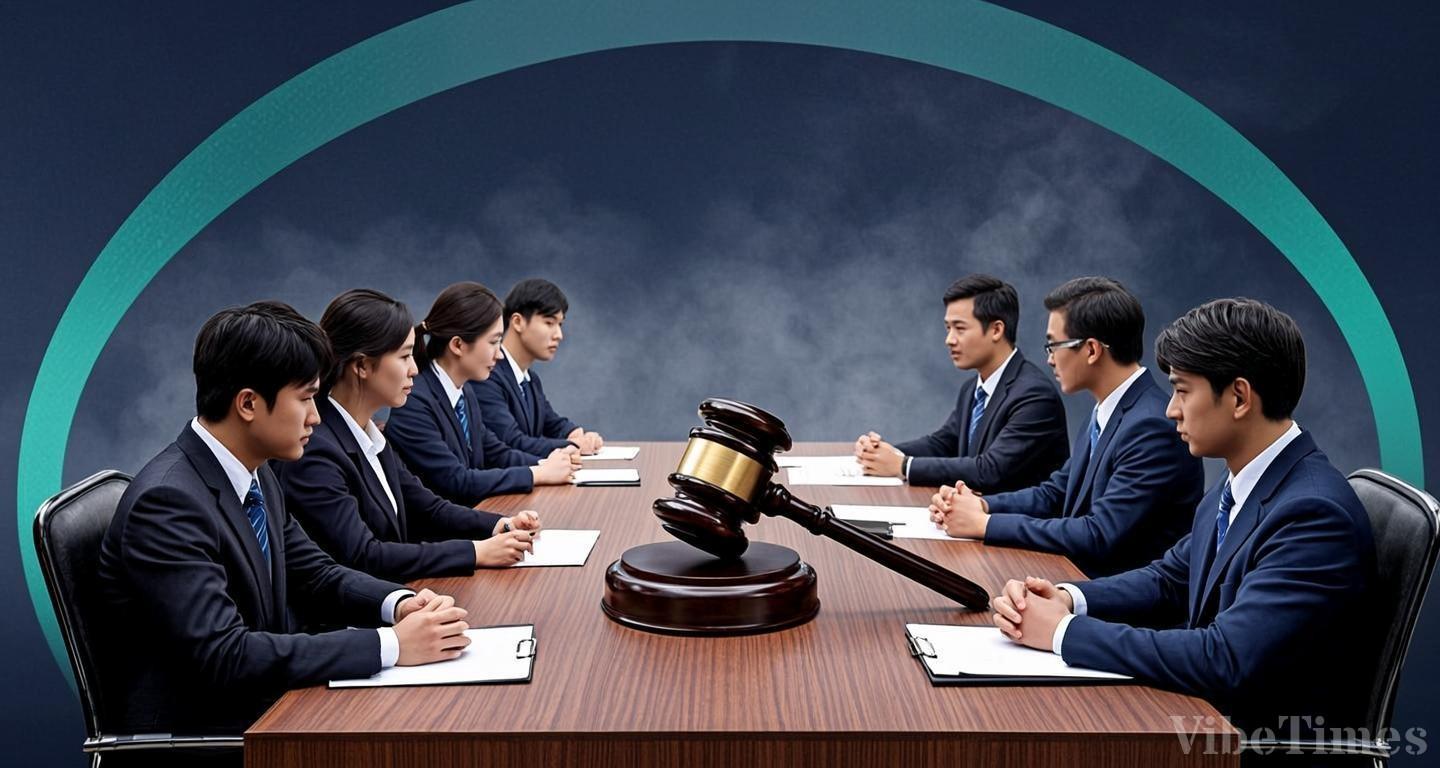
On the 12th, as the National Assembly audits entered their second week, the ruling and opposition parties clashed over suspicions of 'targeted audits' aimed at the Moon Jae-in administration, as well as pending issues such as prosecutorial reform and the launch of the Corruption Investigation Office for High-ranking Officials. The audits on the 12th were held across 12 standing committees, including the Legislation and Judiciary Committee, the Political Affairs Committee, the Strategy and Finance Committee, the Education Committee, the Science, ICT, Broadcasting and Communications Committee, the Foreign Affairs and Unification Committee, the National Defense Committee, the Public Administration and Security Committee, the Culture, Sports and Tourism Committee, the Agriculture, Food, Rural Affairs, Oceans and Fisheries Committee, the Trade, Industry, Energy, SMEs and Startups Committee, and the Land, Infrastructure and Transport Committee. Key issues included 'anomalous signals' on the South Korea-U.S. security line and real estate policy.
During the National Police Agency audit at the Public Administration and Security Committee, the People Power Party repeatedly raised concerns about poor investigations and the burial of cases in the event of the prosecution being abolished. In contrast, the Democratic Party of Korea engaged in a war of words, urging swift investigations into figures in the conservative opposition camp, including suspicions that Rep. Han Dong-hoon leaked investigation materials related to Rep. Kim Seung-won.
At the audit of the South Korean Embassy in the United States by the Foreign Affairs and Unification Committee, the recently surfaced 'anomalous signals' in the South Korea-U.S. intelligence and security lines, including suspicions that National Intelligence Service Director Lee Jong-seok was denied entry to the United States, came under scrutiny.
At the audit of the Korea Land and Housing Corporation by the Land, Infrastructure and Transport Committee, a dispute erupted over the effectiveness of the government's real estate measures. At the audit of the Bank of Korea by the Strategy and Finance Committee, questions focused on interest rate policy directions linked to the real estate market, including the effects of rate hikes.
In the Political Affairs Committee audit of the Fair Trade Commission, the confrontation over an on-site inspection related to suspicions of Coupang's violations of the Large-Scale Distribution Act and whether to introduce a cap on delivery app fees emerged as key points. The National Defense Committee held audits of the Military Manpower Administration and the Alternative Service Review Committee in the morning, followed by an on-site inspection of the Agency for Defense Development in the afternoon.
In addition, the Education Committee audited the Academy of Korean Studies and the Northeast Asian History Foundation, while the Culture, Sports and Tourism Committee audited the Korea Creative Content Agency, the National Institute of Korean Language, and the Korean Film Council. The Agriculture, Food, Rural Affairs, Oceans and Fisheries Committee audited the Ministry of Oceans and Fisheries and the Korea Institute of Marine Science and Technology Promotion, while the Trade, Industry, Energy, SMEs and Startups Committee conducted audits of KOTRA and the Korea Trade Insurance Corporation, wrapping up all 12 standing committees' schedules for the day.