President Lee Jae-myung to Move Into Cheong Wa Dae Residence Next Month

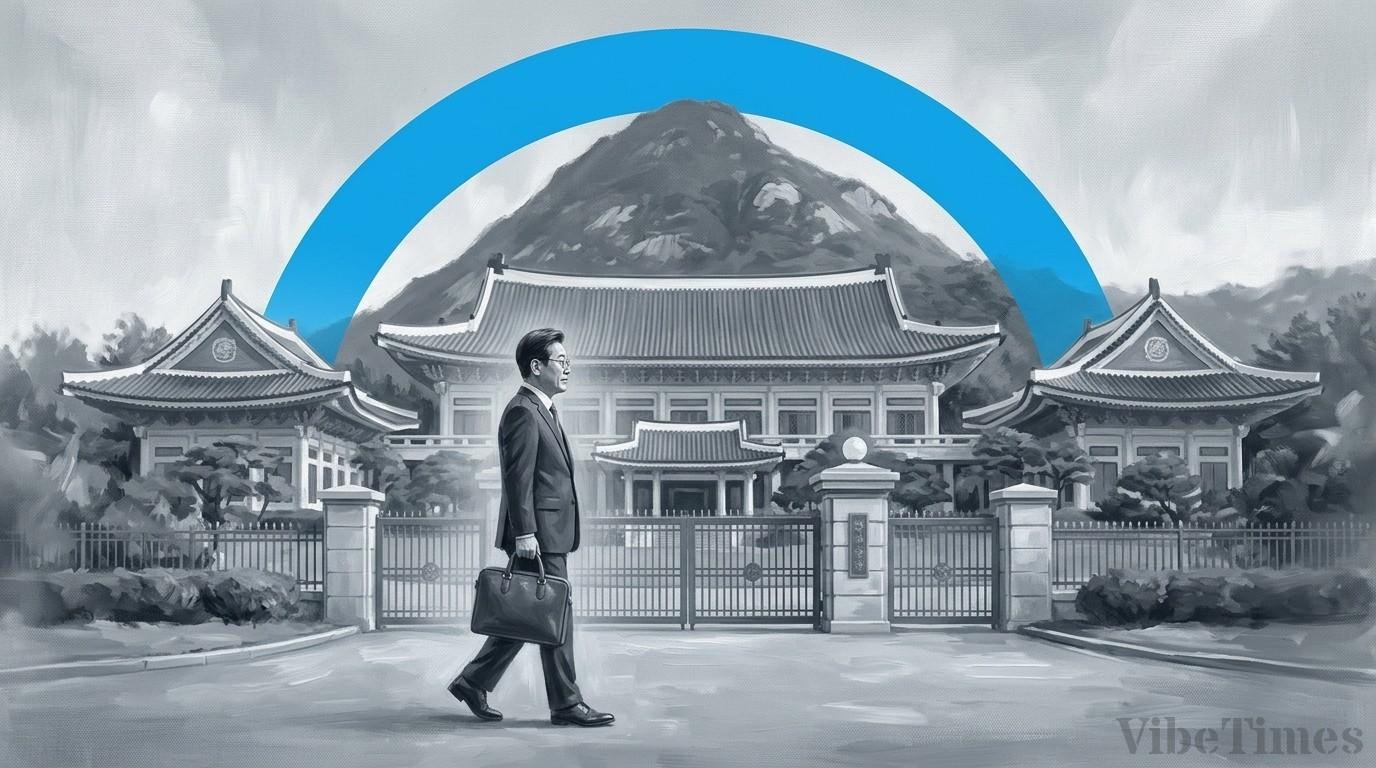
President Lee Jae-myung is expected to move into the presidential residence at Cheong Wa Dae around next month.
Cheong Wa Dae said on the 12th that it is "preparing to make the move possible within the year, through test operations of the building and moving preparations." This means environmental maintenance of the residence has entered its final stage. Since the launch of the Lee Jae-myung administration, which has maintained the presidential office in Yongsan, only the residential function will move to Cheong Wa Dae. Given the symbolic significance of relocating the president's living quarters, the political circle is reading the move in different ways.
The 'Cheong Wa Dae Residence' Returns After the Yongsan Era
The Yoon Suk-yeol government relocated the presidential office to Yongsan upon its launch in 2022 and opened Cheong Wa Dae to the public, while also using a residence near Yongsan. The Lee Jae-myung government has opted for a compromise: keeping the office in Yongsan while placing the residence within the Cheong Wa Dae grounds. According to Cheong Wa Dae, test operations and maintenance work on the residence are currently underway, with the president's move-in targeted for within the year, not extending into next year.
The relocation of the president's home is not a mere administrative matter. The Cheong Wa Dae residence was a symbol of authority for past administrations, so the decision to move there is directly tied to the government's public image. On the other hand, moving only the residence while keeping the office in Yongsan is distinct from a full return to the old Cheong Wa Dae system. It is interpreted as a pragmatic choice to avoid the costs and controversy of building or leasing a separate residence, while maintaining a modern presidential office model that separates workspace from living space.
Between Security and Symbolism
The issues surrounding the residence move fall largely into two categories. First is security. The Cheong Wa Dae grounds sit at the foot of Bugaksan Mountain, which is advantageous for access control and protection, but the travel route between Cheong Wa Dae and the Yongsan office could create a new security burden. Cheong Wa Dae's position is that related procedures are being reviewed as part of the test operation process. The other axis is political symbolism. Observers note that citizens who supported opening the Cheong Wa Dae grounds, along with parts of the conservative camp, may raise concerns about a reduced public access, while some in the ruling party may criticize what they see as the incomplete normalization of the 'Yongsan system.'
Just as President Lee presented credentials to new ambassadors, including Iran's envoy, at Cheong Wa Dae on the afternoon of the 12th, the Lee Jae-myung government has already been using Cheong Wa Dae as a ceremonial space. The move into the residence can be seen as the final stage of this expanded, multi-purpose use.
Upcoming Schedule and Political Ripple Effects
The first point of interest is whether the goal of relocating within the year will be met. If the test operations and maintenance wrap up on schedule, President Lee will begin restructuring his work schedule around the Cheong Wa Dae residence from early next year. Moreover, since the moving plan was announced as it coincides with political events such as the Daegu Dalseong by-election, the opposition cannot be ruled out from turning the symbolism into a political issue. That said, the residence move itself has limited impact on ordinary citizens' daily lives, so transparency in construction and disclosure of costs are likely to determine whether the controversy spreads.
Ultimately, this relocation is the product of a compromise struck between restoring presidential authority and pragmatism. The return to the Cheong Wa Dae residence is largely formal, while the actual decision-making structure remains in Yongsan. Whether the dual system of a separate office and residence settles in stably, or gives rise to new controversy over duplicate security costs and travel routes, remains a question to be answered going forward.