Enshrining the Busan-Masan Uprising in the Constitution Awakens Dormant Revision Debate

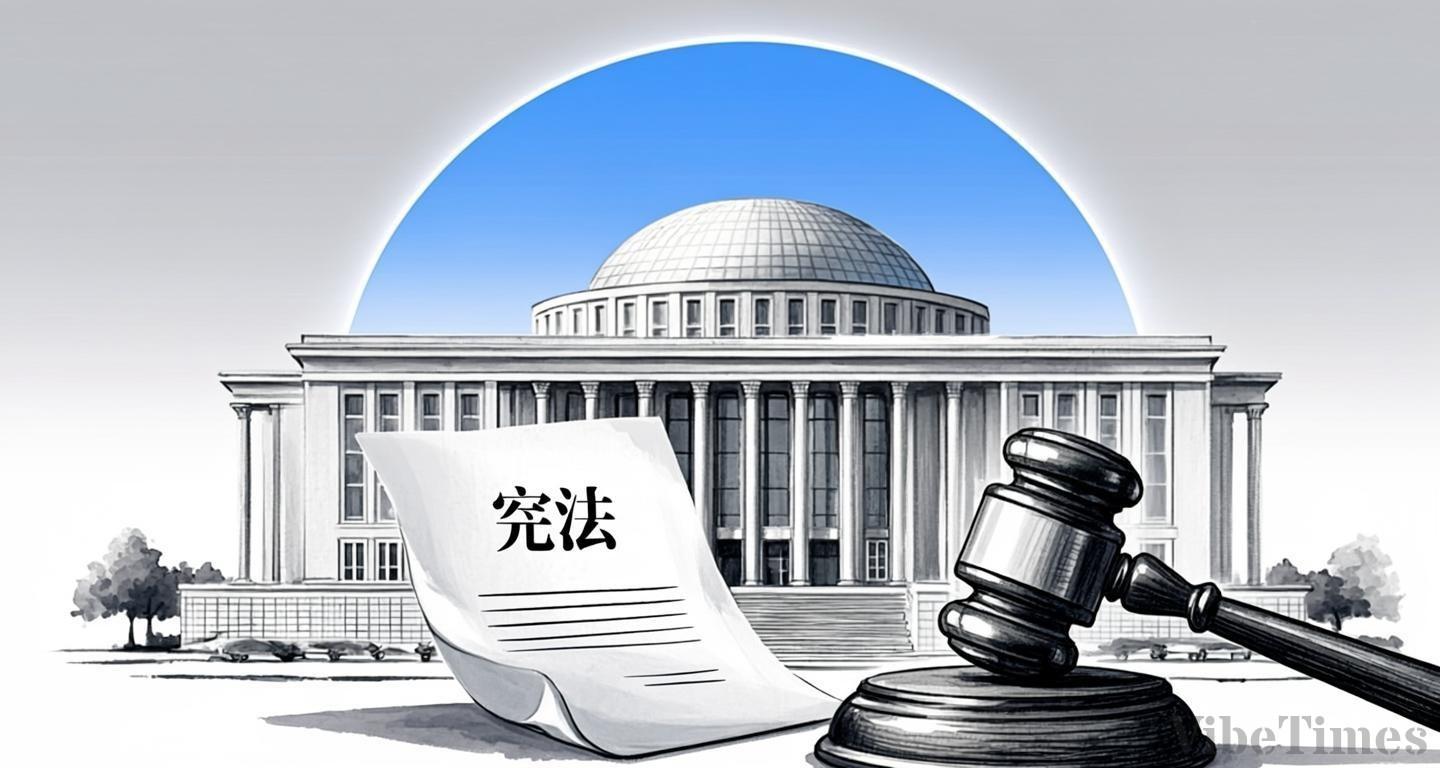
The proposal to enshrine the Busan-Masan Uprising in the Constitution has become a new spark for constitutional revision discussions.
President Lee Jae-myung's statement that the spirit of the Busan-Masan Democratic Uprising should be explicitly written into the Constitution's preamble has set the long-dormant constitutional revision debate moving again. The Busan-Masan Uprising was a democracy movement that broke out in Busan and Masan in 1979, a historic event that led to the collapse of the Yushin regime. The proposal to include it in the Constitution carries weight because it goes beyond mere historical commemoration and could reignite the entire constitutional revision debate addressing the inherent limitations of the current charter.
The Significance of the Preamble Inclusion Proposal
The current constitutional preamble reflects the people's democratic aspirations embodied in the April 19 Revolution and resistance against the Yushin dictatorship, but the Busan-Masan Uprising and the May 18 Democratic Movement have never been elevated to explicit constitutional text. President Lee's remarks are an attempt to fill that void. Although including democracy movements in the preamble raises questions about legal binding force, it carries great significance as a symbolic and political decision about which historical narrative will underpin the nation's identity.
More important is the timing. The remarks came as discussions on revising the Constitution to allow a four-year single presidential term have been steadily raised both within and outside the ruling camp. The current five-year single-term system has stood still for more than three decades because, while no one opposes revision, no consensus has been reached on what new power structure to adopt. The move is read as a strategy of opening the door to the constitutional revision agenda by leading with the relatively uncontroversial task of enshrining the uprising.
Political Crossroads
The reactions of the ruling and opposition parties were bound to diverge. Constitutional amendment requires high thresholds: approval by two-thirds of National Assembly members plus a majority in a national referendum. Unilateral passage by the ruling party is therefore impossible, and without opposition consent, discussion cannot even begin. For the People Power Party, engaging in the revision debate carries the burden of accusations of a 'power-extension offensive' over changing the power structure mid-term, while refusing invites charges of turning its back on democratic history.
President Lee's recent rebuttal of claims of an unusually close Korea-U.S. alliance, his emphasis on autonomy in foreign policy, and his drawing of a line under the previous administration's policies such as 24-hour public access to Bukaksan all fit the same context. It can be interpreted that his attempt to reestablish the roots of his governing philosophy at the constitutional level is converging into the proposal to enshrine the uprising in the Constitution.
The Fate of the Revision Debate
The immediate point of interest is the framework for the revision debate. Whether the National Assembly forms a special committee on constitutional revision, or the government launches a constitutional advisory council, will be the first watershed. A consultative body of the ruling party, opposition, and government would be the most realistic option, but division is certain the moment discussions turn to the power structure. Options such as a parliamentary system, dual executive, or decentralized presidential system abound, but each carries sharply different costs and benefits.
On the inclusion of the uprising alone, the prospects for agreement are relatively high, as public consensus on this historical fact has already formed. If President Lee makes it the first button of the revision debate, he appears set to build momentum by ordering agenda items from the most symbolic onward. The opposition, for its part, is likely to counterplay by narrowing the scope of revision to the power structure or pushing the timing until after the presidential term.
Constitutional revision is not achieved by a single declaration; success is completed only through diligent accumulation. Whether the small consensus of a preamble inclusion becomes a stepping stone of trust to clear the high bar of two-thirds, or ends as yet another slogan, depends on the volume of compromise the ruling and opposition parties build from here.