Legislative Report for October 17: Cho Kuk Innovation Party's Lawyer-Lawmakers Step Up for Assembly Audits

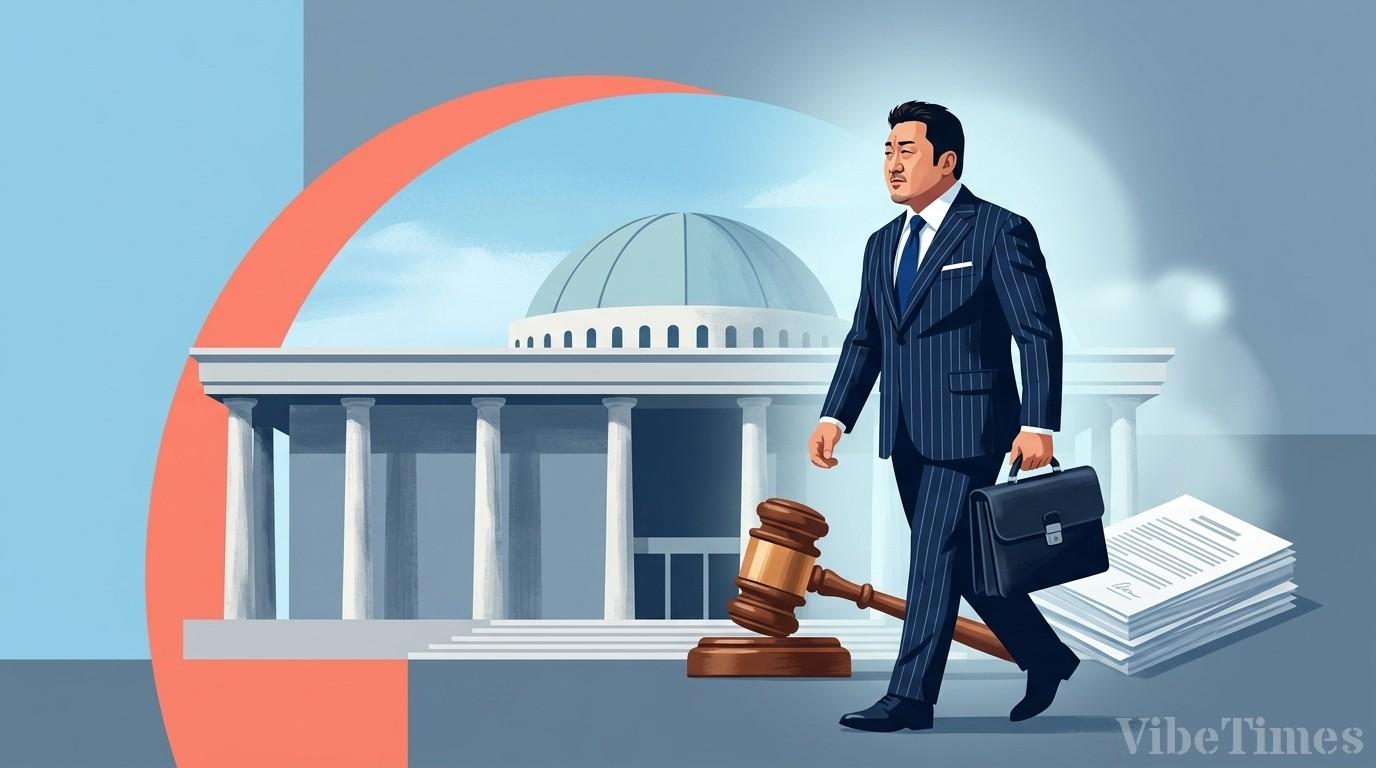
Lawyer-turned-lawmakers of the Cho Kuk Innovation Party took turns questioning prosecutors' offices and justice-related agencies during the National Assembly's government audits.
According to publicly disclosed records of National Assembly activities, Rep. Park Joo-young of the Cho Kuk Innovation Party participated in audit questioning of prosecution and justice-related agencies during the government inspections. Rep. Kim Yi-su of the same party is also concurrently conducting audit and budget review activities as a member of the Special Committee on Budget and Accounts. With numerous figures from the judiciary in its ranks, the Cho Kuk Innovation Party is making its presence felt in audits of the legal and judicial fields.
Committee Assignments of Lawyer-Legislators
According to the National Assembly's open information disclosure system, in the 22nd National Assembly, Reps. Park Joo-young, Kim Yi-su, Byeon Eun-ah, Kim Sung-dong, and Chung Ui-yong were all assigned to the Special Committee on Budget and Accounts. They also hold concurrent seats on the Education Committee. The Cho Kuk Innovation Party's placement of legal professionals on the budget committee, a forum with substantial real authority, is interpreted as a strategy to verify the appropriateness of government fiscal spending.
Rep. Park Joo-young, a lawyer from the younger generation, has been active within the party on legal affairs. In the 22nd National Assembly, he also co-sponsored legislation related to adjusting prosecutorial investigative powers, and joined cross-party efforts on bills protecting workers' rights. The realignment of investigative powers between police and prosecutors is a reform agenda that would transfer investigations to the police while redefining the prosecution's role around indictments—and it dovetails with the three judicial reform bills the Cho Kuk Innovation Party has championed as core pledges.
Judicial Reform Legislative Push Amid Party-Government Conflict
The judicial reform saga now sits at the heart of political conflict. When Democratic Party leader Kim Min-seok formally opened discussion of impeaching Chief Justice Cho Hee-de, People Power Party floor leader Jung Chung-rae countered on the 16th, saying, "The moment an impeachment motion is filed, the people will shout 'impeach Lee Jae-myung.'" Amid this confrontation, the stature of the Cho Kuk Innovation Party lawmakers who co-sponsored the prosecutorial investigative power realignment bill can only grow.
Scrutiny continues on the ground at the audits as well. On the 16th, at a National Assembly Public Finance and Economy Committee audit held at the Bank of Korea's Daegu-Gyeongbuk branch, Reform Party Rep. Lee Jun-seok questioned the Busan Customs chief on measures to block drug smuggling through express cargo. As with the audits of prosecution and justice agencies, this shows the government inspections serving as a forum to expose gaps in the law enforcement system.
Defection Votes and the Legislative Landscape
Recent floor vote results lay bare the shifting alliances among the parties. On the partial revision to the Special Act on Agricultural and Fishing Communities Structural Improvement passed on October 1, the Democratic Party recorded 86 votes in favor and 16 against, with members including Moon Dae-rim, Park Ji-won, and Min Hong-chul defecting. The People Power Party recorded 4 in favor and 40 against on the same bill—effectively opposing it as a party—with four members, including Lee Sang-hwi, Lee Man-hee, and Kwon Young-se, voting yes.
On the alternative bill for the partial revision of the Emergency Medical Services Act, the People Power Party split internally, with 14 in favor and 10 against. Ten members, including Park Chung-kwon, Yoo Young-ha, and Lee Jong-bae, cast no votes. On the partial revision of the Broadcasting Act, Rep. Lee Jin-sook and two others also voted against the party line. Such defections show that regional circumstances and ideological spectrum are reflected directly in bill deliberations.
Outlook and Implications
The activities of the Cho Kuk Innovation Party's legal-professional lawmakers are expected to provide real momentum for upcoming legislation on investigative power realignment and prosecution reform. In particular, using their budget committee seats to scrutinize the prosecution and Justice Ministry budgets is a lever that can calibrate the pace of reform even before bills are passed.
However, with ruling-opposition conflict intensifying over the discussion of impeaching Chief Justice Cho, the timeline for passage of the investigative power realignment bill carries considerable uncertainty. With some even questioning whether an impeachment motion will be filed at all, the audit questioning by the party's lawyer-lawmakers is poised to serve as a litmus test for how fast reform will proceed.
