Breath Test Invalid Without 200㎖ of Water to Rinse Mouth… Supreme Court Clarifies Standard

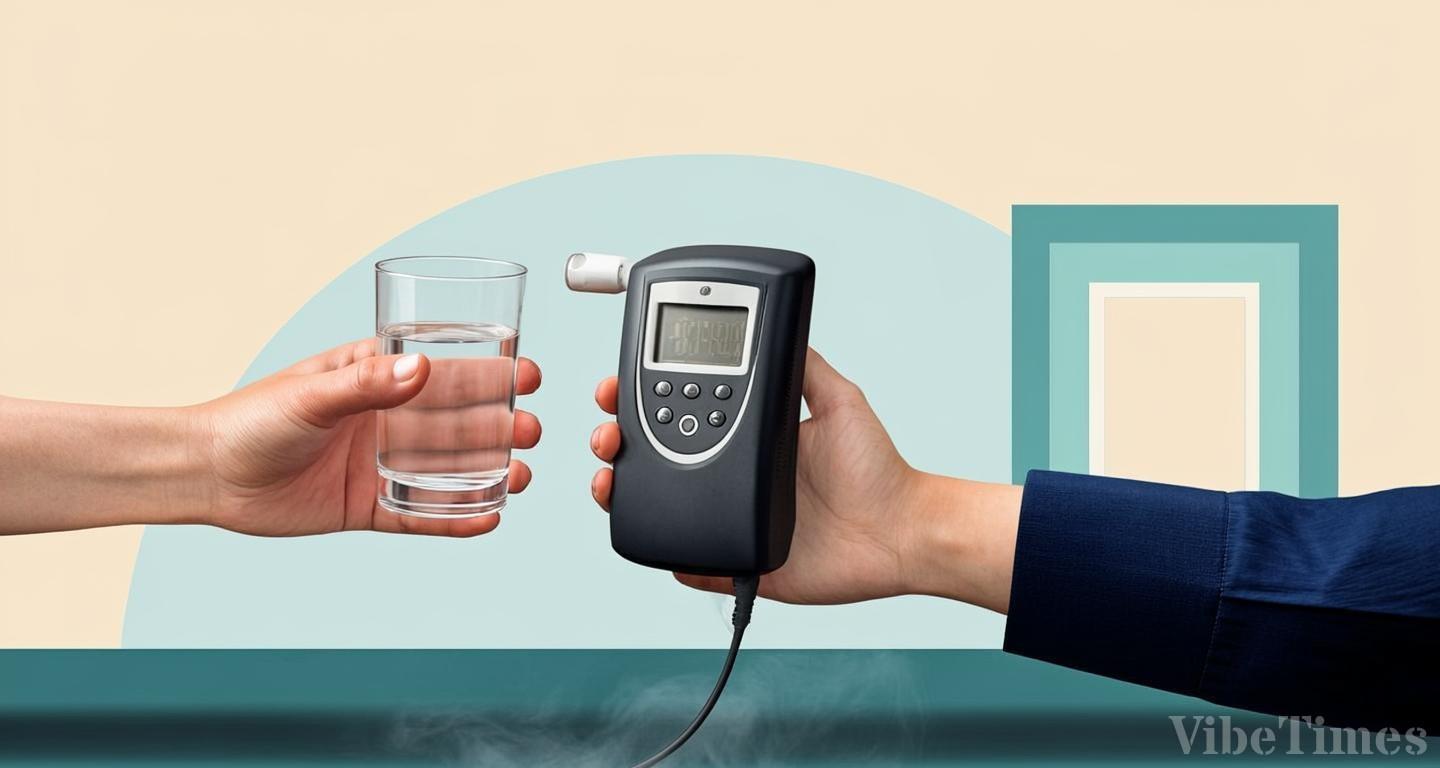
The Supreme Court has ruled that even if a breathalyzer (a device used to check whether someone has been drinking) produces a normal reading, that reading cannot be used as evidence of guilt if police failed to offer a cup of water to rinse the mouth before the test. The case began in December 2023 on a road in Sejong. A car with its engine running was stopped in the middle of the road, with a man in his 40s, identified only as Kim, asleep in the driver's seat. Responding to a report, police arrested him on the spot and took him to a local police substation. At the substation, an officer filled a paper cup with water and approached, but walked away without waking Kim or advising him to rinse his mouth. A subsequent breathalyzer test showed a blood alcohol concentration of 0.081%. Kim, who had a prior record of drunk driving convictions, was found guilty in both the first and second trials and sentenced to one year in prison, suspended for two years.
However, on the 1st, the Supreme Court's First Division (presided over by Justice Chun Dae-yup) overturned the conviction and sent the case back to the Daejeon District Court. The reason: because police failed to follow the statutorily mandated procedure of providing water, the test result cannot in principle be used as evidence of guilt. The fact that about 50 minutes had passed since Kim last drank and about 25 minutes since he finished driving was also at issue. Lower courts held that the influence of any alcohol remaining in the mouth diminished over time, but the Supreme Court disagreed. It found that alcohol could return to the mouth through burping or vomiting, so the mere passage of time cannot rule out the effect of residual alcohol. The Court also pointed out that police had the opportunity to provide water or conduct a retest.
There are cases of drivers unaware of these legal implications. A, 56, a truck driver with 30 years of experience, said, "I knew they would wait about 15 minutes, during which I could drink water, but I didn't know that a test result obtained without offering water couldn't be used as evidence of guilt in court." B, 45, a driver of 19 years who has actually been offered water during a sobriety check, said, "I just thought it was a courtesy from the police."
The basis for the procedure is found in statutes and guidelines. Article 30 of the National Police Agency's 2025 'Traffic Enforcement Processing Guidelines' requires police to provide 200㎖ of drinking water so that residual alcohol in the mouth can be rinsed away. Since July 4, 2023, the obligation to provide water has also been explicitly stated in the Enforcement Rules of the Road Traffic Act. Even if a driver insists on refusing the water, this is treated separately from refusing the test. An official from the National Police Agency's Traffic Safety Division explained, "If someone does not comply with the test without clearly refusing, officers must inform them of the disadvantages at least three times at five-minute intervals, and after 15 minutes from the initial request, they can be processed as a test refuser." He added, "This procedure means the test cannot be delayed indefinitely, and advising a mouth rinse is a basic step even when someone has passed out drunk or has difficulty communicating."
