President Lee Jae-myung's approval rating falls to 39%, dipping below 40%

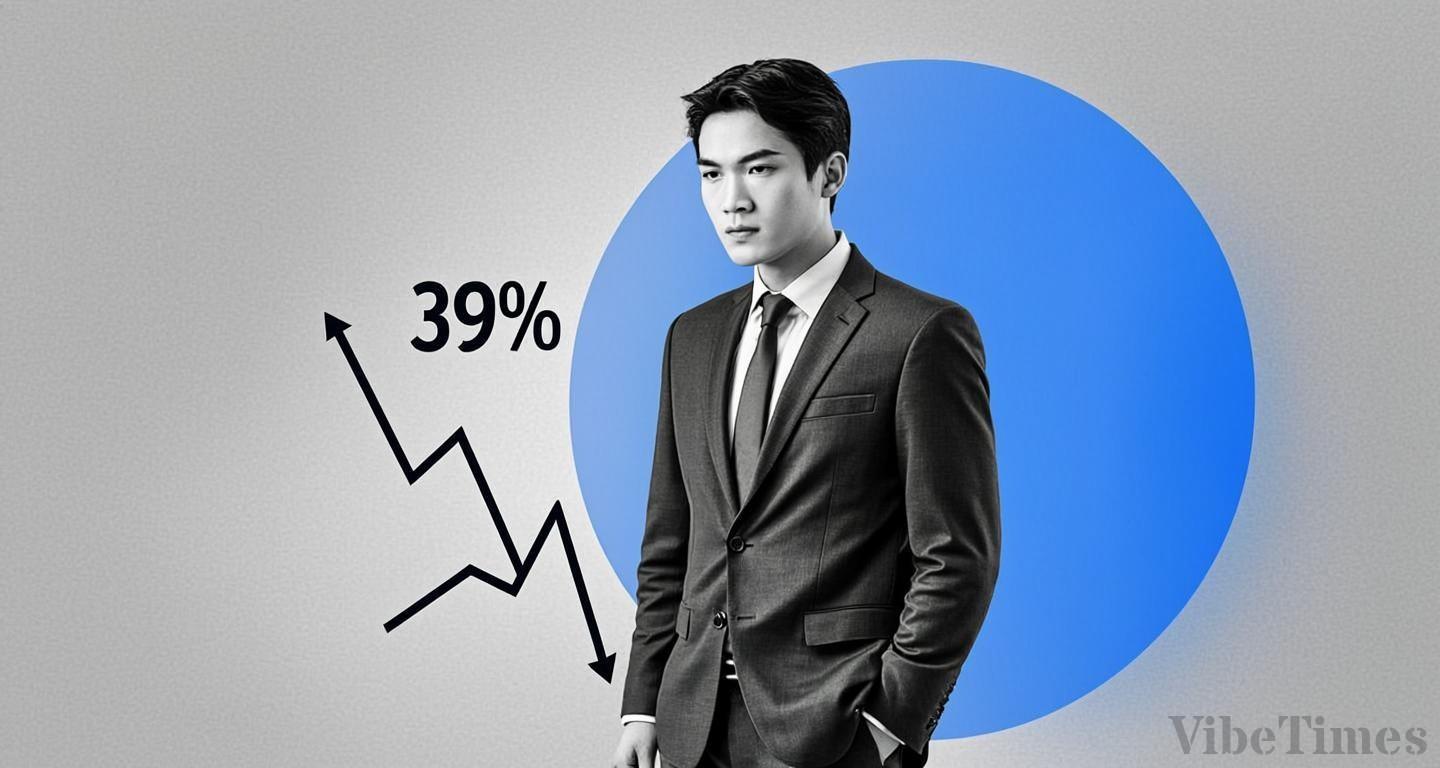
President Lee Jae-myung's approval rating for his handling of state affairs has sagged to 39%.
The figure, compiled from a Gallup Korea opinion poll, marks a slight decline from the previous week. The survey had a margin of error of ±3.1 percentage points at the 95% confidence level, with a response rate of 10.4%. In the same poll, the ruling Democratic Party of Korea recorded 35% support and the People Power Party 30%, leaving the gap between the ruling and opposition parties at just 5 percentage points.
What 39% Means: Signs the Honeymoon Momentum Is Fading
The key takeaway is that the approval rating, which was high in the early days of the administration, has slipped below 40%. Given the ±3.1 percentage point margin of error, the true figure could fall anywhere between 36% and 42%, but the direction of the trend is meaningful in itself. What matters is not the absolute number but the trajectory.
The gap in party support is also worth noting. The 5-percentage-point difference between the Democratic Party at 35% and the People Power Party at 30% is close to the margin of error, meaning the ruling party does not hold an overwhelming advantage. There is also a 4-percentage-point gap between the president's approval rating and the ruling party's support, indicating that public assessments of the president personally and of his party do not fully align.
Political Controversies Fueling the Decline
Behind the drop lies a series of recent political battles. After President Lee admitted he was playing golf with family while receiving reports on the day of the ceiling collapse accident in Daegu, disputes between Rep. Joo Jin-woo and the Democratic Party intensified. Controversies involving the presidential couple continued day after day, with the presidential office rebutting claims about First Lady Kim Hye-kyung's alleged Taereung CC golf outing as false information.
The controversy over investigators' attendance at Cabinet meetings appears to have been another variable. President Lee defended the attendance of prosecutors, including Chief of the Corruption Investigation Office for High-ranking Officials Kim Ji-yong, calling it the "normalization of the abnormal" and insisting it had nothing to do with political neutrality, while the opposition raised concerns about interference in ongoing cases. Rhyu Si-min's criticism that the president's prosecution reform direction carried a "foul stench of a fish market" signals voices of dissent emerging even from within the president's inner circle—a potential crack in his support base.
The Ruling Party's Response and the Policy Agenda
The ruling party is moving to defend the president's approval rating. President Lee is reportedly set to host a dinner at the presidential office on the 26th with senior Democratic Party lawmakers serving their fifth or sixth terms to discuss key policy issues. The move is seen as an effort to shore up party unity while strengthening a focal point within the caucus. The administration's successive gestures of "unity," including gifting all ruling party lawmakers a biography of former President Roh Moo-hyun, follow the same logic.
Congressional business, however, is far from smooth. The remanded retrial of the president's election law case has been assigned to Criminal Division 7 of the Seoul High Court and is underway, while the Democratic Party is pushing to pass a parliamentary probe into Chief Justice Jo Hee-de and a special prosecutor act on "fabricated indictments" during the regular session. As confrontations between the ruling and opposition parties over the judiciary intensify, the political war of attrition that drags down approval ratings is likely to be prolonged.
Outlook: Managing the Center Holds the Key
The point to watch going forward is how the gap between the ruling and opposition parties—hovering near the margin of error—moves. For the opposition to rise above the low-30s, continued flight from the centrist base is needed, and the current rifts surrounding the president could serve as that conduit. Conversely, if the ruling party fails to quell the golf and protocol controversies and the prosecution reform debate at the same time, it risks eroding even its 35% party support.
November and December's National Assembly calendar—including the retrial ruling and the fate of the special prosecutor bill—is expected to act as the trigger determining the direction of the approval rating graph. While the dip may prove to be fluctuation within the margin of error, this poll's warning is that if consecutive declines are confirmed, an early lame-duck controversy could erupt just six months into the administration.