Insurrection Special Prosecutor Seeks Death Penalty Again in Yoon Suk-yeol's Second Trial

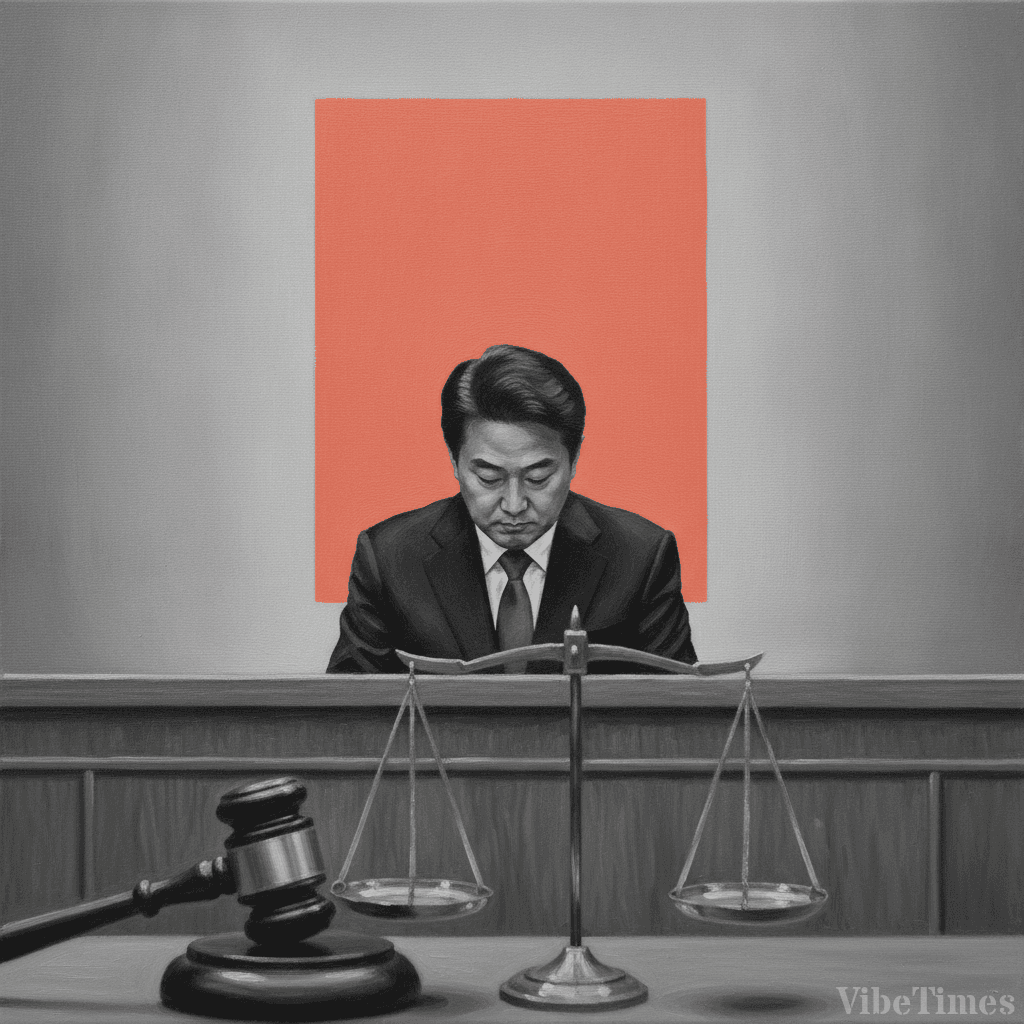
The special prosecutor on insurrection charges has once again sought the death penalty for former President Yoon Suk-yeol in the second trial.
As the trial over his central role in the December 3 martial law crisis moves from the first trial into the appeals stage, the confrontation between the special prosecution team and the defense has narrowed into a battle over the sentence. At a hearing of former President Yoon's appeals trial on charges of leading an insurrection, held on the 29th by the Seoul High Court's Criminal Division 12-1 (Chief Judge Lee Seung-cheol), Special Prosecutor Cho Eun-seok asked the court to impose a sentence of the same severity as in the first trial.
From Life Imprisonment in the First Trial to a Continued Battle on Appeal
Former President Yoon was sentenced to life imprisonment in the first trial on charges of leading an insurrection. The prosecution's request for the death penalty in the second trial rests on the argument that the weight of the crimes confirmed by the court must be reflected in the maximum statutory sentence. The prosecution maintains that given the gravity of an act that shook the constitutional order, a heavy sentence is unavoidable. The defense, for its part, is reported to have argued on the grounds of the substantive unconstitutionality of the martial law declaration and challenged the very legal elements required to establish the crime of insurrection.
Death penalty requests rarely result in actual sentences. The last execution in South Korea took place in December 1997, and even death sentences themselves have been rare since then. However, the severity of a requested sentence serves as a gauge of the prosecution's view of culpability in a case, and as such can influence judicial sentiment and public opinion.
A Litmus Test for Judicial Accountability Over the December 3 Crisis
This trial carries significance beyond an ordinary criminal case. It is the first instance in which the judiciary will determine what legal assessment is given, within the constitutional framework, to a sitting president's declaration of emergency martial law. The charge of leading an insurrection falls under the heaviest category in criminal law, holding to account a ruler who sought to overthrow the state system itself.
In the trials of military personnel implicated in the same crisis, verdicts have been split, with former soldiers who deployed troops on orders from above being acquitted one after another in the first trial. How the legal assessment diverges between those lower in the chain of command and the ultimate decision-maker is expected to be clarified in future rulings. The special prosecutor's investigation into military-related cases is also proceeding along the same track.
Political Circles, Public Opinion, and the Trial's Next Phase
Reactions from the ruling and opposition parties are starkly divided. The Democratic Party said that after wrapping up the parliamentary inspection, it would focus on ten key livelihood bills, including housing stability and jobs, during the regular National Assembly session, but the trial of former President Yoon continues to serve as a benchmark for the political landscape immediately after the presidential election, regardless of the political calendar. Meanwhile, voices within the People Power Party have questioned the credibility of the special prosecution's investigation as a whole.
The remaining procedure is clear. Once the appeals court issues its ruling, the case will proceed to the Supreme Court depending on whether either side files an appeal. The special prosecution has shown a firm posture in pursuing guilty verdicts, promptly appealing the acquittal of Seoul Mayor Oh Se-hoon in the appeals trial of his political funds case. In this case as well, it is highly likely to fight the matter all the way to the Supreme Court to prevent any part of the first-trial outcome from being overturned.
The timing of the second-trial ruling has not yet been set. However, since the first trial found him guilty on most of the charges, the focus of the appeals trial is expected to center on sentence adjustment and legal interpretation. Whether life imprisonment is upheld, the sentence is reduced, or an even heavier penalty is imposed will determine the historical weight the judiciary assigns to the crisis.
Nelson Mandela said to enjoy life even when death was certain. But at issue in this trial is not one individual's life or death, but rather how much weight the judiciary will bring to bear in restoring a constitutional order that was once shaken. The answer will come on the day of the ruling.
