First Step in Contributing to Strait of Hormuz Navigation: Mine Countermeasures Operation

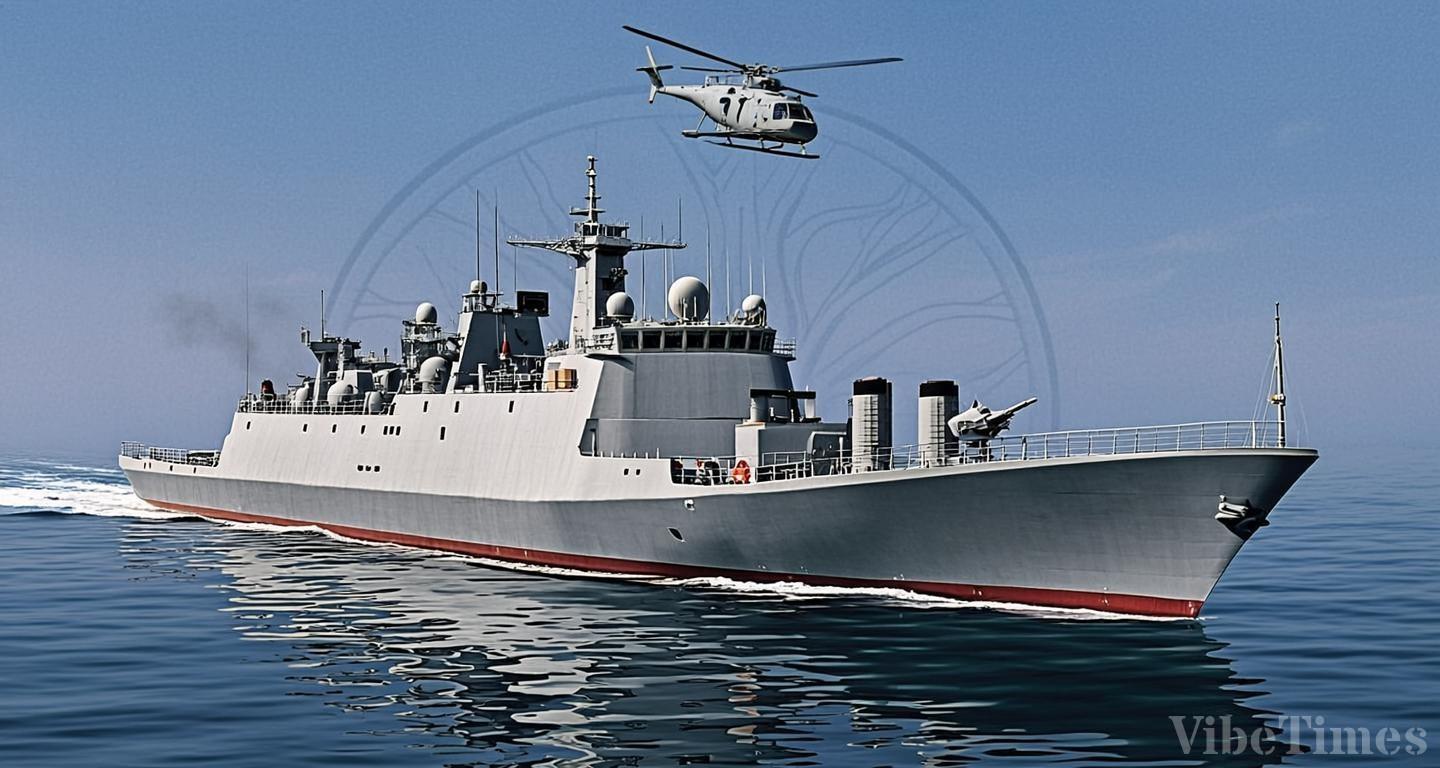
The mission of 'supporting the restoration of freedom of navigation' has been explicitly added to the Cheonghae unit's mandate for the first time. This means the South Korean military will formally step in to remove hazards at sea so that vessels can travel safely. The area of operations is directly linked to the Strait of Hormuz. According to the Ministry of National Defense on November 5, 2026, the government has added this mission to the revised consent bill for extending the Cheonghae unit's deployment, which it will soon submit to the National Assembly. This marks a shift in the unit's role, which has centered on merchant ship protection and anti-piracy operations since its deployment to the Gulf of Aden off Somalia in 2009.
Unmanned mine-countermeasure equipment and an explosive ordnance disposal team are at the core. Under the bill, an explosive ordnance disposal (EOD) team, along with mine-countermeasure assets such as an unmanned underwater vehicle (UUV), an unmanned surface vessel (USV), and a remotely operated vehicle (ROV), will be deployed as part of the Cheonghae unit's capabilities. When asked whether the unit would be prepared for mine clearance in Hormuz, a Defense Ministry official said, "It is not exactly that, but we did not rule that out and included it as an element of the operation." He added, "We cannot fail to prepare for the time when a permissive environment emerges," saying that if Britain and France request support for protecting international sea lanes, "we cannot go without preparation."
Britain and France, on the premise of a post-war settlement between the United States and Iran, have led discussions on forming a multinational task force to restore transit through Hormuz, and the government has participated in those talks. Seoul recently dispatched a liaison officer to the British- and French-led freedom of navigation initiative for Hormuz. The conditions for participation, however, are clear: a 'permissive environment' must be established, such as a US-Iran ceasefire or the signing of a memorandum of understanding, and additional National Assembly consent is also required.
Among the unmanned mine-countermeasure capabilities the military is considering deploying, the unmanned surface vessel is still in combat testing, while the unmanned underwater vehicle and the remotely operated vehicle have been fielded. The Defense Ministry official explained the need for advance preparation through the Cheonghae deployment, saying, "It would be burdensome to deploy them before they have sufficiently adapted to the operating environment."
Kim Jun-hyung, floor leader of the Rebuilding Korea Party, expressed opposition the previous day, saying, "Do not open the door to troop deployment by tucking in an expansion of the operational area and a change of mission." The extension bill must pass through the National Assembly's consent procedure to be processed further.