Lee Jae-myung's Toughest Foe Turned Out to Be Within His Own Party

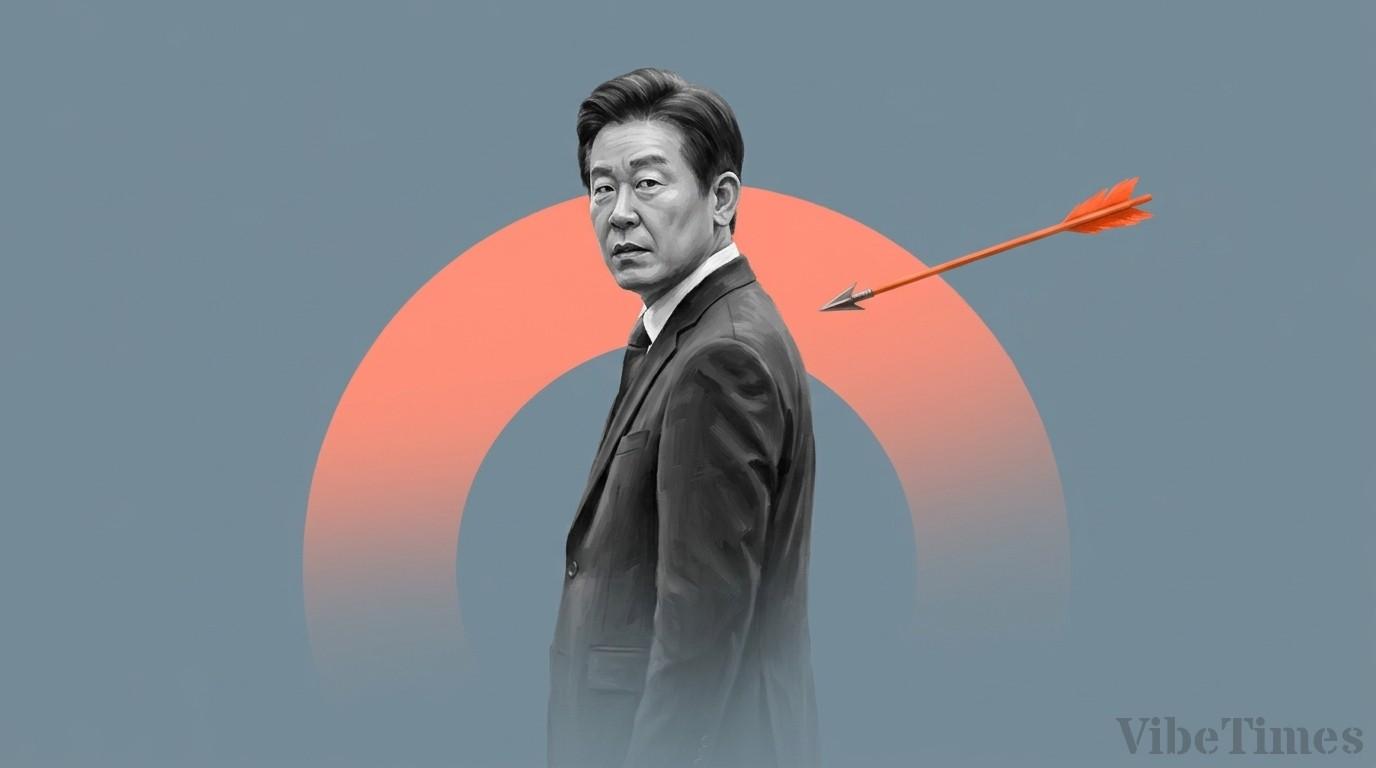
"Arrows Flying From Behind" — Lee Jae-myung Names His Toughest Foe
President Lee Jae-myung has identified his most difficult enemy as being "internal." On the 14th, the president shared on X an interview video of Chun Jun-ho, senior deputy floor leader of the Democratic Party of Korea, offering comfort: "You stood by me and endured hardship while we crossed the bridge of judicial murder and political persecution." He added, "The hardest thing is the arrows that fly at you from behind." The message of encouragement toward Chun is read as carrying a hidden political message. In fact, within the ruling camp, subtle differences in temperature are evident over the withdrawal of charges in cases related to President Lee and the handling of the fabricated-indictment special prosecutor act.
Chun Jun-ho was one of President Lee's closest aides, having served as his chief secretary when Lee was Democratic Party chairman. Even after Lee took office, Chun has served as the party's channel for communication with the government, making it unusual for the president to single out a specific lawmaker and publicly acknowledge their "hardship." Political circles interpret the remarks as more than mere encouragement — a protective message aimed at his inner circle. The comments could also be seen as a direct response to critical voices within the party that "political judgment is not always right" and to disagreements surrounding the ongoing trials.
Withdrawal of Charges and the Special Prosecutor Act — A Gap Opens Between Party and Government
The People Power Party, defining the ruling camp as pushing for the withdrawal of charges in cases related to President Lee Jae-myung and the "fabricated-indictment special prosecutor act," has intensified its offensive. On the 14th, the PPP held a rally denouncing the act at Busan Station plaza, urging the president to exercise his right to request reconsideration — commonly known as the veto. From the opposition's perspective, the calculation is that even if the special prosecutor act passes, the president's veto could nullify it. PPP candidates running in Busan are also reported to have taken the position that "the special prosecutor act on the withdrawal of charges raises concerns about undermining the judicial system."
The terrain of public opinion is not simple either. In publicly released surveys, responses saying the trials related to President Lee should resume reached 58.7%, climbing as high as 66.1% in the Seoul area — figures well above a majority. This shows that public demand regarding judicial risk has not subsided even after the president took office. The prevailing view is that, with pro-resumption sentiment at this level, pushing for the withdrawal of charges or a special prosecutor could become a political burden. The president's "arrows" remark carries added weight given that it came at a moment when internal and external pressures are converging.
Calculation Behind the Encouragement of an Aide — A Variable for Future Governance
The president's remarks are also connected to the broader controversy in which Cheong Wa Dae, responding to former lawmaker Rhyu Si-min's criticism that "President Lee deceived the people," countered that it was "distorting his commitment to prosecutorial reform" while reviewing legal action. With opposition rallies in the streets, internal party criticism, and partisan battles over prosecutorial reform unfolding simultaneously, the presidential office is playing defense and offense in parallel. The public encouragement of Chun Jun-ho is seen as a preemptive move to shield a trusted figure amid pressure from multiple directions.
The key point to watch going forward is the fate of the fabricated-indictment special prosecutor act. Passage through the National Assembly appears achievable depending on how lawmakers on both sides vote, but whether the president exercises his right to request reconsideration is likely to be the real watershed. If he vetoes the bill, he will face criticism for personally blocking a special investigation into cases involving himself; if he does not, parts of his party may push back. Either choice carries a cost. What the president's remarks suggest is a moment when stopping the arrows from behind has become just as important as holding up the shield in front.