Yoon rebuts special counsel, arguing insurrection ended only at the time of impeachment passage

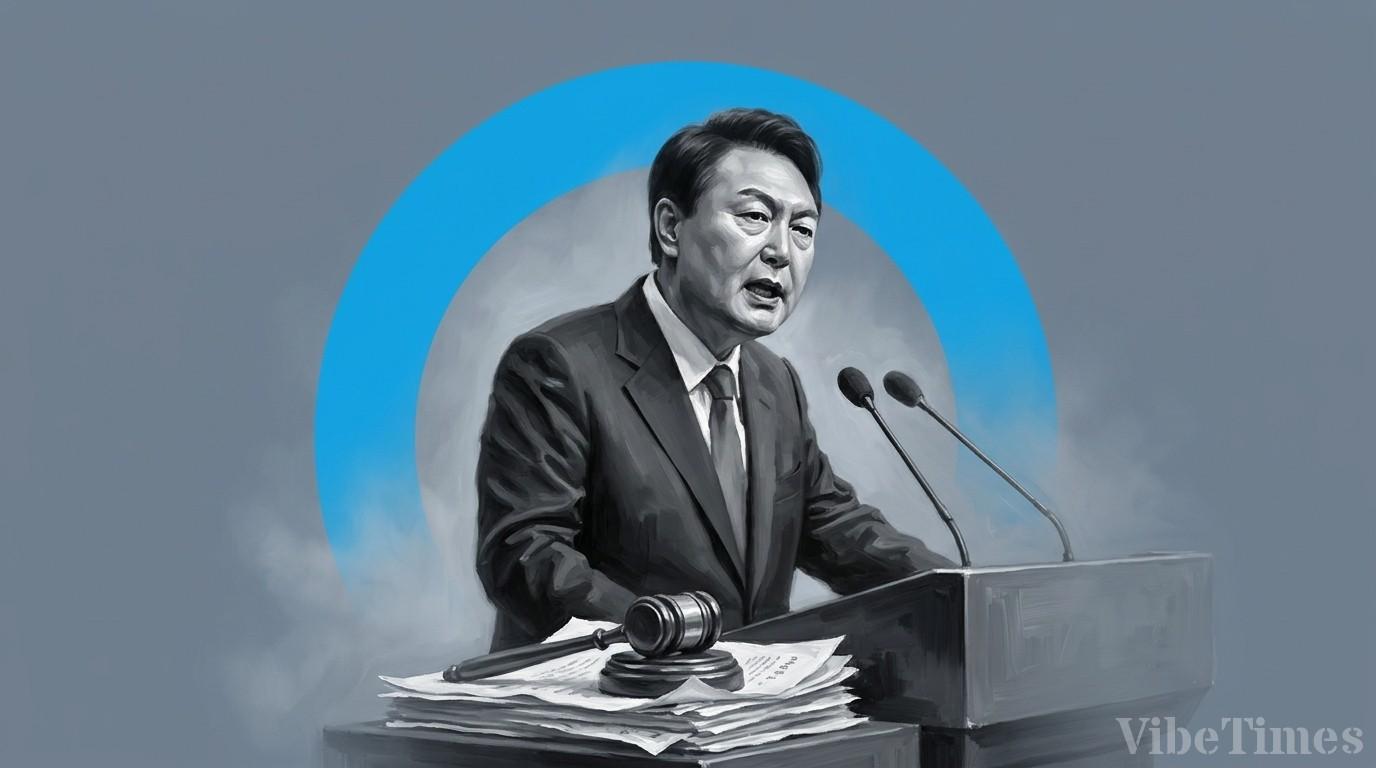
Special counsel: 'The insurrection ended at the time of impeachment passage'
Former President Yoon Suk Yeol has directly rebuted the second special counsel's determination regarding when his insurrectionary acts ended. The special counsel team led by Kwon Chang-young concluded that the insurrectionary acts stemming from the December 3 emergency martial law declaration ended not when martial law was lifted, but when the presidential impeachment motion was passed. According to a Yonhap News report, on the 13th Yoon said of this finding, "The martial law situation had already been lifted, so it's hard to understand how (the insurrection) continued afterward (until the impeachment vote)," and was seen chuckling.
The core of the former president's argument is that the finding that the insurrection persisted even after troops were withdrawn is difficult to accept. He contends that since martial law was lifted and forces returned to their bases, ending the physical state of affairs, viewing the insurrection as continuing until the impeachment motion's passage is legally excessive. The special counsel's determination directly affects the scope of insurrection charges and the calculation of overlapping offenses, and is expected to become a key point of contention at trial.
Why the dispute over the end date matters
Where the endpoint of the insurrectionary acts is set is not merely a matter of confirming dates. The later the end date, the longer the alleged criminal period, and the greater the likelihood that related acts will be treated as a single continuing crime. Conversely, if the insurrection is deemed to have ended when martial law was lifted, subsequent acts could be evaluated separately or excluded from the charges.
The special counsel's choice of the impeachment passage date as the endpoint appears to rest on the interpretation that the insurrection is not completed merely by the physical act of deploying troops, but persists until the intent to destroy constitutional order is actually eradicated. The Yoon camp is countering this finding of continuity by citing the objective fact of the military withdrawal. The two sides hold directly opposing views of the same facts.
Courtroom battle and political fallout
The dispute is highly likely to become a central issue the court must decide alongside whether the insurrection charge is established. If the court accepts the special counsel's interpretation, the scope of the charges will be recognized broadly; if it accepts Yoon's argument, parts of the indictment could be narrowed.
Meanwhile, political skirmishes over the special counsel investigation are intensifying. On the 14th, the People Power Party held a rally denouncing the "fabricated-indictment special counsel act" at Busan Station plaza, urging President Lee Jae-myung to exercise his right to request reconsideration of the bill. The Democratic Party criticized the rally as "a street protest that abandons the budget session and mocks the president." The parties are also clashing over the possibility of withdrawing the indictment under the special counsel act, with one side claiming "there is no authority to withdraw the indictment" and the other retorting, "Who do you take for a fool?" — a sign of escalating conflict.
The dispute over when the insurrection ended is expected to serve as a core line of defense in upcoming court hearings. With the Yoon camp emphasizing that the situation ended after martial law was lifted, the special counsel now bears the burden of presenting additional evidence to prove the continuity of the constitutional subversion. The two sides' legal battles are expected to continue until the court issues its ruling.
