Former Minister Cho Kuk Denied Entry into Japan

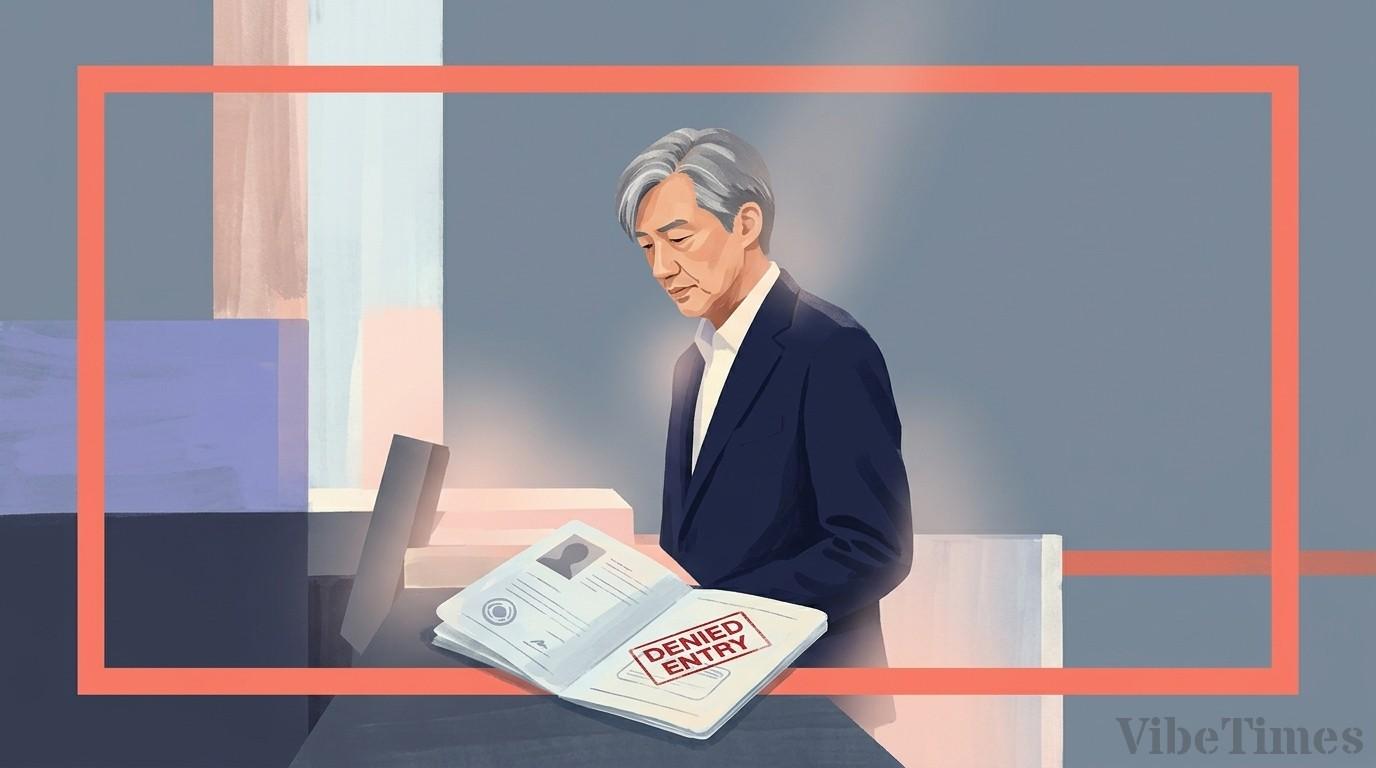
Cho Kuk, head of the Innovation Policy Research Institute of the Rebuilding Korea Party and former justice minister, was denied entry into Japan on the 17th after failing to pass immigration screening at Tokyo's Haneda Airport. Japanese authorities refused to grant him entry at the immigration stage. At a briefing on the afternoon of the 17th, Im Myeong-hee, spokesperson for the Rebuilding Korea Party, said Cho arrived at Haneda Airport at around 11:05 a.m. that day to attend a joint seminar with Meiji Gakuin University, but the Immigration Services Agency of Japan denied his entry at 1:19 p.m.
Japanese authorities suspended the entry screening and took Cho to a separate office, where they conducted two interviews—lasting 50 minutes and 22 minutes—unrelated to the purpose of his visit. They then issued a written notice denying his entry and asked him to sign a waiver of his right to file an objection. Cho refused, saying, "I will return to Korea, but whether to file an objection is my right, so I cannot waive it." Spokesperson Im said Japanese authorities cited grounds for denial of landing under Japanese law. A consul general from the South Korean Embassy in Japan arrived at the scene to protest, but the objection was not accepted.
Cho had been scheduled to deliver a keynote speech on the 18th at Meiji Gakuin University in Tokyo under the theme "Solutions for an Era of Inequality: A Advanced Nation of Social Rights." Spokesperson Im said all of Cho's itinerary in Japan fell through, including a luncheon meeting with Korean correspondents stationed in Tokyo, a seminar co-hosted by Meiji Gakuin University's sociology department research institute and the Innovation Policy Research Institute, a meeting with Japanese academics including Takegawa Shogo, professor emeritus at the University of Tokyo, and a meeting with Lee Sung-si, director of the Korean History Research Institute in Japan.
Spokesperson Im said, "This is a case where entry was denied to a public figure attending an academic event at the official invitation of a Japanese university." He raised the question of "whether this is being applied equally to all entrants."
Japan's Immigration Control Act原则上 bars foreign nationals who have been sentenced to imprisonment or detention of one year or more, either within or outside Japan. Cho had a two-year prison sentence finalized over his children's college admissions scandal. Earlier this year, singer Kim Chang-yeol, a public ambassador for the Dokdo Love Headquarters, and Park Seok-un, co-leader of the Korea Progressive Alliance, were each denied entry into Japan ahead of Shimane Prefecture's "Takeshima Day" and the March 1st Independence Movement Day, respectively.
In 2019, when Japan–South Korea tensions escalated while Cho was serving as senior presidential secretary for civil affairs, he criticized the Japanese government on his Facebook page with a reference to the "spear tip" (an allusion to the 1960 assassination of a Japanese politician).