As Kim Jong Un Raises the Bar for Talks, Lee Jae Myung's Government Seeks a Solution to North Korea's Nuclear Problem

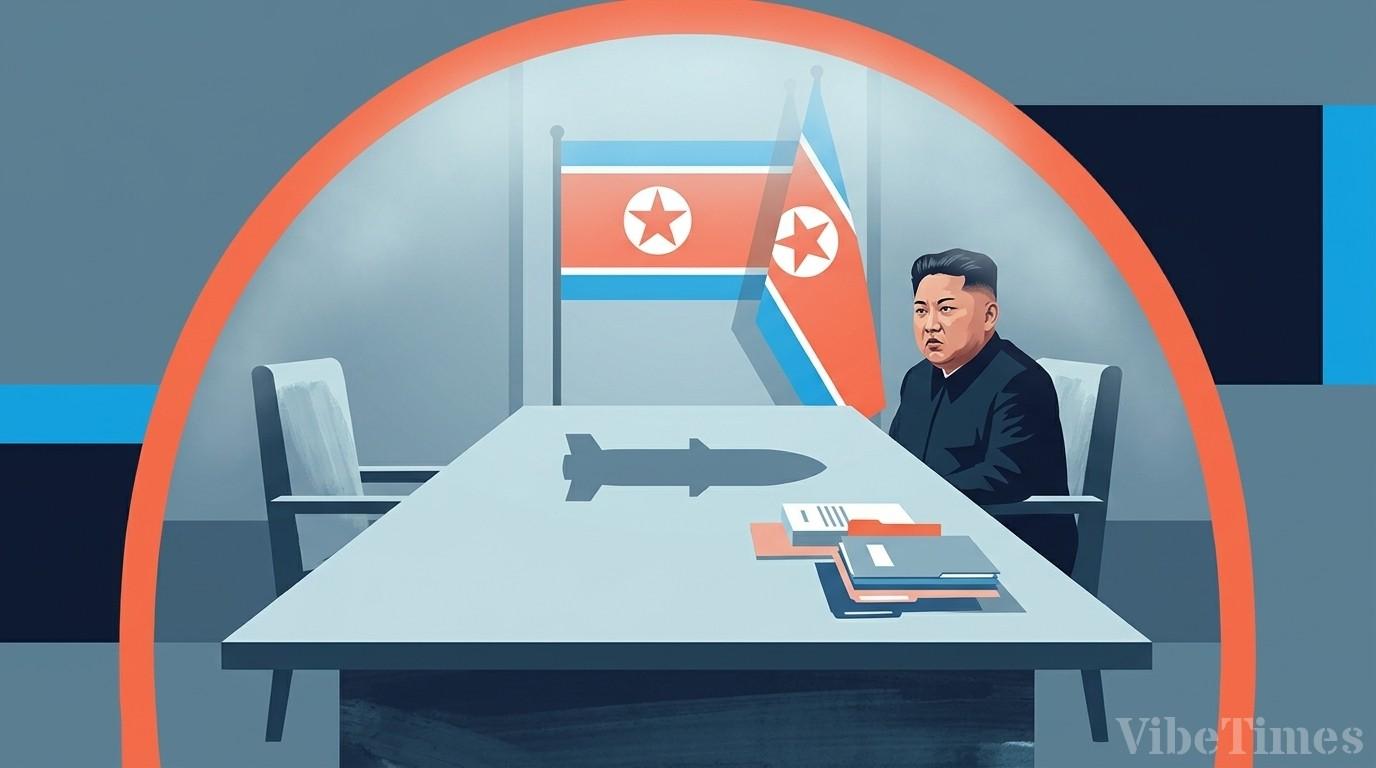
U.S. President Donald Trump pushed for a summit with North Korean leader Kim Jong Un right up until his recent trip to Asia, but the meeting fell through after Pyongyang failed to respond. Analysts say the failed U.S.-North Korea summit could affect South Korea's nuclear strategy, which has centered on restarting dialogue.
According to a report by The Wall Street Journal (WSJ) on the 21st, President Trump continued efforts to resume talks, including sending a personal letter to Kim. Before traveling to China to attend the Asia-Pacific Economic Cooperation (APEC) summit in Shenzhen on the 18th and 19th, Trump pressured his aides to finalize a U.S.-North Korea summit, but the effort fell through. The WSJ reported that U.S. officials had considered offering North Korea a declaration ending the Korean War, the establishment of a liaison office, and a statement that would not demand the dismantlement of its nuclear program.
A Foreign Ministry official called the report "one with an unclear source." Diplomatic sources explained that the end-of-war declaration and liaison office proposal were ideas the South Korean government had suggested and the U.S. was reviewing.
Analysts say Kim's refusal to respond to President Trump's overtures, even a personal letter, reflects that North Korea's demands far exceed what the U.S. has offered. Kim has long demanded recognition of North Korea as a nuclear state and the withdrawal of hostile policies toward Pyongyang, including major sanctions. Jang Yong-seok, a research fellow at Seoul National University's Institute for Unification and Peace, interpreted: "Chairman Kim is signaling he won't come to the table for merely an end-of-war declaration or tacit acceptance of his nuclear status. He seems to have judged that Trump has nothing more to offer right now."
China's stance is also believed to have played a role. Jang said, "China did not want Kim and Trump to meet in China around the APEC summit, and Kim, reading the situation, sent a message that he would side with Beijing." Kim Seong-bae, head of the Institute for National Security Strategy, said, "Chairman Kim appears to have wanted to join a U.S.-China-Russia summit as a nuclear power, but China did not wish to see Kim take center stage."
On the 22nd, after receiving credentials from new ambassadors from ten countries including Russia and Vietnam, Kim said in a speech that "the Democratic People's Republic of Korea seeks neither hegemony nor expansion."
Lee Byung-cheol, a professor at the Institute for Far Eastern Studies at Kyungnam University, emphasized: "South Korea must be prepared to protect its security and diplomatic interests, both if a U.S.-North Korea summit never materializes and if President Trump abruptly moves toward nuclear arms control negotiations without denuclearization. Rather than simply waiting for U.S.-North Korea dialogue, it is urgent to face reality and develop strategy and a roadmap."