Sovereign AI Isn't Like Nuclear Weapons

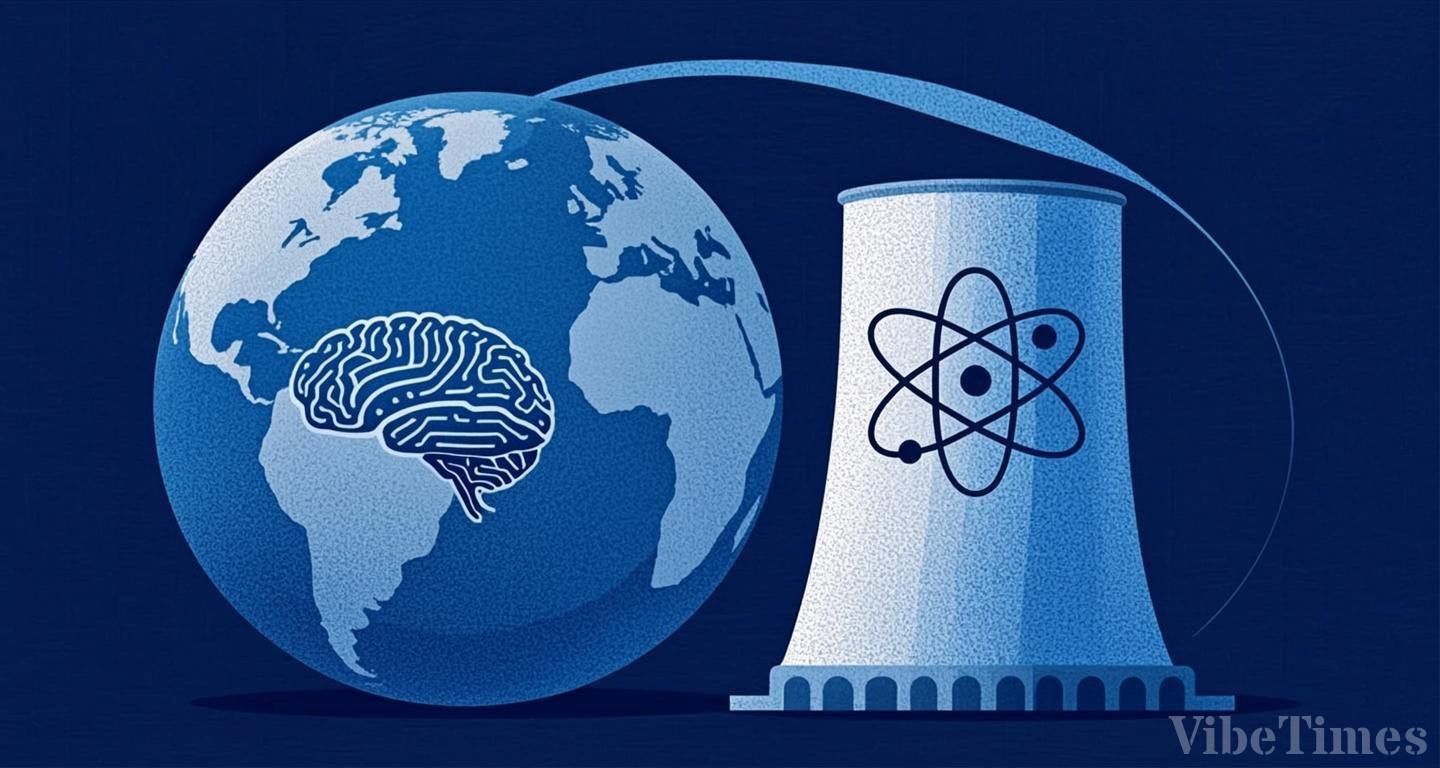
The pitfall of the nuclear analogy. Comparisons of AI to nuclear weapons have spread through the global debate on AI regulation and into the rationale for Korea's 'sovereign AI' (AI independently secured under national leadership), yet an analysis suggests AI and nuclear weapons have more differences than similarities.
In early this month, Dario Amodei, CEO of Anthropic, posted a lengthy essay arguing for the need to slow the pace of developing the most advanced AI models (frontier models). Having previously likened top-performing AI to 'weapons-grade nuclear material,' he invoked the Strategic Arms Limitation Talks (SALT), under which the US and Soviet Union capped nuclear arsenals during the Cold War. The analogy does not stop with him. Elon Musk has warned that AI could be more dangerous than nuclear weapons, and Sam Altman has floated regulation modeled on the International Atomic Energy Agency (IAEA). In June, when the US government banned the export of two of Anthropic's top models, CIA Director John Ratcliffe compared such models to 'digital nuclear weapons.'
In Korea, too, this analogy has become an argument for sovereign AI. Just as the Nuclear Non-Proliferation Treaty (NPT) blocked latecomers from developing nuclear arms, the argument goes, Korea must secure its own models before the US and China restrict AI development by latecomers. Some see the essence of AI sovereignty as securing 'our own top frontier model.' The government has budgeted 5.5937 trillion won for next year to acquire top-tier AI models and related technologies.
By domestic standards that is a large sum, but it pales next to the tens to hundreds of trillions of won that US Big Tech is investing in AI. Moreover, the frontier model race is not a one-and-done game. With each new generation, vast computing resources, data, electricity, and talent must be reinvested.
There is an alternative. By leveraging open models, Korea can fine-tune them with Korean language and data, adapt them by industry, and build smaller, more efficient models. Of course, open models lag behind top closed models in performance.
Some argue that the judgment itself—refusing to rely entirely on the US and China for AI—is correct. But whether the answer must be a 'Korean GPT' or 'Korean Claude' is another question. Investing in the technology, infrastructure, data, and talent to analyze and adapt a variety of open models can itself constitute sovereign AI. There is also discussion of directing the GPUs Korea has secured toward the goal of a 'national computing foundation for tuning and operating the best open models.'
Korea already holds a key strategic asset in the AI arms race: Korean companies possess strong competitiveness in high-bandwidth memory (HBM), the most serious bottleneck in frontier AI development. Even France's Mistral, a symbol of Europe's push for frontier model independence, is broadening its business scope rather than fixating solely on the race for the strongest model.
The core of this diagnosis is that the sovereign AI debate need not hang on a single proposition: 'we must have our own nuclear bomb.'
