Passage of Jangbogo-N Special Act Opens the Path to Nuclear Submarines

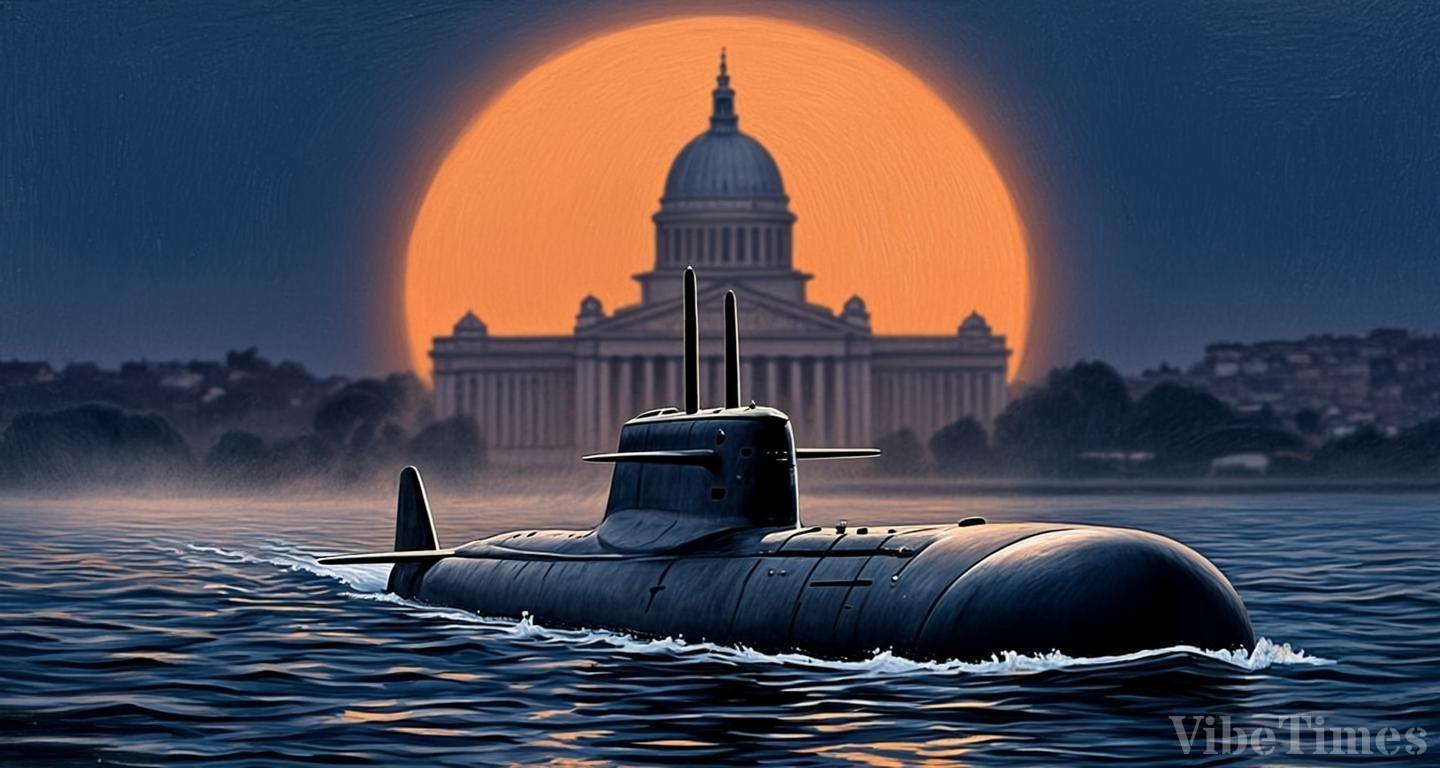
The legal groundwork has been laid for South Korea's introduction of nuclear-powered submarines.
The government passed a bill to enact the Special Act on the 'Jangbogo-N Project' at a Cabinet meeting on the 29th. The bill is a special law designed to enable the swift and systematic introduction of a Korean-style nuclear-powered submarine, easing standard project procedures and regulations as special exemptions on national security grounds. President Lee Jae-myung chaired the meeting, and the bill will now move to the National Assembly for the legislative process.
Why a Special Act?
Unlike diesel-powered submarines, nuclear-powered submarines run on nuclear fuel, allowing them to operate underwater for extended periods. This dramatically enhances the stealth and sustained operational capabilities that are the core strengths of submarines. With North Korea's submarine-launched ballistic missile (SLBM) threat and intensifying naval arms competition among neighboring countries, acquiring nuclear-powered submarines has long been a cherished goal.
The problem lay in the procedures. Defense projects typically take years to complete requirements determination and force development reviews. Layered on top of this, general statutes such as nuclear safety regulations and environmental assessments inevitably cause repeated project delays. The government's choice of a special act is seen as an intention to eliminate these procedural bottlenecks in advance.
Key Provisions of the Bill
The essence of the bill is granting special exemptions for the Jangbogo-N Project. By stipulating the legal basis for the project in statute, it secures stability in budget planning and technology development, while applying a fast-track principle to related licensing and permit procedures. Since nuclear-powered submarines must carry a reactor, mechanisms to link with the existing regulatory framework, including the Nuclear Safety and Security Commission, are also needed. The bill is reported to include provisions establishing a governance structure for such inter-agency coordination.
The scope of application is extended to the Defense Acquisition Program Administration, shipbuilding and nuclear-related companies, and research and development institutions. In particular, it opens up major business opportunities for domestic defense shipbuilders with experience building submarines. For the industry, which possesses the capability to build vessels of 3,000 tons or more, the domestication of nuclear propulsion systems could serve as a springboard for expanding its technological capabilities.
Debate in the National Assembly
The remaining hurdle is the National Assembly. Given that this is a security project, the chances of overt escalation of opposition between the ruling and opposition parties are limited, but points of contention remain. The first is cost. The defense industry's mid-term estimates suggest that developing nuclear-powered submarines could require budgets in the tens of trillions of won, making debate over prioritization against other force enhancement projects inevitable.
The second is the side effects of easing nuclear regulations. Some point out that easing safety regulations as special exemptions could raise questions about compatibility with the International Atomic Energy Agency (IAEA) framework and transparency in nuclear material management. On the other hand, military authorities and the government maintain that the submarine reactor is designed in a way that can control nuclear proliferation controversies. Some civic groups also argue that the law should explicitly mandate transparent information disclosure throughout the project and post-hoc oversight mechanisms by the National Assembly.
Legislative Timeline and Outlook
With its passage at the Cabinet meeting, the bill has completed the government's legislative process and will now undergo review by the National Assembly's Legislation and Judiciary Committee and National Defense Committee. The government and Defense Ministry are expected to aim for passage within the current session, and if the ruling party cooperates in handling the bill, legislation could be completed within the year. However, if negotiations over the nuclear-related special exemption provisions are prolonged, the process could slip into the first half of next year.
Even once legislation is complete, it will take considerable time for the project to get fully underway. Design, reactor development, and sea trials typically take around 10 years. The significance of the legislation, therefore, lies not in short-term force acquisition but in serving as the starting point of a long-term maritime security strategy. How much the procedural exemptions actually shorten the project timeline, and how safety and transparency are guaranteed in the process, are expected to become the core of future discussions.
