Parents' Jeonse Contracts with Children Face Gift Tax Scrutiny Over Non-Residence

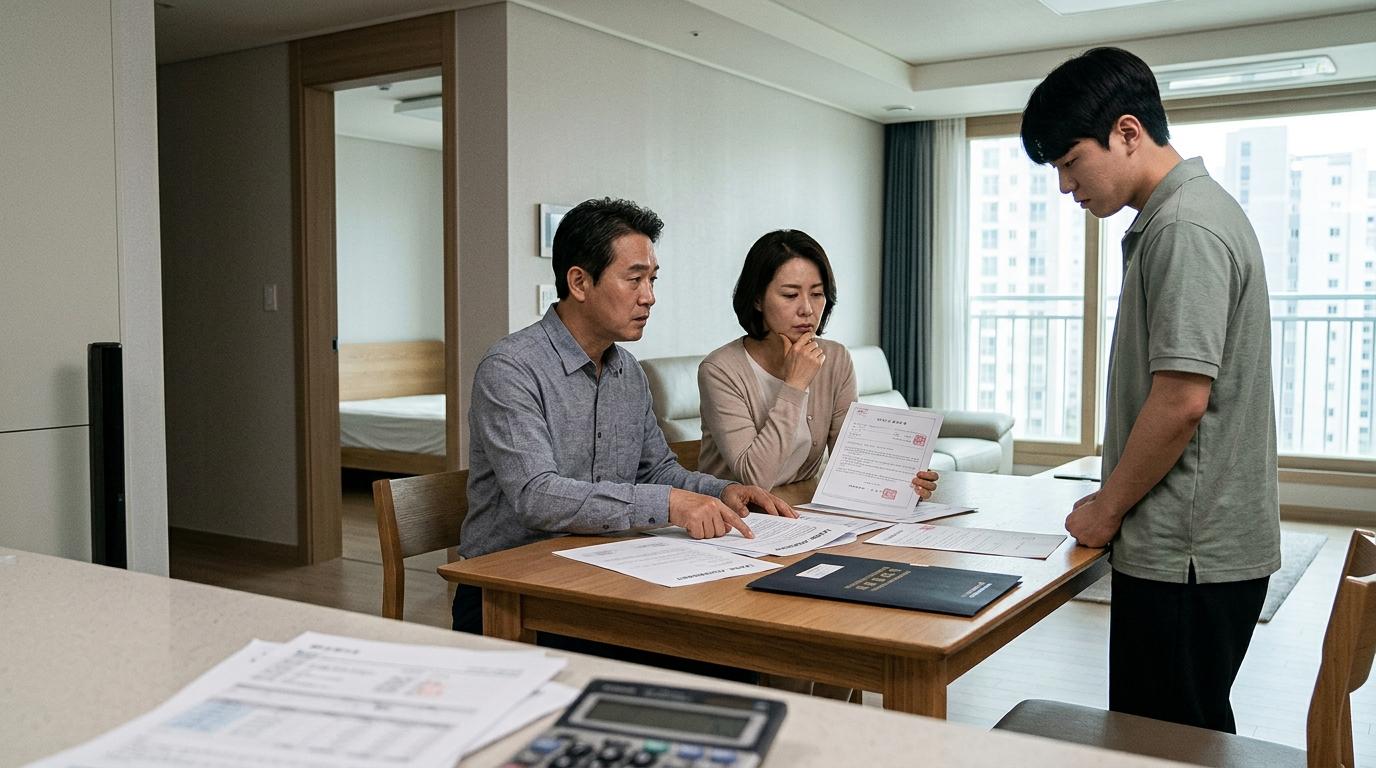
Parents-Children Jeonse Contracts: Potential Gift Tax 'Bomb' if Child Does Not Reside
When children enter into jeonse contracts for properties owned by their parents at a significantly lower deposit than market rates without actually residing there, it can be deemed a gift by tax authorities, potentially leading to substantial gift tax assessments. This is because tax law prioritizes the substance of economic benefit over the formal contract terms. The benefit a child gains by using a property under terms far below market value is presumed to be a gift.
Parents-children jeonse contracts can become a hidden pitfall for gift tax. Parents and children are considered 'related parties' under tax law, meaning all their property transactions are scrutinized more strictly than ordinary dealings. Housing jeonse contracts also fall under this category of related-party transactions and are highly likely to be interpreted not as simple lease agreements but as a means of transferring economic benefits to the child for free or at a low cost. In particular, situations where a child does not actually reside in the property but enters into a jeonse contract with their parents at a deposit significantly below market value become a primary factor for gift tax assessment.
Under the principles of substance over form and 'deemed gift' regulations, tax law emphasizes the actual economic meaning of a transaction rather than its superficial appearance. When these principles are applied to jeonse contracts between parents and children, if the deposit amount stated in the contract shows a significant difference from the actual market price, that difference can be considered an economic benefit gratuitously received by the child from the parents, i.e., a gift. Even if it is not explicitly stated as a gift contract, if property value is judged to have been substantially transferred, tax authorities will include it in the taxable base through 'deemed gift' provisions.
The child's 'actual residence' is a key criterion in determining gift tax. It is one of the most crucial factors that differentiates whether gift tax will be imposed on a child's jeonse contract for a parent's property. If the child registers their residency at the property, actually lives there, and maintains independent economic activities, it is highly likely to be recognized as a standard lease agreement. However, if the child does not actually reside there, has a clear residence elsewhere, but only enters into a jeonse contract for the parents' property, it is very likely to be interpreted not for residential purposes but as a means of transferring parental assets or facilitating the child's finances.
Key Contract Types Raising Gift Tax Concerns and Tax Investigation Procedures
To avoid unexpected gift tax burdens in parent-child jeonse contracts, it is crucial to be aware of the specific types of contracts that tax authorities may flag and prepare accordingly. In particular, the child's 'non-residence' status and 'below-market-rate contract' conditions can be direct causes for gift tax assessment.
Jeonse contracts where the child does not reside are considered the most typical case suspected of being a gift. For example, a child who works elsewhere and lives in an officetel under their name enters into a jeonse contract for their parents' property with a low deposit, while the parents continue to live there or the property remains vacant. Such contracts can be seen as the child not receiving the actual benefit of housing but rather obtaining the same economic effect as receiving a large sum of funds at a low interest rate, which is interpreted as a clear gift.
Contracts with deposits or monthly rents significantly below market value are also prime targets for gift tax assessment. According to the Inheritance and Gift Tax Act, if the difference between the property's market value and the deposit actually paid by the child is less than 300 million KRW, gift tax is not imposed. However, issues arise when this threshold is exceeded or the difference is substantial. For instance, if parents enter into a jeonse contract with their child for a property that would typically command a 500 million KRW deposit in the market, but only require a 200 million KRW deposit, gift tax is likely to be imposed on the 300 million KRW difference. This applies not only to the deposit amount but also to cases where the child pays significantly less than market rate for the use of the property (interest equivalent).
Examining the detailed procedures of tax authorities' investigations and assessments, tax agencies operate a systematic investigation system for property transactions between related parties and impose gift tax on suspicious transactions. It is important to understand these procedures in advance and prepare thoroughly.
During the fund source investigation and explanation request phase, upon the conclusion of a parent-child jeonse contract, tax authorities may initiate an investigation into the source of the deposit funds used by the child. If a substantial jeonse deposit is secured relative to the child's income level or asset size, and the source of these funds cannot be clearly explained, it may be presumed to be a gift from the parents and taxed accordingly. Therefore, it is crucial to ensure that the jeonse deposit is transferred directly from the child's account to the parents, leaving a clear transaction record, and that the deposit amount stated in the contract matches the actual transferred amount. Furthermore, if funds are received from parents, clear interest agreements and payment records must exist to classify it as a 'loan,' and the interest rate must be at a reasonable level.
Through the gift tax imposition and objection procedures, tax authorities conduct fund source investigations, review resident registration records, and perform on-site residency checks to identify the child's non-residence and below-market-rate contract status. If a reasonable explanation is not provided, a gift tax filing notice or assessment decision will be issued. Gift tax must generally be reported and paid within 3 months from the end of the month in which the gift was received. If there are objections to the tax authority's assessment, one can request a pre-assessment review within 30 days of receiving the pre-assessment notice, or after the decision notice, challenge it through administrative appeal procedures such as an appeal for review or an appeal for trial.
Practical Guide for Safe Parent-Child Jeonse Contracts
To safely enter into a jeonse contract between parents and children while avoiding gift tax burdens, several essential requirements must be strictly adhered to. The key is to resolve any reasonable suspicions from tax authorities and prove it as a legitimate lease transaction.
To prepare for clear proof of residency, the most critical step is to gather documents that can prove the child's 'actual residence' in the parent-owned property beforehand. This can include the child's official change of address registration, utility bill payment records (electricity, water, gas, etc.) during the period of actual residence, internet/TV installation records, and testimony from neighbors. If the child resides elsewhere after the jeonse contract and leaves the parents' property vacant, it can be deemed a violation of the actual residency obligation and subject to gift tax, so caution is advised.
For setting contract terms that reflect market prices, the deposit amount in the jeonse contract must be determined at a reasonable level after thoroughly investigating surrounding market rates. Although there isn't a precise legal definition for 'significantly below market value,' one should be mindful that prices more than 30% lower than market value or exceeding a certain amount in difference can become taxable. The contract must clearly state the deposit amount, payment method, and contract period. Financial transaction records (bank transfers, etc.) proving that the deposit was funded by the child's own money must be kept. Additionally, specifying details regarding the deposit in special clauses of the contract can serve as supporting evidence for explanation in case of future disputes or tax assessments.