Parent-Child Lease Contracts: Residency Requirements and Gift Tax Implications

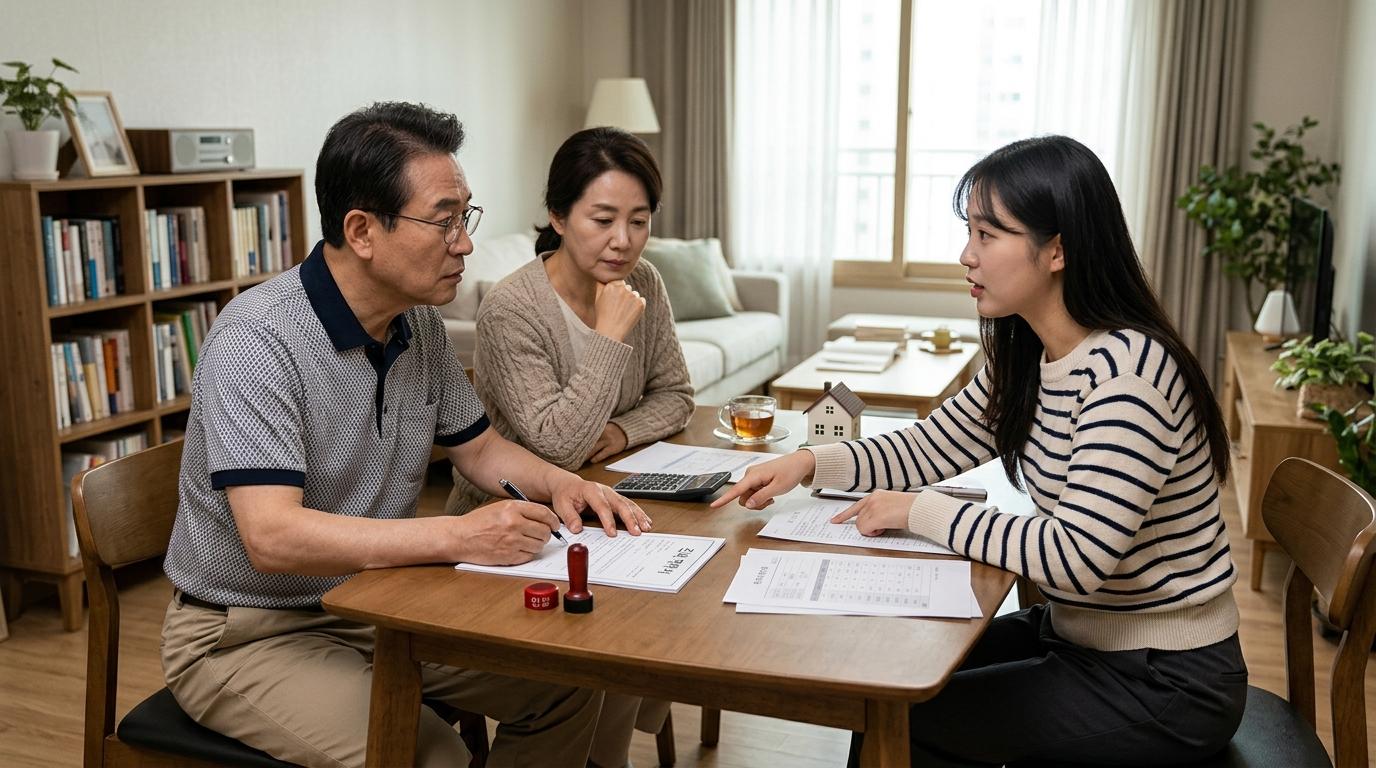
As cases where parents enter into lease agreements for their children to secure stable housing increase, thorough review is necessary as unexpected gift tax burdens can arise due to non-compliance with actual residency requirements or specific contract methods. Amidst recent housing market instability, the need for housing support for children has grown, bringing such contract types into greater focus. However, the 'actual residency' requirement under the Residential Lease Protection Act and the 'gift tax' issues raised by tax authorities interact complexly, and overlooking these can lead to significant financial burdens.
Current Status of Parent-Child Lease Agreements and the Importance of the Actual Residency Requirement
Examining the current status and key issues of parent-child lease agreements reveals an increase in cases where parents provide support for the security deposit of a lease for their children, who are struggling with high housing costs in an unstable market environment. This manifests not just as financial aid but as providing actual living space, sometimes referred to as a 'parental advantage.' However, such contracts attract keen scrutiny from tax authorities due to the special nature of family transactions. Specifically, the obligation of 'actual residency,' a core requirement of lease agreements, and the possibility of being deemed a 'gift' under income tax laws highlight the dual nature of these contracts.
The prolonged high housing andJeonse (lump-sum deposit) prices in recent years have made it increasingly difficult for younger generations to secure independent housing, increasing the need for parental support. High deposit burdens, particularly in the Seoul metropolitan area and major cities, act as a significant barrier to entry for young people. Consequently, parents are exploring various ways to help their children achieve housing stability, with providing their own property for rent to their children or covering the Jeonse deposit emerging as practical alternatives. These methods offer the potential for positive outcomes by alleviating financial pressure on children and providing a stable living environment.
As both the 'actual residency' obligation and 'gift tax' issues emerge simultaneously, parent-child lease agreements face two key challenges. The first is the 'actual residency' requirement related to the Residential Lease Protection Act. Landlords have an obligation to reside in the property to refuse lease renewal or assert their rights, and this applies equally to parent-child contracts. The second is the 'gift tax' issue from a tax perspective. Financial transactions between family members can be considered the transfer of economic benefits, making it highly probable for the transaction to be construed as a gift depending on the contract's form or the deposit's nature. Therefore, careful consideration is needed to meet both conditions or minimize legal/tax risks.
To address the legal issues and misconceptions surrounding the 'actual residency' condition, it's crucial to understand that 'actual residency' is a key determinant of landlord and tenant rights and obligations under various provisions of the Residential Lease Protection Act. In particular, 'when the landlord or their lineal ascendants/descendants intend to actually reside in the property' is a significant point of contention in parent-child lease agreements, as it is a reason for the landlord to refuse lease renewal. If a parent, as the landlord, enters into a lease agreement with their child but it is the child, not the parent, who resides in the property, questions may arise about whether the landlord's actual residency obligation has been properly fulfilled. Furthermore, the child may have an obligation to clearly explain the source of the Jeonse deposit received from the parent.
According to Article 6-3 (1) of the Residential Lease Protection Act, landlords cannot refuse a tenant's renewal request without just cause between six months and two months before the lease term ends. However, they can refuse if the landlord or their lineal ascendants or descendants intend to actually reside in the property. 'Actual residency' here means more than just registering a change of address; it implies actually living and residing in the property. Therefore, for a parent, as the landlord, to refuse lease renewal and claim actual residency, they must move into and live in the property themselves for legal validity.
Gift Tax Risks and Criteria for Identifying Legitimate Transactions
A problem arising when a child resides in a property under a lease contract registered under the parent's name is that if the parent, as the landlord, has leased the property to the child but the child, not the parent, resides there, the landlord's 'actual residency' requirement may not be met. In such situations, if the parent attempts to exercise their right to refuse lease renewal and lease the property to a third party, the reason for refusing the existing lease renewal with the child may not be legally recognized. Moreover, even if the child resides in the property long-term, it could be legally considered the child's independent residence rather than the parent's actual residency, leading to complex issues concerning the application of the Lease Three Acts.
Regarding the child's obligation to prove the source of the Jeonse deposit, if the child receives a substantial Jeonse deposit from their parents to secure independent housing, tax authorities may require them to explain the source of funds. This is to ascertain whether the funds, which the child should ideally procure independently, were received as a gratuitous gift from the parents or as a legitimate loan (loan for consumption). If the source of funds cannot be clearly proven during the explanation process, the support may be treated as a gift, and gift tax may be imposed. Therefore, it is crucial to clearly record and manage the source and flow of the Jeonse deposit from the time of the contract.
Distinguishing between legitimate transactions and 'deemed gifts' to avoid a gift tax bomb is a sensitive matter. Unlike ordinary commercial transactions, family transactions are strictly judged by tax law based on their substantive nature. If the contract's form or the deposit's nature is not recognized as a typical lease transaction, gift tax may be imposed under 'deemed gift' regulations. This can occur if the deposit is set significantly below market price, if the deposit is loaned interest-free, or if the transaction's substance is for a purpose other than a Jeonse lease. Therefore, to avoid a gift tax shock, the conditions for being recognized as a legitimate transaction must be met.
Analyzing typical cases deemed gifts, tax law pays close attention to the following: First, if parents lend Jeonse deposit funds to their children interest-free, it can be considered a gift of the deposit amount, as it's essentially a gratuitous provision of funds. Second, if the Jeonse deposit or monthly rent is set significantly below market rates, the difference from the market price can be treated as an economic benefit gratuitously provided by the parents to the child, leading to gift tax. Third, if a contract is documented as a Jeonse lease but its substance is determined to be for property title transfer or another purpose, not a landlord-tenant relationship, the contract itself risks being deemed a gift.
As of 2024, gift tax exemptions and deduction limits stipulate that gift tax is levied on gratuitous asset transfers. Currently, when parents gift assets to an adult child, up to 50 million KRW can be exempted from gift tax over a 10-year period. For minor children, the exemption is up to 20 million KRW over 10 years. Amounts exceeding these limits are subject to progressive tax rates (10% to 50%) based on the taxable income. Therefore, if parents support their child with a Jeonse deposit exceeding 50 million KRW, a gift tax return and payment obligation arise for the excess amount. It is crucial to be aware of these limits and plan financial support accordingly.
Practical Strategies for Safe Contract Execution
To meet the requirements for a legitimate transaction that is not suspected of being a 'gift,' it must be provable that a lease agreement was actually executed between the parents and child. The contract must clearly specify the deposit amount, rent (monthly rent), and contract period. Second, if the Jeonse deposit is borrowed from parents, a certain percentage of interest must be paid regularly and documented as a financial transaction. The National Tax Service requires the application of the statutory interest rate (currently around 4.0% to 4.3%) or a reasonable market interest rate. Third, the Jeonse deposit and monthly rent (if applicable) should be set at a reasonable level, not significantly differing from surrounding market prices. Lastly, if there is monthly rent, the child must actually pay the rent to the parent and keep records of these payments.
Examining prudent contract execution and management strategies for practical application, parent-child lease agreements can minimize legal and tax risks through careful approaches and strict adherence to procedures. It is important to establish reasonable contract execution and management strategies by reviewing specific problems and successful tax-saving methods through actual case studies. The distinction between a loan for consumption and a gift must be clear, and transparency should be ensured by utilizing notarization or tax filing procedures when necessary.
Care must be taken to distinguish between 'loan for consumption' and 'gift' and to avoid tax pitfalls. When parents provide funds to their children for Jeonse deposits, the key to tax savings is having these recognized as 'loans for consumption' rather than simply 'gifts.' To be recognized as a loan for consumption, a loan agreement, an obligation to pay interest, and actual proof of interest payments must be clear. If no interest is paid or if it is unclear, tax authorities are highly likely to consider it a gift. For example, if parents agree to lend their child 500 million KRW at an annual interest rate of 4%, but no interest is actually paid for a year, the implied interest of 20 million KRW (500 million KRW x 4%) could be deemed gifted and subject to gift tax. Therefore, the interest rate, payment method, and deadline must be specifically stated in the contract, and actual interest must be paid and its records maintained.
Finally, to summarize prudent contract execution and management strategies for reducing risks in parent-child lease agreements, it is advisable to follow these specific measures: First, drafting a loan for consumption agreement and having it notarized is highly beneficial to clarify the loan fact and interest payment obligation. Second, pay the agreed-upon interest regularly each month or year via actual bank transfers to the parents and retain the transaction records as proof. Third, if there is monthly rent, the child should pay the rent directly to the parent and provide financial transaction proof. Fourth, if an amount exceeding the gift tax exemption limit must be supported, proactively reporting and paying the gift tax to the National Tax Service is a wise method to reduce future penalties. In addition, diligently managing records such as resident registration, resident permits, and utility bill payment history is important to prove the child's actual residency.