Iran's Revolutionary Guard Displays Missiles, Signals Hardline Stance

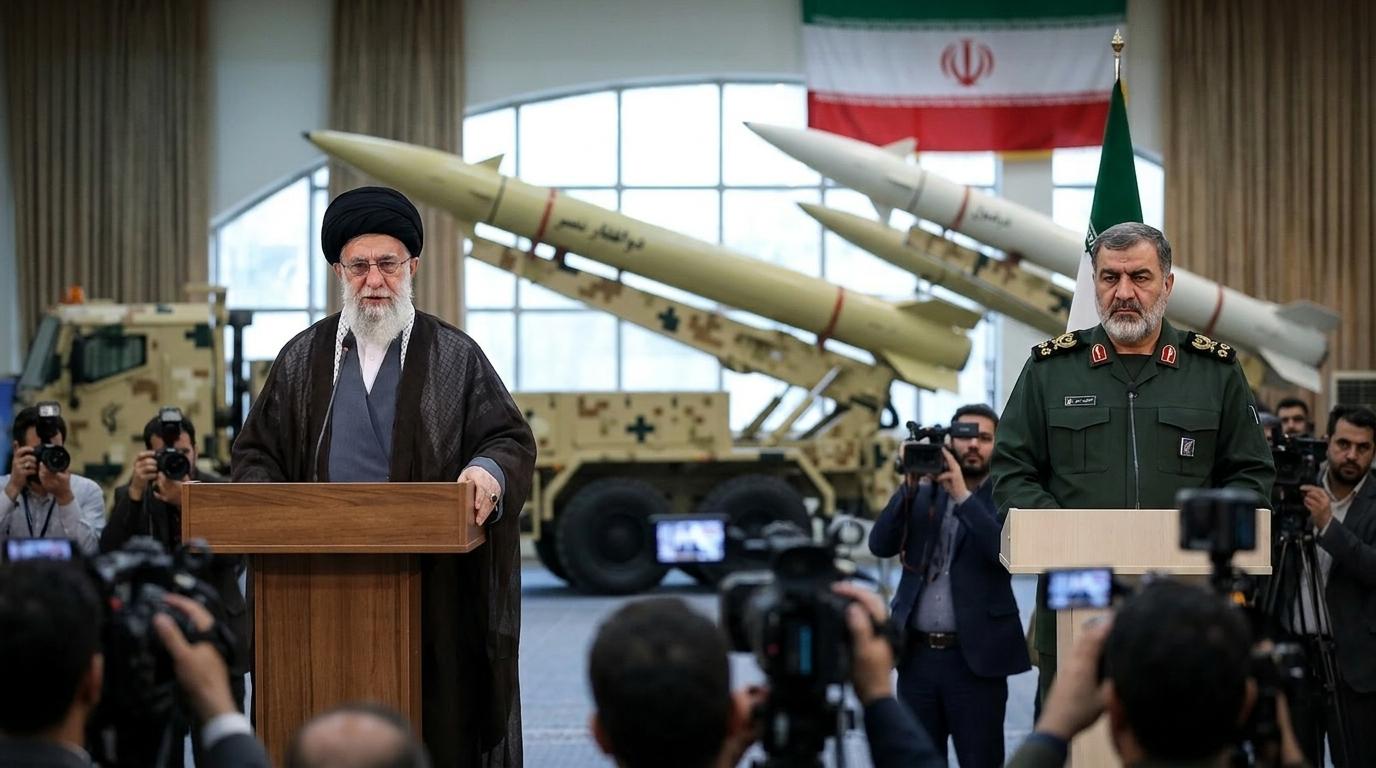
On April 21st, the Iranian Revolutionary Guard (IRGC) displayed ballistic missiles in Tehran's Enghelab Square, signaling a hardline stance. This comes as IRGC-led hardliners have risen to prominence as the new ruling power following a recent operation by a US-Israeli coalition. While the former leadership under Ali Khamenei, as ideologues, were cautious about taking risks and hesitant to acquire nuclear weapons, the constraints of his 'fatwa' (religious decree) have vanished with his passing.
Iran currently possesses approximately 440 kilograms of 60% enriched uranium, and there are concerns that the country might follow North Korea's nuclear development model, lowering the threshold for nuclear weapons development. The US Secretary of Defense has characterized Iran's approach to nuclear development as a 'North Korean-style model.' The IRGC, motivated by regime survival logic, views North Korea's achievement of nuclear armament as a role model.
Consequently, the possibility of cooperation with North Korea is being eyed as a realistic means to shorten the vulnerable stages of nuclear development. Nuclear cooperation between Iran and North Korea could extend beyond their accumulated missile technology cooperation, paving a path towards accelerated nuclear armament through technology transfer. North Korea could offer Iran expertise in miniaturizing nuclear warheads, missile integration designs, and enhancing the survivability of underground nuclear facilities, providing a pathway to nuclear armament in a short period.
The partnership between the two nations dates back to the Iran-Iraq War in the 1980s, when North Korea became a reliable supplier for Iran, which was isolated from Western defense markets. Starting with initial sales of conventional weapons, it evolved into joint development and production of ballistic missile technology, advancing technologically from the Scud-C to the Nodong missile, and subsequently to the Shahab-3, Emad, and Qadr. The US Treasury confirmed in 2016 that Iranian officials had made highly secret visits to North Korea and were involved in the development of the core propulsion system for the Hwasong-15 ICBM.
Experts warn that Iran has likely secured most of the technical hardware required for ICBM development. The tightening relationship between North Korea and Iran amid heightened sanctions continues a strategic partnership built over 40 years, with many ballistic missiles launched by Iran confirmed to be based on North Korean designs and components. In a situation where military capabilities and nuclear infrastructure have been damaged by conflict, swift technological support from North Korea has become the most realistic and attractive path for the leadership to restore its forces. The terror of precision strikes experienced by Iran reinforces the political justification for possessing nuclear weapons, potentially giving North Korea leverage to negotiate favorable terms for nuclear technology transfer. This could be the final element needed for Iran to possess a complete nuclear delivery capability.