Chief Policy Advisor Kim Yong-beom Diagnoses High Inflation, Weak Won as 'Friction Noise of Takeoff'

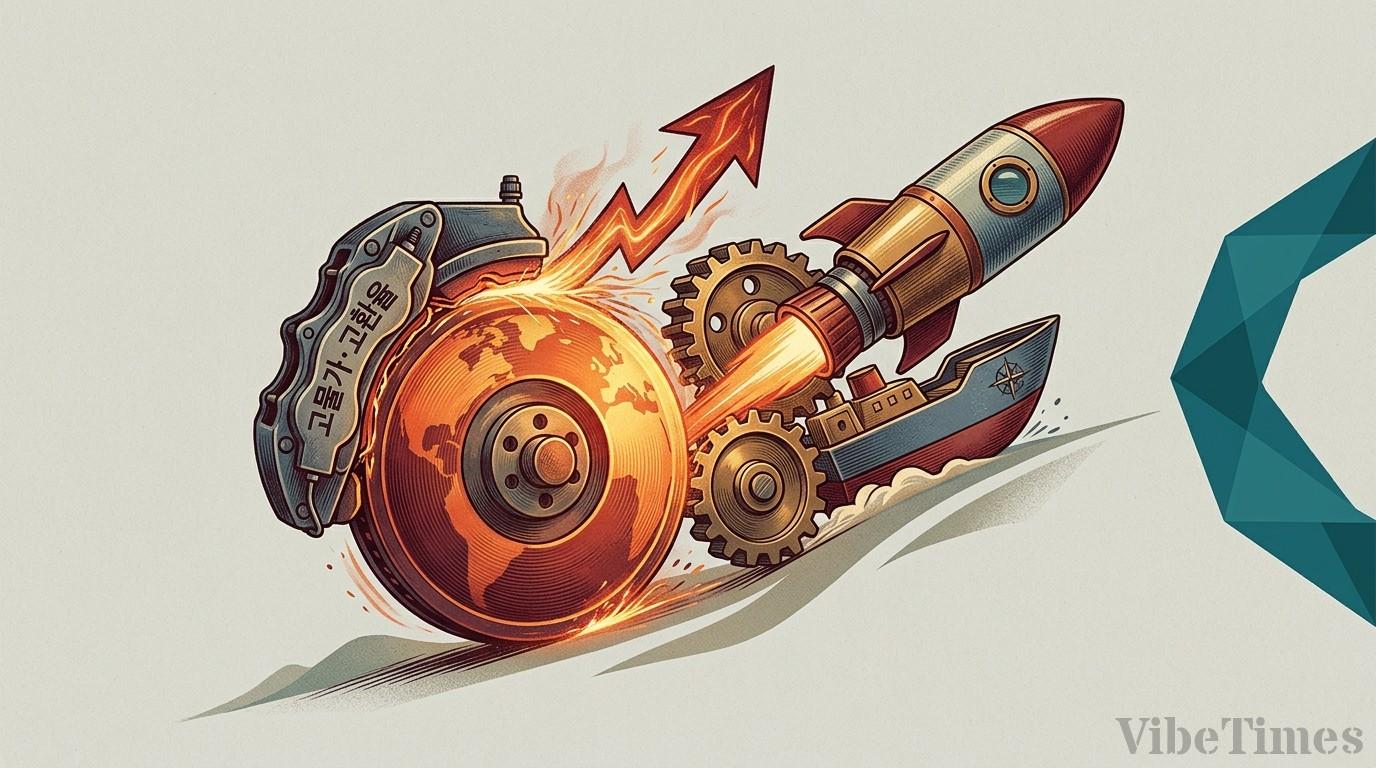
The KOSPI index recently recovered to the 8,000-point level, fueling expectations of reaching 10,000 points. However, concerns are rising that price instability due to the depreciation of the Korean won could act as a brake on these expectations, burdening the entire economy.
Amid deepening exchange rate instability with the won falling past 1,520 per dollar on the 22nd, Kim Yong-beom, Senior Presidential Secretary for Economic Affairs, diagnosed the phenomena of high interest rates, high inflation, and high exchange rates as an inevitable 'cost of success' and 'friction noise of takeoff' as the South Korean economy advances to the next stage.
The United States is undertaking astronomical AI investments by its big tech firms, and the Trump administration also seeks to boost the economy through tax cuts and fiscal expansion. China, the world's second-largest economy, is implementing expansionary fiscal policies to escape deflation. Japan, burdened by immense national debt, is also pursuing further fiscal expansion for economic stimulus. Europe is increasing its fiscal spending on defense, energy transition, infrastructure improvements such as power grids, and enhancing industrial competitiveness. Investments and fiscal expansions occurring within these countries' long-term plans are likely to continue for a considerable period.
As the US government and top global corporations simultaneously increase their demand for dollars, interest rates are rising. The market forms based on complex interactions of supply and demand, and the current rise in interest rates is a testament to high demand for money. Why is money needed? Money is needed for future investments. The realignment of global supply chains due to US-China competition has lowered economic efficiency, leading to high inflation and consequently raising interest rate levels. The interest burden on governments of major developed nations, which have relied on debt to sustain their economies since the global financial crisis, is also increasing.
Amid these global trends, analyses suggest the South Korean economy is well-positioned to benefit. Korean companies hold an absolute competitive edge in sectors like semiconductors, which account for the largest portion of AI investment, as well as in energy infrastructure and defense industries. The goods currently needed by countries worldwide align with the items that Korea excels at producing and exporting.
Professor Kim Woo-chul, Chairman of the Korean Fiscal Association, stated that the government plans to run deficits in the range of 100 trillion won annually until 2029. Professor Kim noted that the national debt-to-GDP ratio, already around 49%, is projected to exceed 60% by 2029, a threshold the IMF considers 'high scrutiny'. He estimated that Samsung Electronics and SK Hynix's operating profits this year would increase by 300 trillion won compared to last year, and applying an effective corporate tax rate of 15% would yield an additional 45 trillion won in tax revenue.
The KOSPI surged 75% last year and has risen another 90.96% this year, surpassing the 8,000-point mark. As of the 26th since the start of the year, foreign net selling of KOSPI shares reached a record 96.4 trillion won. This suggests that despite the high attractiveness of the Korean stock market, the risk of currency translation losses due to exchange rate instability is fueling capital outflows. As of the closing price on the 26th, the dollar/won exchange rate had risen 4.45% since the end of last year. Korea's 10-year government bond yield jumped over 20% from 3.385% at the end of last year to 4.064% on the 22nd. This rise in exchange rates leads to a depreciation of the won, exacerbating price burdens and fueling interest rate hikes, creating a vicious cycle.