Lee Jae-myung Ballot Controversy Sparks Abuse of Power Election Row

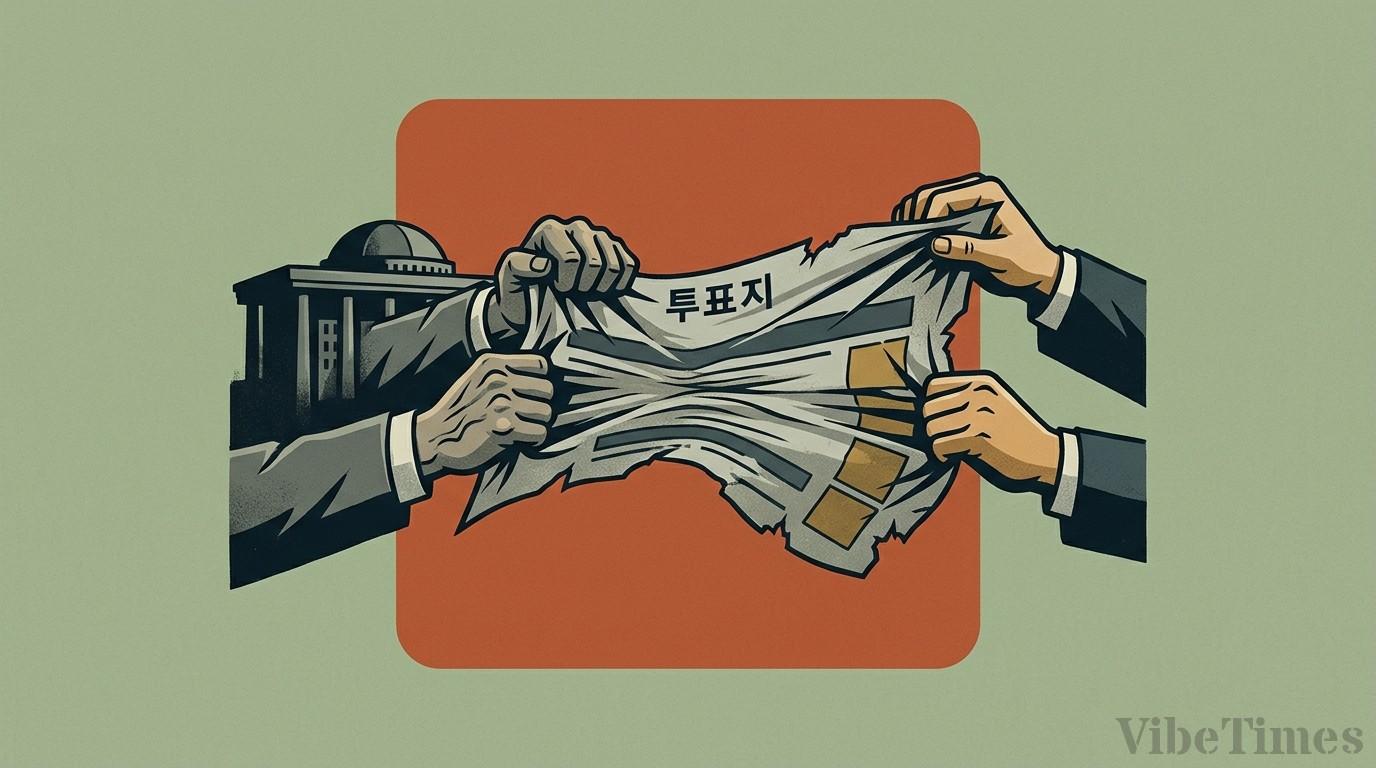
Lee Jae-myung Ballot Controversy, Abuse of Power Election Dispute Heats Up
On May 29th, the first day of early voting for the 22nd National Assembly by-elections, President Lee Jae-myung's actions regarding his ballot inside the voting booth have emerged as a hot political issue. The People Power Party has framed it as an alleged 'ballot exposure' and 'abuse of power election,' launching an offensive, while the Democratic Party has countered that it was a simple 'happening.' Given the high sensitivity surrounding election transparency and fairness, the issue is expected to create subtle repercussions throughout the entire election process. Notably, the controversy has garnered even more attention amidst a high early voting participation rate of 12.07%.
On this day, President Lee Jae-myung cast his ballot with his wife, Kim Hye-kyung, at a polling station set up at a community center in Samcheong-dong, Seoul. According to Yonhap News, President Lee was seen briefly emerging from the voting booth to inquire about the marking tool. As this scene was captured, the People Power Party immediately reacted. They claimed President Lee's actions constituted clear 'ballot exposure,' potentially violating the Public Official Election Act, and raised suspicions of an 'abuse of power election.' The People Power Party criticized such behavior by the incumbent president as capable of unfairly influencing the election.
Conversely, the Democratic Party dismissed the People Power Party's claims as 'absurd.' They maintained that the President's brief inquiry after leaving the booth was merely a 'happening' and that there was no illegality or impropriety in the voting process. The Democratic Party argued it was simply a minor confusion the President experienced during voting and that attempting to amplify it into an election issue was politically motivated. The stark difference in perspectives between the two parties foreshadows fierce exchanges from the first day of early voting until the final stages of the election.
Key Issues: The Meaning of 'Ballot Exposure' and 'Abuse of Power Election'
The core of this controversy lies in the two keywords: 'ballot exposure' and 'abuse of power election.' The current Public Official Election Act strictly prohibits actions that could undermine the fairness of an election. Revealing the contents of a ballot or the voting situation to others can be legally restricted, and such actions by the highest power, like the president, are perceived with greater sensitivity due to their significant ripple effect. The 'abuse of power election' allegations raised by the People Power Party assert that there was an attempt to influence the election using the president's status and authority.
Political circles analyze that this controversy is less likely to directly impact the outcome of the by-elections and more likely to indirectly affect voters' perceptions and their inclination to vote. Concerns are being raised that it could foster public distrust in the transparency of the election process rather than directly influencing the results of major elections that have already been decided. In particular, President Lee's reported remark, 'Is it okay if it's only half marked after coming out of the booth?', has led to divided interpretations: whether it was an inquiry about the voting method or if there was another intention. Such controversies could subtly affect voter turnout and potentially serve as a factor to mobilize or alienate specific voter bases.
This incident once again underscores the importance of 'secret ballot,' a fundamental principle of elections. Each voter has the right to express their will freely in an environment where secrecy is guaranteed and must vote without any external pressure or fear of exposure. Regardless of the president's intention, his actions could, as a result, raise questions about this fundamental principle, making it difficult to escape criticism. This is a moment when clear fact-finding by the National Election Commission or relevant agencies and efforts to resolve voter misunderstandings are urgently required.
Market and Industry Impact: Political Uncertainty and Investment Sentiment
President Lee Jae-myung's ballot controversy is unlikely to have an immediate direct impact on specific economic sectors. However, an escalation of political uncertainty cannot be ruled out as a factor that could negatively affect overall investment sentiment. Particularly, with the ongoing uncertainty surrounding the election results, such political issues can intensify risk aversion among market participants. This could lead to increased volatility in the stock market or a dampening of capital concentration in specific stock groups.
Furthermore, other political news reported alongside this controversy could have indirect effects. The news of Reform Party leader Lee Jun-seok meeting with Japan's new party 'Team Mirai' to discuss 'digital democracy' and 'AI politics' raises interest in the potential political application of AI technology. If AI were to actively intervene in the election process, it could become a new variable in the investment outlook for data-related industries and IT companies. However, as this stage has not yet led to concrete policies or market changes, such impacts will need to be observed from a long-term perspective.
Amidst various political movements, this 'ballot controversy' will capture public attention in the short term. However, from an economic and investment market perspective, the uncertainty of election results and the direction of future government policies will be more significant variables. Therefore, investors need a cautious approach, comprehensively considering macroeconomic indicators, interest rate policies, and major industry trends, rather than focusing on short-term political issues. The impact of political issues on capital markets is largely psychological, making fundamental analysis even more crucial at this time.
Future Outlook: Continued Election Fairness Debate and Heightened Voter Interest
The ballot controversy involving President Lee Jae-myung is expected to lead to continued back-and-forth between the ruling and opposition parties during the remaining election period. The People Power Party is likely to focus on probing this issue until the final days of the election, holding the Democratic Party politically accountable. Conversely, the Democratic Party will likely dismiss the controversy as an unfounded claim and strive to shift the focus to policy debates inherent to the election. Such exchanges could serve as an opportunity to further heighten voters' interest in the transparency and fairness of the election process.
As a result of this controversy, societal demand for procedural transparency during early and general voting processes is expected to grow. The National Election Commission should actively engage in clarifying the facts and providing transparent, detailed information to ensure voters can cast their ballots with confidence. Various issues related to election procedures may arise in the future, and prompt and fair responses to them will be critical in securing the credibility of the election results.
Ultimately, this incident demonstrates how closely every action of a politician is scrutinized and how much room for interpretation it leaves during an election. In particular, the actions of the highest power holder are inevitably evaluated by stricter standards. Regardless of the election outcome, it is necessary to observe from a long-term perspective how this controversy will influence the maturity of Korean politics and the development of election culture. Voters will critically assess candidates' policies and visions amidst these political controversies to cast their valuable votes.