Ballot Shortage Crisis Sparks 'Overall Predicament' Rebuke

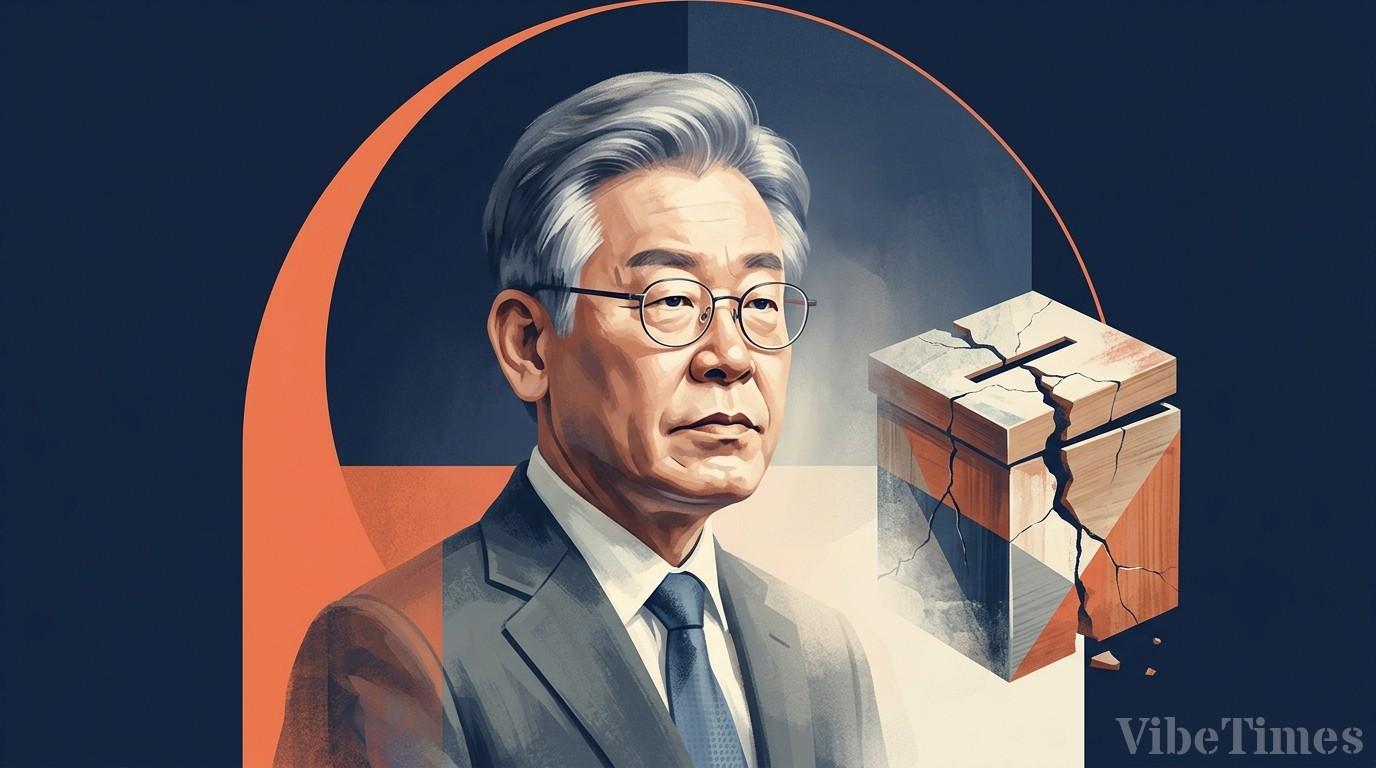
June 3 Local Election Ballot Shortage Crisis, President's 'Overall Predicament' Rebuke... Concerns Over Weakened State Momentum
The ballot shortage crisis that occurred during the nationwide local elections held on June 3 is shaking the political landscape. On the 8th, President Lee Jae-myung, during a meeting of the heads of the four branches of government convened to discuss key state affairs, expressed strong regret over the incident and rebuked the National Election Commission (NEC), calling it "an institution that has lost public trust." The incident is facing criticism not just as a simple administrative error, but as an act that has undermined the foundation of democracy, and is expected to impose significant burdens on future state governance.
On the 7th, President Lee ordered the formation of a joint investigation headquarters by the prosecution and police regarding the ballot shortage crisis in the local elections. He also requested the National Assembly to promptly pursue a parliamentary inquiry. The meeting of the four branch heads scheduled for the 8th was also intended to address responsibility for this serious situation and discuss measures to prevent recurrence. President Lee expressed concern that such mismanagement of elections, amidst a situation where 43% of respondents indicated they voted for him in the June 3 local elections, could amplify public disappointment and weaken the administration's governing momentum.
The NEC's unprecedented ballot shortage crisis immediately faced fierce criticism from the political sphere. The Democratic Party of Korea pointed to the NEC's functional failure and called for the dismissal of responsible parties and institutional improvements. President Lee, in particular, strongly chastised the NEC regarding the ballot shortage crisis, reiterating the severity of the situation by ordering the formation of the joint investigation headquarters and requesting a parliamentary probe. This direct rebuke from the President suggests that the incident is not merely an NEC issue but could directly impact the credibility of the entire government.
Unprecedented Ballot Shortage Crisis: Analysis of Causes and Repercussions
The fundamental causes of this ballot shortage crisis are attributed to errors in the pre-election prediction system and a lack of preparedness. It is suggested that voter turnout was underestimated, or there were serious flaws in the printing and distribution processes. The head of the Election Management Committee himself acknowledged the severity of the situation, calling it "an unprecedented event that has undermined the foundation of democracy," and offered his resignation. This incident, which directly impacted the fairness and credibility of the election, is expected to have significant political repercussions, going beyond mere procedural oversight and infringing upon citizens' right to vote.
Responsibility for this situation is also a subject of intense debate within the political community. Lee Jun-seok, leader of the Reform Party, criticized Jang Dong-hyuk, leader of the People Power Party, for using the crisis as a pretext to call for a by-election, labeling it as an attempt to pressure Oh Se-hoon, the Seoul Mayor, to resign. This is interpreted as a check on moves to exploit election mismanagement for political gain and a critique of behavior that obscures the essence of the issue. Meanwhile, lawmaker Han Dong-hoon mentioned measures such as restricting leave and vacation for NEC staff during the election period and called for thorough measures to prevent recurrence, underscoring the collapse of public trust in the NEC's independence and fairness.
President Lee's meeting on the 8th with the heads of the four branches—National Assembly Speaker Cho Jeong-sik, Supreme Court Chief Justice Cho Hee-dae, Constitutional Court Chief Justice Kim Sang-hwan, and Prime Minister Kim Min-seok—is also seen as an effort to manage the resulting political and institutional fallout and minimize national division. Discussions are expected to focus on the June 3 local election ballot shortage crisis, a sensitive issue directly linked to the government's future policy implementation momentum. In the second year of the Lee Jae-myung administration, which needs to secure positive policy momentum, as exemplified by the rural restoration case in Shinan County, this crisis could become a major stumbling block. While the president's approval rating remained high as of late May, the NEC's fallout could potentially lead to a drop in support at any moment.
Political Feuding and Concerns Over Weakened Policy Momentum
The prevailing analysis is that this ballot shortage crisis cannot be dismissed as mere administrative inexperience by the NEC. The Presidential Office's strong rebuke, stating, "The NEC has lost public trust; its existence as an independent body is meaningless," highlights that distrust in the NEC has reached its peak. Fundamental questions about transparency and fairness in the election process have been raised, posing a risk of decreased public acceptance of all future election results.
In this context, doubts may also arise about the sincerity of state affairs that the Lee Jae-myung administration intends to pursue, such as the review of abolishing the defamation law for factual statements or rural restoration policies. Having experienced issues with fairness in the election process, the public is likely to apply stricter standards to the transparency and credibility of government policies. Therefore, the government must conduct a thorough investigation into the incident and present a concrete roadmap for re-establishing the NEC's independence and professionalism. The possibility that even the 43% of supporters who voted for President Lee in the June 3 local elections might turn away due to this crisis cannot be overlooked.
Furthermore, the 22nd National Assembly, already grappling with various policy challenges such as pension reform, protection of teaching rights, and addressing educational inequality, may face disruptions in policy discussions due to heightened political tension from this incident. Particularly, as the timeline for a cabinet reshuffle quickens, with the nomination of Han Sung-sook as Prime Minister candidate, the opposition party is expected to escalate its offensive against the government and the ruling party, demanding accountability for the election mismanagement. If this political conflict prolongs, there are concerns that the momentum for urgent policy initiatives, such as economic recovery and securing future growth engines, could be significantly weakened. The outcome of the meeting of the four branch heads and the progress of the parliamentary inquiry are expected to be crucial variables determining the future direction of politics.