Ruling, Opposition Parties Clash Over Election Commission Constitutional Amendment Proposal

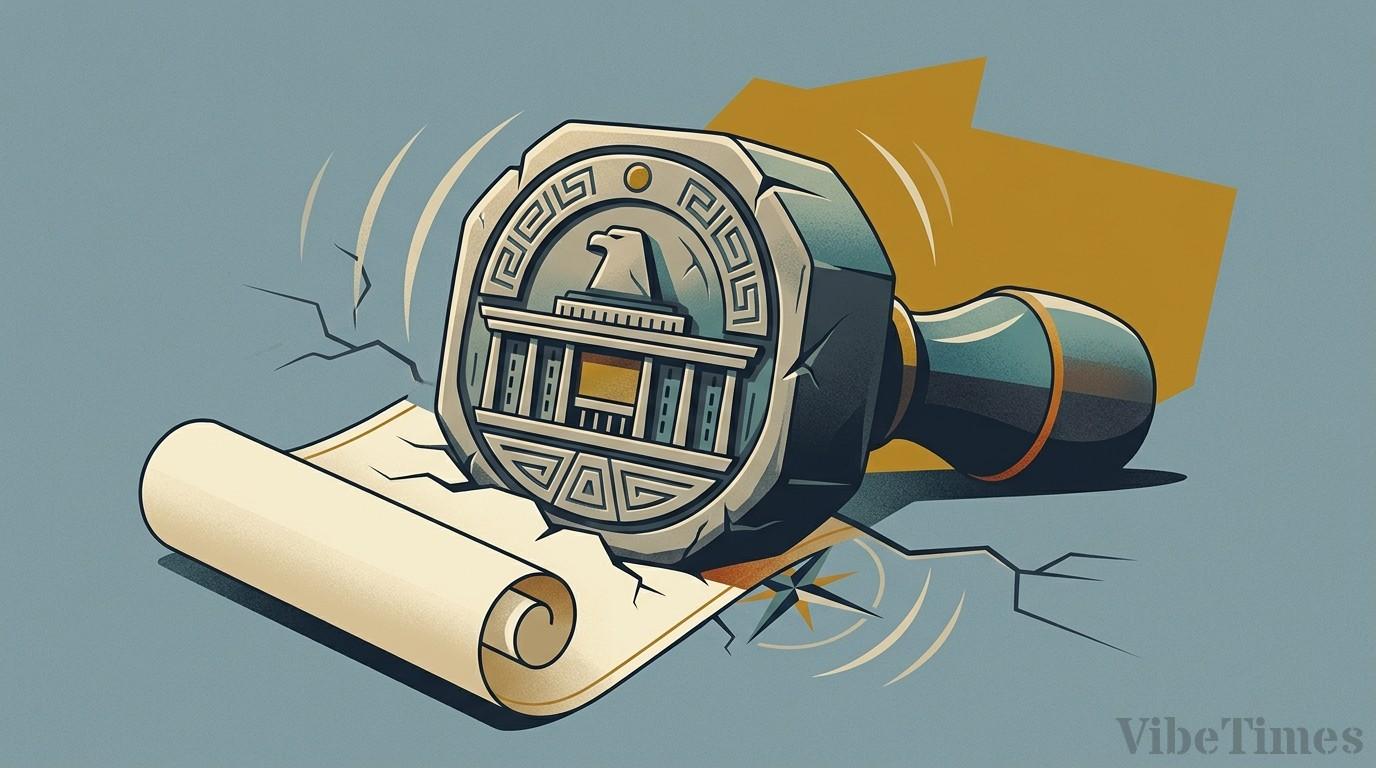
President Launches Constitutional Amendment Push Amid Distrust in Election Commission
President Lee Jae-myung publicly proposed a 'one-point constitutional amendment' on the 19th aimed at reforming the Election Commission. He also stated that the president could directly propose an amendment bill if necessary. The remarks, made amid ongoing allegations and protests surrounding the Election Commission, immediately drew reactions from the political circles.
The proposal stems from accumulated distrust in the Election Commission. Last February, an audit by the Board of Audit and Inspection revealed preferential hiring practices within the commission, sparking nationwide public outrage. Although the Constitutional Court subsequently reviewed the scope of the commission's independence through an authority dispute judgment, it is widely assessed that this was insufficient to restore public trust. Recently, large-scale protests have continued, triggered by the Election Commission's issues.
Core of the Amendment Proposal and Parallel Legislative Discussions
The 'one-point constitutional amendment' proposed by President Lee aims to revise the Election Commission's structure, operation, and oversight at the constitutional level. The current constitution defines the commission as an independent constitutional body, limiting structural reforms through parliamentary legislation or administrative audits. Therefore, the logic is that constitutional amendment is inevitable to enhance the effectiveness of Election Commission reforms.
Separately from the constitutional amendment discussions, the People Power Party has proposed a bill to abolish early voting. This amendment bill, involving lawmakers like Han Dong-hoon, proposes increasing the current one-day main voting period to two days while eliminating early voting, and reintroducing absentee voting through prior registration only in unavoidable circumstances. The bill directly addresses concerns about the security vulnerabilities and reliability of the early voting system.
Heated Confrontation Between Ruling and Opposition Stances
The People Power Party immediately rejected the president's proposal for a constitutional amendment. Representative Jeong Jin-seok stated, "We oppose a one-point constitutional amendment for the Election Commission and insist that a special prosecutor be accepted first." The party officially declared its stance that "the one-point constitutional amendment is a diversionary tactic." From the ruling party's perspective, discussions on constitutional amendments are seen as a means to dilute pressure to accept the special prosecutor's investigation.
The fact that the second Special Prosecutor's team (Special Prosecutor Kwon Chang-young) notified former Prosecutor General Lee Won-seok for questioning as a witness on the same day further complicates the political context. The special prosecutor is investigating allegations of a cover-up related to First Lady Kim Keon-hee, and former Prosecutor General Lee's side has yet to announce whether he will appear. In this situation, the ruling party has a strong incentive to prioritize the special prosecutor issue over the constitutional amendment.
Regarding the protests concerning the Election Commission, President Lee stated, "Sovereign acts to secure legitimate suffrage should be protected," but also ordered strict investigations into cases involving false information dissemination, fake news, and obstruction of business. He clarified that while he does not oppose the protests themselves, he draws a line against any radical actions.
Legislative Outlook and Procedural Hurdles
Amending the constitution requires passing two significant hurdles: approval by more than two-thirds of the National Assembly members and ratification through a national referendum. Currently, while both the ruling and opposition parties somewhat agree on the necessity of Election Commission reform, they are sharply divided on the methodology, indicating that significant difficulties are anticipated before discussions on constitutional amendment can lead to an actual proposal.
The bill to abolish early voting must also pass deliberation by the National Assembly's Public Administration and Security Committee. Given the clear differences in stance between the ruling and opposition parties on this bill, it is difficult to predict at this stage when it might be processed by the plenary session. As early voting has been a system that has substantially contributed to increasing voter turnout, debates surrounding its impact on election participation rates if abolished are expected to intensify.
Given that the president has mentioned the possibility of directly proposing a constitutional amendment, how the negotiation table between the Presidential Office and the National Assembly is set up will be a key variable going forward. Discussions on legislation and constitutional amendment for Election Commission reform are likely to remain a major political issue for the foreseeable future.