President Lee Shares Achievements in Second Year of Pragmatic Diplomacy

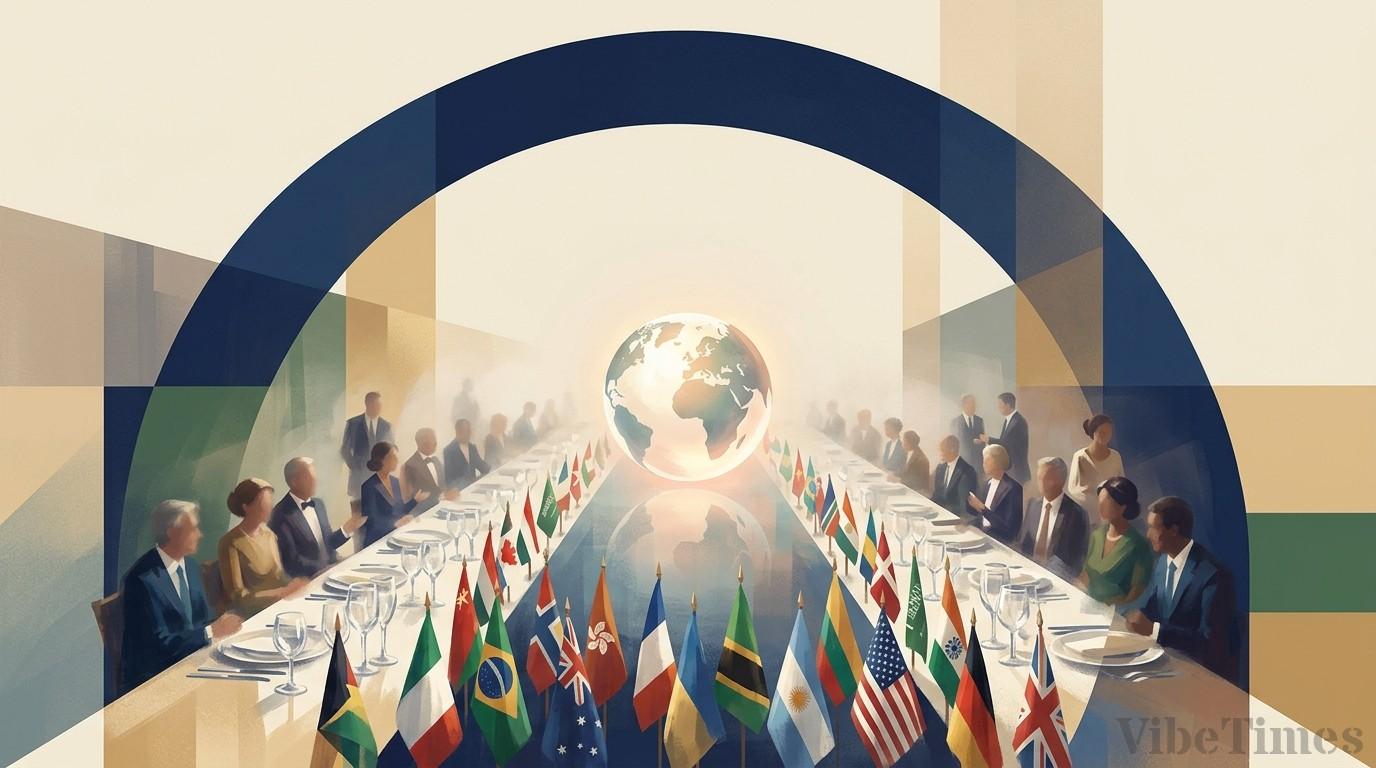
President Lee Jae-myung Shares Second-Year Achievements in 'Pragmatic Diplomacy' Amidst Summit-Level Engagements with 50 Nations
President Lee Jae-myung hosted a dinner on the 23rd at the Cheongwadae Nokjiwon, inviting diplomatic envoys and international organization representatives from 118 countries. At the event, President Lee shared his diplomatic achievements, which included meeting with heads of state from over 50 countries and holding approximately 100 summit and bilateral meetings since taking office. He emphasized 'pragmatic diplomacy' as the direction for national administration in his second year. The large-scale attendance of diplomatic envoys from 118 countries suggests that South Korea's diplomacy has expanded its practical influence on the global stage. This signifies concrete steps taken to enhance Korea's national interests within its relationships with various countries, rather than merely increasing the frequency of diplomatic activities. The event is seen as a reflection of the international community's keen interest in President Lee's diplomatic initiatives.
President Lee stated that in just over a year since his inauguration in May last year, he has met with heads of state from more than 50 countries, holding close to 100 summit and high-level meetings. This level of diplomatic activity is unprecedented compared to previous administrations. The diplomatic envoy dinner is a continuation of these active diplomatic efforts, and the invitation of around 30 diplomatic representatives, including heads of missions from 118 countries, to Cheongwadae demonstrates the expanded scope of South Korea's diplomatic horizons. The event, which featured Korean hospitality customs such as 'Iron Plate Samgyeopsal' and 'Chimaek' (chicken and beer), was praised for creating a diplomatic venue that harmonizes tradition and modernity. It served as an event that went beyond mere diplomatic protocol, contributing to promoting Korea's cultural charm and building friendly relationships.
'Asset Polarization' and Youth Alienation Hidden Behind Economic Growth
While acknowledging economic growth driven by the semiconductor industry boom and the surge in the stock market, President Lee Jae-myung expressed deep concern over the deepening asset polarization and the sense of alienation felt by the younger generation as a result. The President remarked during a recent State Council meeting, "Asset polarization is intensifying amid the semiconductor boom and stock market surge, and the sense of alienation felt by the younger generation is particularly poignant." This directly points to social issues difficult to grasp through economic growth indicators alone, suggesting the need for policy focus to expand beyond mere growth rate enhancement to distribution and equity. A sense of crisis that the ladder of opportunity for those in their 20s and 30s is breaking is deeply entrenched within Cheongwadae.
Analysts suggest that the President's remarks are not unrelated to his approval rating falling below 50% for the first time since taking office. The diagnosis is that the economic anxiety and uncertainty about the future felt by those in their 20s and 30s are major factors contributing to the decline in approval ratings. In response, Cheongwadae sources indicate that Prime Minister Kim Min-seok and Chief of Staff Kang Hoon-sik have recently pointed out the alienation felt by youth, and Cheongwadae is reportedly reviewing the establishment of an internal platform to gather opinions from and reflect them in policies for the 20s and 30s demographic. This is interpreted as a strategic move to enhance the tangible impact of policies through strengthened communication with the youth and to prevent the erosion of his support base. Efforts to directly listen to the voices of the youth and incorporate them into policy are expected to be a significant driving force for future national administration.
Foreign Policy and Economic Policies: Future Prospects under the Guiding Principles of 'Pragmatism' and 'Balance'
President Lee Jae-myung's recent diplomatic activities, culminating in about 100 summit and high-level meetings over the past year, demonstrate that South Korea has expanded its practical influence on the global stage. The banquet hosting diplomatic envoys from 118 countries was an occasion to share these achievements and reaffirm the commitment to continue the 'pragmatic diplomacy' approach. Notably, hearing from President Trump during the G7 Summit about North Korea's willingness to engage in dialogue suggests efforts to seek diplomatic breakthroughs even in the strained relations with North Korea. Furthermore, the blueprint for developing bilateral relations with China, formulated through mutual state visits, is also noteworthy. This illustrates the pursuit of a balanced diplomacy strategy that prioritizes national interests amidst complex international dynamics.
In the economic sphere, the administration unveiled its growth strategy for its second year, which involves promoting artificial intelligence (AI) and balanced national development based on the semiconductor industry boom, while also signaling tax reforms for real estate holdings for speculative purposes. This is interpreted as an intention to simultaneously pursue economic growth and the resolution of asset inequality. Moreover, expressions of concern over the high exchange rate in the mid-1,500 won range and expectations for further declines reflect a policy stance that considers both export competitiveness and price stability. Concerns expressed over the abolition of the prosecution's supplementary investigation rights and directives for thorough investigations into the death of a firefighter in Gwangju showcase another axis of national administration: strengthening the rule of law and protecting the socially vulnerable.
Facing the challenge of declining presidential approval ratings, President Lee is seeking to secure national administration momentum centered on the two pillars of 'pragmatic diplomacy' and 'balanced economy.' In particular, strengthening policies and creating communication channels to alleviate the sense of alienation among the youth are expected to be key tasks for future national administration. Attention is focused on whether these efforts will translate into actual policies and achieve the dual goals of economic growth and social integration.