TOPIK OMR Card Filling: A Comprehensive Guide to Precautions

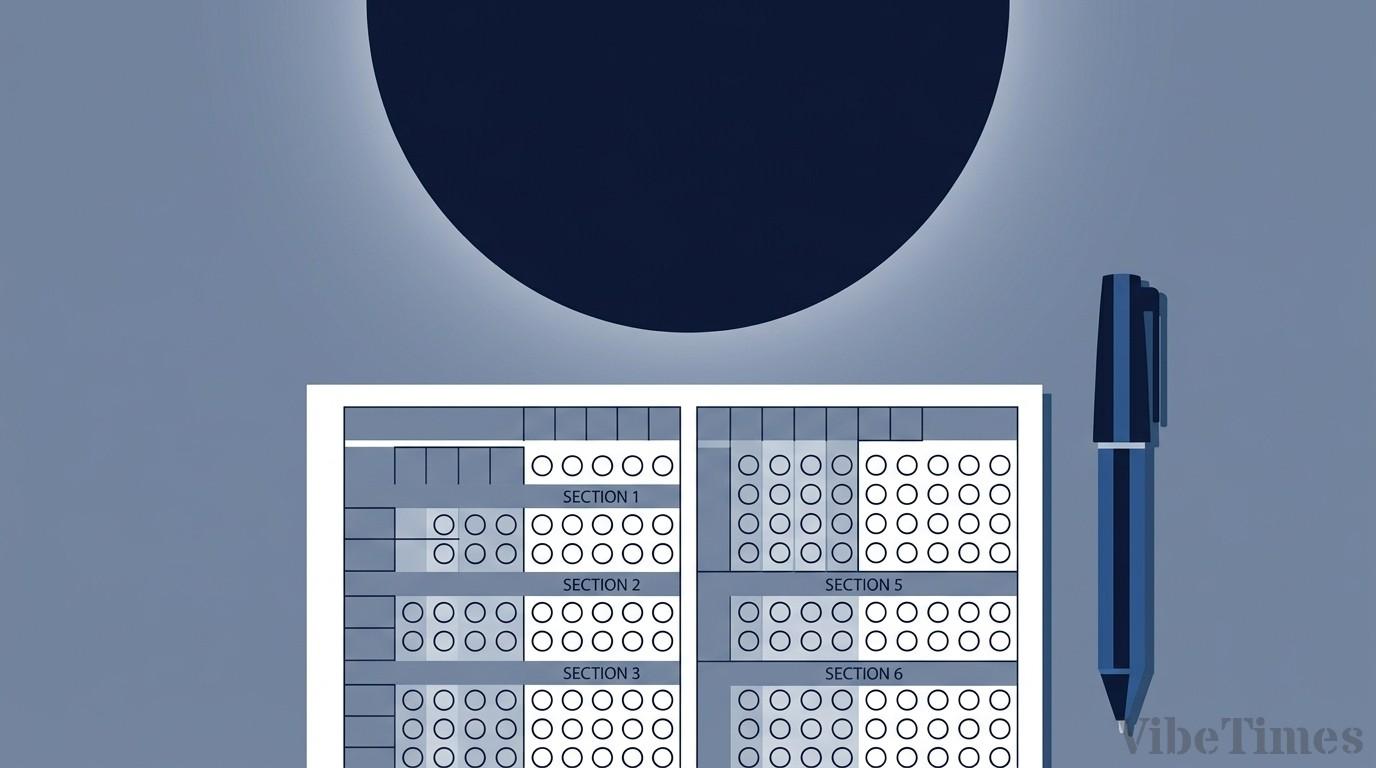
TOPIK OMR Cards: Minor Mistakes Can Determine Success or Failure… Prevent Disadvantages with Proper Filling Methods.
The Test of Proficiency in Korean (TOPIK) is an international standard examination that assesses the practical Korean language skills of learners. It plays an essential role in various fields, including studying abroad in Korea, employment, and visa applications. To guarantee the fairness and reliability of the test, TOPIK has adopted the OMR (Optical Mark Reader) system for answer sheet grading for decades. OMR cards enable fast and accurate processing of answers from numerous test-takers, maximizing objectivity and efficiency by eliminating subjective errors through mechanical grading. Therefore, filling out an OMR card should be understood not just as marking answers, but as a crucial process directly linked to the accuracy of test results. Minor mistakes made while filling out the OMR card can lead to critical outcomes. Issues such as using a pencil of incorrect thickness, overlapping marks, or marking in the wrong box can cause the OMR reader to fail to recognize or misinterpret the answers. Such incorrect entries risk being marked as 'incorrect' or even 'invalid.' Notably, smudges or tears caused by careless corrections can also lead to reading errors, and it is crucial to recognize that the responsibility for all these disadvantages rests solely with the test-taker.
1. TOPIK OMR Cards: The Key Mechanism for Test Fairness
Purpose of the TOPIK Test and Background of OMR Card Adoption
The Test of Proficiency in Korean (TOPIK) is administered for multifaceted purposes, including promoting and disseminating Korean language education, supporting Korean language learners, and providing opportunities for studying and working in Korea. Test scores serve as important indicators closely connected to test-takers' real lives, used for university admissions, scholarship applications, employment, and obtaining marriage-immigrant visas. The National Institute for International Education (NIIED), which administers TOPIK, has adopted the OMR card system for answer sheet grading from its early stages to maximize test fairness and grading accuracy. The OMR system allows for the fast and accurate automated grading of answers from a large number of candidates. It fundamentally blocks opportunities for subjective human judgment, thereby playing a key role in enhancing test objectivity and reliability. Consequently, OMR cards function not merely as answer sheets but as essential technological devices ensuring the efficiency and fairness of test administration.
Direct Impact of OMR Card Filling Errors on Test-Takers
Inaccurate marking of answers on the OMR card can lead to direct and severe disadvantages for test-takers. OMR readers recognize answers based on pre-set criteria, so even minor errors in the filling method carry a high risk of being treated as incorrect or not recognized at all. For instance, if the pencil lead is too thin when marking, or if the box is not completely filled, it may not be recognized by the reader and could be processed as 'unanswered.' Conversely, if the mark extends beyond the box's boundaries or overlaps with other boxes, it can lead to misinterpretation or the item itself being invalidated. Furthermore, smudges or blotting that can occur during corrections, or damage to the OMR card (tears, creases, etc.), are also major factors causing reading errors. The responsibility for all these issues lies entirely with the test-taker, so one must approach OMR card filling with the mindset that not a single mistake is permissible.
2. TOPIK OMR Cards: Specific Procedures and Tips for Correct Filling
Accurately Fill in Test-Taker Information and Basic Test Details
The test-taker information section at the top of the OMR card is a critical area that forms the basis for score notification and result confirmation. It is essential to use the designated writing instrument, typically a black pencil (HB or 0.5mm/0.7mm mechanical pencil), to fill in your test taker number, name, and date of birth without any errors. The test taker number, in particular, is a unique identifier used in score inquiries and all official procedures, so it is crucial to develop the habit of reconfirming it at least twice after filling it out. Additionally, accurately select your test division (TOPIK I or TOPIK II) and proceed carefully with marking other test-related information, such as the test type, test session, and subject name, according to the proctor's instructions. Incorrect personal information can cause serious errors during the grading process or even result in the invalidation of the test itself. Therefore, this section requires the same level of careful attention as marking the answers.
For Each Question, Mark the 'Correct Box' 'Sufficiently Darkly'
The absolute principle for marking answers to multiple-choice questions is to fill the 'correct box' 'sufficiently darkly.' Test-takers must fill only the box corresponding to the option they are certain is correct (e.g., 1, 2, 3, 4, 5) with a pencil. At this time, it is important to fill the entire selected box evenly and sufficiently darkly so that the OMR reader can accurately recognize the answer. If the marking is too light, there is a risk that the reader will not recognize it, leading to it being processed as 'unanswered.' Conversely, if the mark extends beyond the boundaries of the box or covers multiple boxes, it may be considered incorrect or invalidated due to 'multiple markings.' Therefore, practice is needed to fill the boxes evenly with an appropriate thickness (neither too thin nor too thick), considering the size of the box. Matching the question number with the answer number on the OMR card is also an essential habit.
When Correcting Answers, 'Erase Completely' and 'Refill Neatly'
Situations requiring answer correction may inevitably arise during the test. The most crucial principle at such times is to 'completely' erase the previous answer. Use the eraser provided with the OMR card to cleanly remove the incorrectly marked area. If even a trace of the previous mark remains, there is a very high probability that the OMR reader will recognize both the old and new answers or misinterpret them, causing grading errors. Therefore, it is essential to erase meticulously and ensure no eraser shavings remain. After erasing, proceed by marking the newly chosen answer 'sufficiently darkly' in the 'correct box' as explained earlier. If the OMR card is damaged or smudged during the correction process, it can directly lead to unreadable marks, so more careful attention and delicate handling are required during this phase. The use of correction tape or liquid correction fluid is generally not permitted for OMR cards, so only an eraser should be used.
3. TOPIK OMR Card Filling: Pitfalls that Lead to Mistakes and Wise Preventive Measures
Review 'Most Common Mistakes' by Type and Real-Test Coping Strategies
The common mistakes test-takers make when filling out OMR cards are relatively clear in their types, and thorough preparation is possible for them. First, 'overlapping marks' or 'marking multiple answers' can lead to the item being invalidated as a multiple answer. To prevent this, it is important to choose answers carefully and to completely erase previous marks when correcting. Second, 'marks outside the box' are also a direct path to incorrect answers or recognition errors. When marking answers, always be mindful of the box's boundaries and practice marking precisely within the designated box. Third, if an answer is 'insufficiently marked' and not recognized, the item will be processed as unanswered. This can be resolved through practice by using an HB pencil to evenly fill a significant portion of the box. Fourth, 'damage to the answer sheet' occurs due to smudges, tears, or creases, which can render it unreadable. It is important to handle the answer sheet with care, especially when eating or drinking in the examination room. Recognizing these potential mistakes in advance and consistently practicing OMR card filling through mock tests is the best way to reduce errors.
On Test Day: Comply with Proctor Instructions and Manage Your OMR Card
On test day, paying full attention to the proctor's guidance and instructions is paramount. There may be special announcements regarding how to use the OMR card, methods for correcting answers, and other points to note during the exam; understanding these is a test-taker's duty. The TOPIK OMR card must remain under the strict management of the test-taker until the end of the exam and is strictly prohibited from being taken outside the examination room. Therefore, careful management is required throughout the test to prevent the answer sheet from being lost or damaged. Even if answer marking is completed in advance, additional work such as reviewing and refining marks can be done until the end of the exam, but the OMR card must be handled delicately during this process to avoid damage. It is crucial to recognize OMR card filling proficiency not merely as a technical skill but as an important part of the test, and practicing to fill it out calmly and accurately beforehand is the key to increasing the chances of passing.