6·3 Election Ballot Controversy Fuels Intensified Special Prosecutor Debate

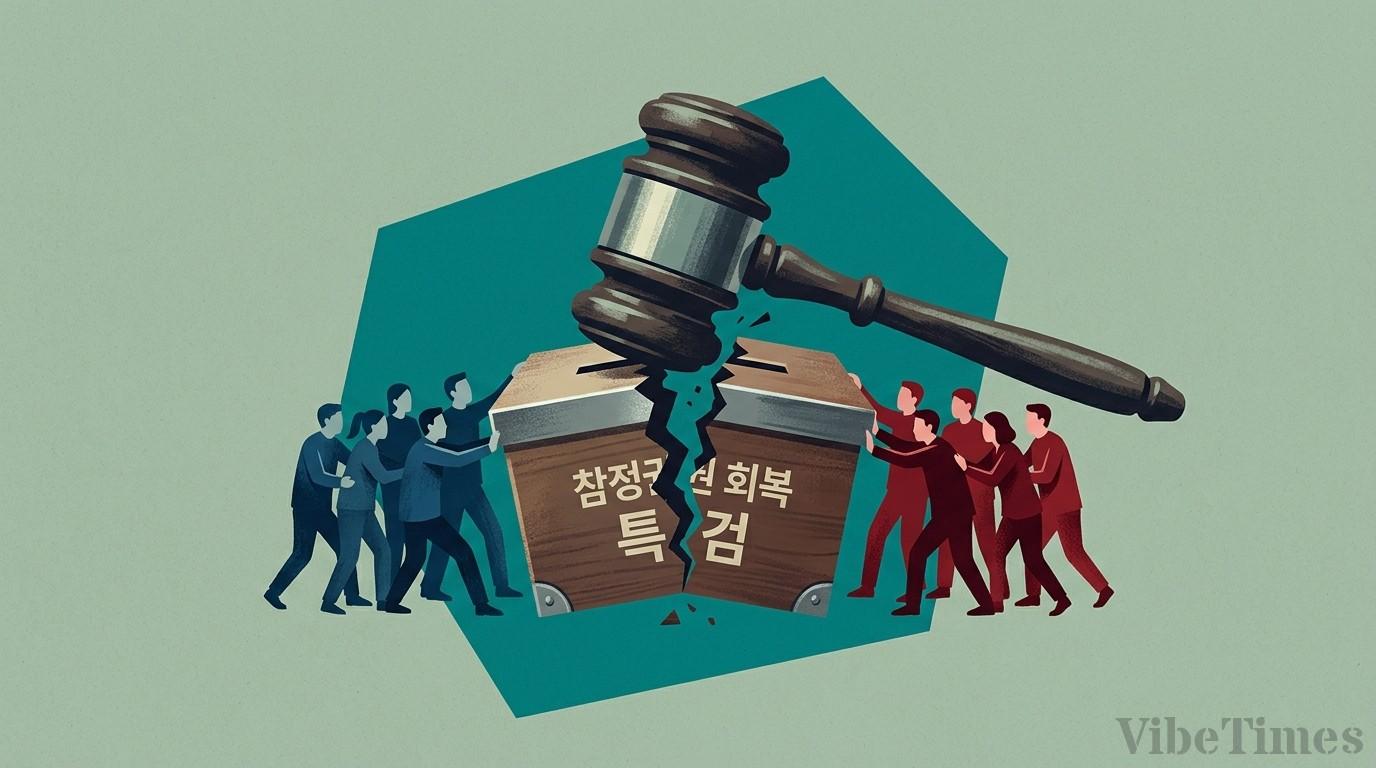
Clash Over ‘Right to Vote Restoration Special Prosecutor’ ... 6·3 Election Controversy Reignited
As moves to uncover the truth and determine responsibility surrounding the ballot shortage during the June 3 local elections gain momentum, the inter-party dispute over the introduction of a ‘Right to Vote Restoration Special Prosecutor’ is intensifying. The opposition party is strongly demanding the introduction of a special prosecutor, arguing that the ballot shortage infringed upon citizens’ basic right to vote, while the ruling party is pushing back, labeling it a ‘political offensive,’ drawing close attention to the future legislative process.
Background to the Ballot Shortage Incident and ‘Right to Vote Infringement’ Controversy
The local elections held on June 3 sparked serious questions about the fairness and reliability of election management due to nationwide ballot shortages. In some areas, ballots ran out shortly after voting began, resulting in voters being deprived of their opportunity to participate. The People Power Party (PPP) has designated this incident as a grave matter that clearly infringed upon citizens’ right to vote and is advocating for the introduction of a special prosecutor for thorough fact-finding.
PPP leader Jang Dong-hyuk criticized the current administration via a recent social media post, stating, “The public demands a ‘Right to Vote Restoration Special Prosecutor,’ but the current government is solely focused on a ‘Prosecution Quashing Special Prosecutor’ [implying an investigation to nullify charges].“ This is interpreted as an assertion that the current government is concentrating only on politically advantageous issues rather than those that could lead to unfavorable suspicions. Jang added a strong critique that the proposed special prosecutor has devolved into a ‘shield and absolution tool’ rather than a means of ‘achieving justice.’ Such remarks suggest the possibility that the chaos during the 6·3 elections may escalate beyond mere administrative error into a political issue.
Key Contents and Impact of the ‘Right to Vote Restoration Special Prosecutor Act’
The ‘Right to Vote Restoration Special Prosecutor Act’ aims to investigate the causes of the ballot shortage incident during the June 3 local elections, punish those responsible, and establish institutional improvements to prevent similar incidents from recurring. If the bill is pursued, the special prosecutor's team will have investigative authority over the entire election management process. This could include the decision-making processes of the Election Commission, problems with ballot printing and distribution systems, and the appropriateness of budget execution.
The core issue of this bill lies in determining whether the ‘right to vote was infringed’ and clarifying accountability accordingly. If cases of damage suffered by voters who were unable to vote or had to forgo voting due to ballot shortages are concretely proven, investigative targets could extend not only to Election Commission officials but also to government and political figures responsible for supervision.
The PPP argues that this bill is necessary to achieve fundamental reform of the election management system and establish an environment where citizens’ right to vote is absolutely guaranteed. In contrast, the Democratic Party (DP) has shown intent to pursue special prosecutors for other matters, such as a ‘Prosecution Quashing Special Prosecutor,’ and there is a discernible cautious stance or opposition to introducing a ‘Right to Vote Restoration Special Prosecutor.’ This is understood to stem from concerns that it could lead to investigations targeting specific political factions.
Inter-party Confrontation and Civil Society's Demands
The gap in stances between the ruling and opposition parties regarding the June 3 local election ballot shortage incident is clear. The PPP regards this incident as a ‘grave illegal act that undermined the public's right to vote’ and strongly urges accountability and institutional improvement through the passage of the bill. As a basis for this, like PPP leader Jang Dong-hyuk’s remarks, they are emphasizing public demand for a ‘Right to Vote Restoration Special Prosecutor’ and engaging in a public relations campaign.
Meanwhile, the DP finds common ground on ‘election commission reform’ itself, but remains at an impasse regarding the introduction of a ‘Right to Vote Restoration Special Prosecutor.’ Some are prioritizing discussions on other pressing issues such as a ‘Prosecution Quashing Special Prosecutor,’ while others adopt a cautious approach, citing that the introduction of a special prosecutor itself could be perceived as a political offensive. There are also efforts to focus on other legislative initiatives, such as proposing amendments to the Criminal Procedure Act to abolish the supplementary investigation authority of the prosecution, slated for launch in October.
Amidst this inter-party confrontation, civic groups are raising their voices, demanding guarantees of fairness and transparency in election management. They express concern that allowing the chaos of the 6·3 election process to go unaddressed could lead to a decline in future election credibility and shake the foundations of democracy, calling for active measures to uncover the truth and punish those responsible.
Future Legislative Procedures and Outlook for Market/Industrial Impact
The sharp confrontation between the ruling and opposition parties over the ‘Right to Vote Restoration Special Prosecutor Act’ increases uncertainty about its passage through the National Assembly. Consensus between the parties is essential for the bill to be ultimately approved. Currently, the outcome of the parliamentary inquiry special committee formed after the 6·3 elections and subsequent inter-party negotiations are expected to be key variables. With the special committee scheduled for its second meeting on July 1, the results of this meeting could influence the momentum for the bill's future progress.
Should the bill pass and a special prosecutor be appointed, a thorough investigation into the entire election management system is anticipated, followed by policy recommendations for related system improvements. This could lead to institutional changes in various areas, including the role and scope of responsibility of the Election Commission, the ballot issuance and management system, and enhanced transparency in budget execution.
While the process of pursuing and passing such a bill may temporarily amplify political uncertainty, there are positive outlooks that it will contribute to the development of democracy by enhancing the credibility of election management in the long run. However, depending on the specific content of the bill, the scope of application, and the range of investigations, the burden on relevant organizations or individuals could increase, potentially heightening market sensitivity to specific political issues in the short term. Nevertheless, the ripple effect is expected to depend more on the intensity of political debate than on direct impact on the overall economy.
