Kim Jong-in says Lee Jae-myung is repeating Yoon Suk-yeol's mistakes

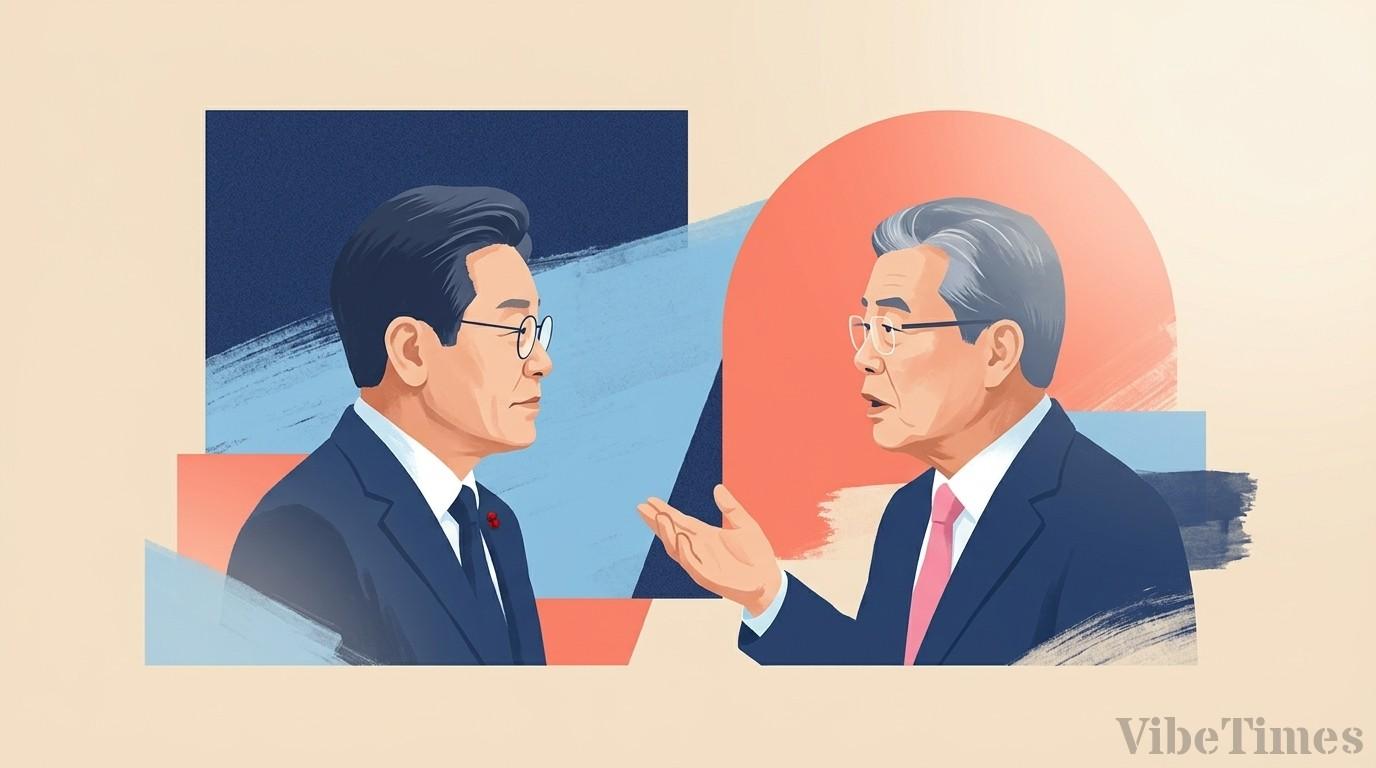
Kim Jong-in has delivered a pointed assessment of President Lee Jae-myung: he is "repeating Yoon Suk-yeol's mistakes."
Kim recently said of the president that he "seems out of touch with the situation," warning that the pattern of failure once shown by former President Yoon Suk-yeol must not be repeated. The criticism carries weight as a direct strike from a veteran politician who has crossed party lines and wielded influence in both conservative and reformist camps. The remarks are drawing divergent interpretations from political circles, particularly given that they came as the president's approval rating for job performance fell 1.0 percentage point from the previous week to 35.9%, with disapproval standing at 60.6%.
Falling Approval Ratings and a Staff Shake-up at the Same Time
The decline in President Lee's approval rating is being read not as mere fluctuation but as a structural signal. The gap between 35.9% approval and 60.6% disapproval — nearly two to one — shows that his initial support base has weakened considerably. The presidential office has turned to a reshuffle of its senior staff as a way to break through the crisis. Following the replacement of the senior secretary for political affairs, Kim Tae-geun was tapped as the new state affairs situation director after Kim Jung-woo offered his resignation.
The personnel shake-up did not stop there. The president named Lee Yong-chul, head of the Defense Acquisition Program Administration, as his nominee for justice minister. Choosing a justice minister from the defense procurement agency is an unusual move. But since the nominee belongs to the so-called "Seongnam line," observers see the appointment as rooted in the president's ties from his days as Seongnam mayor. Compounding matters is the controversy that the nominee directed the withdrawal of indictments during a review of prosecutorial investigations, pushing the opposition's criticism beyond qualifications to claims that the appointment is aimed at managing judicial risk.
The Clash Triggered by the 'Fabricated Indictment Special Counsel Bill'
Rhyming with Kim Jong-in's criticism is the special counsel controversy. The "Special Counsel Bill to Uncover the Truth Behind Fabricated Investigations and Indictments," led by the Democratic Party and other liberal factions, passed the National Assembly plenary session. The People Power Party countered that six of the 12 subjects of the special counsel probe are cases tied to President Lee, calling the bill "a self-issued pardon to erase the president's trial," and even branded it the "Lee Jae-myung Jailbreak Act" while holding a rally against it. Since the probe's scope includes the Daejang-dong development corruption scandal and the allegation of illegal payments to North Korea involving Ssangbangwool, the opposition views the special counsel as a pretext for dismissing the president's indictments.
The timetable is also drawing scrutiny. The special counsel bill was not tabled at the 48th Cabinet Council chaired by the president on the 10th, with the presidential office saying it would be taken up next week. With even the timing of the Cabinet Council review being read as political calculation, the so-called "indictment-withdrawal buildup" controversy — fueled by the National Assembly inspection and the Future Prosecution Committee — has now shifted to the special counsel stage.
The ruling party leadership has pushed back head-on. Democratic Party floor leader Han Byung-do said the People Power Party was holding a "downright farce of a party" shouting "impeach the president," and vowed to hold it accountable. He also noted that key bills under the September 7 supply measures have been stalled in the National Assembly for ten months due to opposition non-cooperation. In effect, the special counsel showdown has swallowed up both the December budget negotiations and the entire housing supply legislative agenda.
Failing to Learn from Yoon Suk-yeol's Collapse
The core of Kim Jong-in's "repeating Yoon's mistakes" remark lies not in policy but in situational awareness. His argument is that the axis of the previous government's failure was a leadership that grew rigid in judgment, surrounded by sycophants despite a weakening support base, and a structure in which livelihood issues were sidelined while energy was poured into resolving judicial risk. Indeed, although President Lee has ordered "supply, no matter what," the issue of redevelopment excess-profit recapture fees has emerged as a variable, while the relevant bill remains adrift in the National Assembly.
The president's communication intensity remains high. He is described as a politician of prolific output, speaking for roughly two hours each week at the televised Cabinet Council and posting as many as ten social media messages a day. But the sober interpretation of the 60.6% disapproval figure is that volume of words does not translate directly into approval.
Outlook for the Months Ahead
In the short term, whether the special counsel bill is tabled at the Cabinet Council is the biggest variable. If it is promulgated, the ruling and opposition parties will clash anew over the selection of investigation targets and the appointment of special prosecutors; if its consideration drags on, pressure will build even within the ruling party. A standoff between the presidential office, seeking to turn the page with its staff shake-up, and the People Power Party, clinging to its "self-pardon" narrative, is highly likely to persist throughout the budget season.
In the medium term, whether the downward slide in approval ratings can be reversed will determine the president's focus. For a president who, like the climber's adage, hoped the valley he gazed down upon after reaching the summit would be a valley of peace, the valley now spread before him is a front entangled in approval ratings, legislation, and judicial risk. The only way to prove Kim Jong-in's warning wrong will ultimately be measured in the numbers.