Semiconductor exports hit record $46.7 billion... Trade surplus stands at $34.8 billion

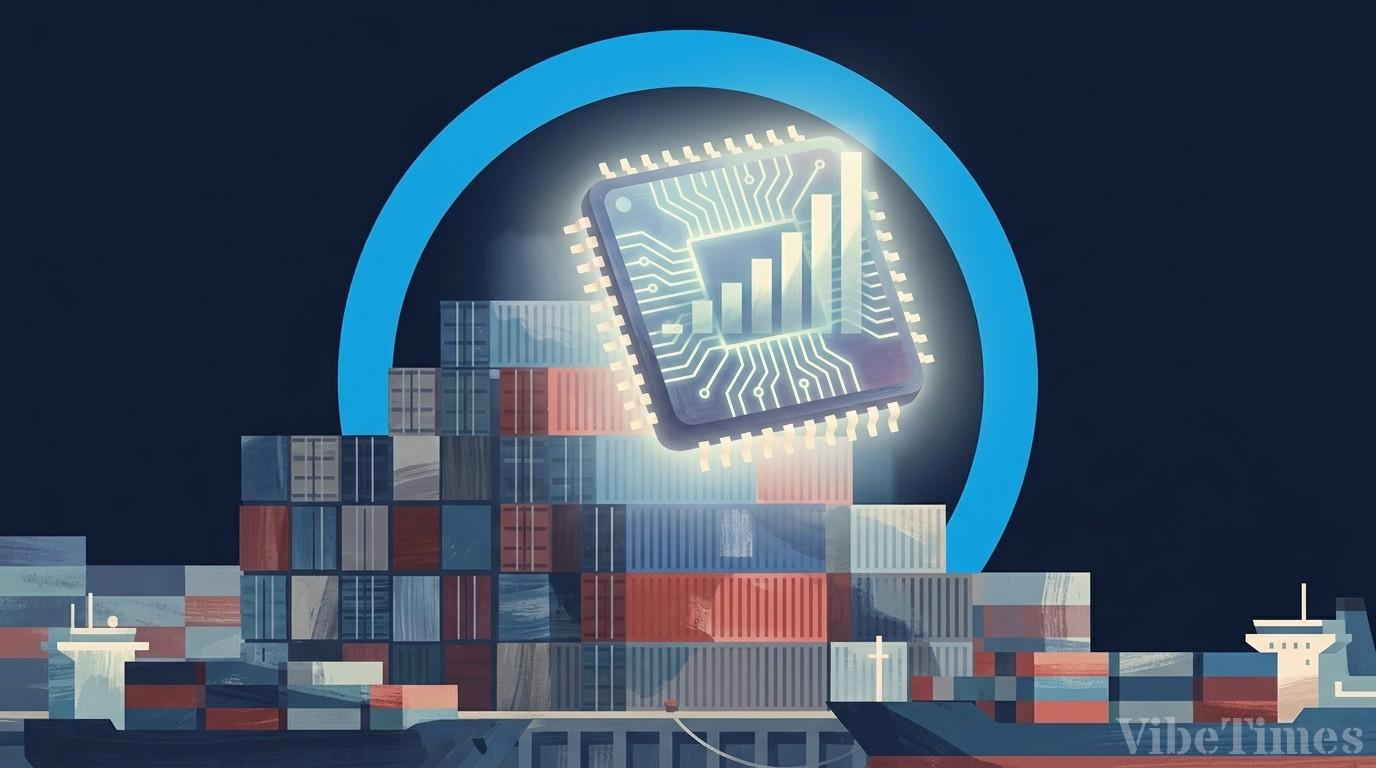
Demand for artificial intelligence (AI) semiconductors has led the increase in South Korea's exports. According to the Ministry of Trade, Industry and Energy on the 1st, exports last month reached $98.25 billion, a 68.7% increase from the same month last year. In particular, semiconductor exports recorded $46.65 billion, accounting for approximately 47% of total exports. This figure represents a more than twofold increase (209.0%) from the previous year. Propelled by surging AI demand, semiconductors achieved a record-high performance, leading the export growth. Semiconductor exports have surpassed the $40 billion mark for three consecutive months. Demand for AI infrastructure remains strong as hyperscalers such as Google and Amazon expand their facility investments.
Other IT sectors also showed strength. Computer exports surged 419.5% to $6.24 billion, driven by the continued rise in NAND flash prices—a key component for enterprise SSDs. Wireless device exports grew 21.2% to $1.88 billion, marking the 10th consecutive month of positive growth, bolstered by strong sales of new models such as the Galaxy S26 and Z Fold and Flip 8.
Excluding semiconductors, export growth rates reached 20%. Petroleum exports rose 65.3% to $6.84 billion, petrochemicals increased 12.2% to $3.86 billion, and bio-health products grew 22.3% to $1.41 billion. Fourteen of the top 20 export items saw an increase.
Steel exports increased 7.9% to $2.11 billion, maintaining positive growth for a third consecutive month. While exports to Europe declined due to the implementation of EU import quotas (TRQ), sales of steel plates and materials to the U.S. rose sequentially, driven by the expansion of AI data center construction.
Automobile exports fell 29.8% to $3.85 billion. This decline was attributed to a combination of factors, including the base effect from shifted summer vacation schedules, partial strikes, and expanded local production in the U.S. The shipbuilding sector also plummeted 45.9% to $1.69 billion due to a decrease in delivery volume.
Regionally, seven of the nine major export markets showed positive performance. Exports to China, the largest trading partner, soared 119.3% to $24.1 billion, while exports to the U.S. also grew 89.3% to $16.5 billion.
The trade balance for August recorded a surplus of $34.75 billion. The surplus has exceeded $30 billion for three consecutive months. The cumulative surplus for the January-August period reached $202.5 billion, an increase of $162.2 billion compared to the same period last year.
Minister of Trade, Industry and Energy Kim Jong-kwan stated, "Exports in August maintained their upward momentum, recording a high performance exceeding $90 billion," adding, "It is positive that the export base is expanding, with non-semiconductor exports also posting a high growth rate of 20% amid sustained strength in semiconductor exports." He identified U.S. tariff policies, EU steel import quotas, the strengthening of protectionism, global supply chain restructuring, and the situation in the Middle East as factors causing uncertainty in the trade environment. The government plans to monitor the impact of these changes on exports.