51 follow-up bills to abolish the Prosecutors' Office pass the National Assembly plenary session

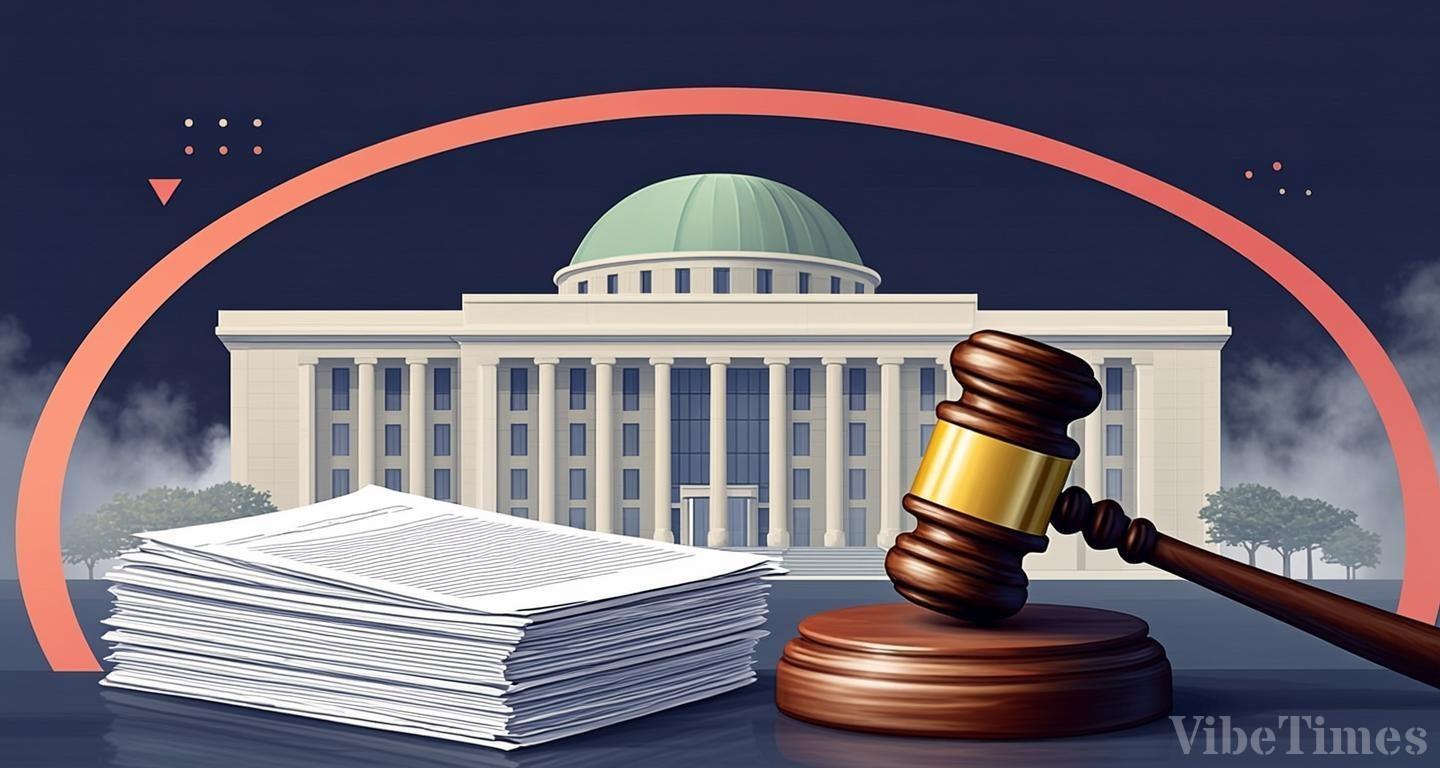
51 Prosecution Reform Bills Pass Plenary by a Slim Margin
Fifty-one follow-up bills accompanying the abolition of the Prosecutors' Office passed the National Assembly's plenary session on the 17th. The package, spearheaded by the Democratic Party, included revisions to the Criminal Act as well as a broad overhaul of the criminal justice system following the creation of the Office of Public Prosecution and the Bureau of Major Crime Investigation. Although an unexpectedly high number of absences among ruling party lawmakers made the vote count razor-thin, the bills ultimately passed, prompting assessments that the prosecution reform has entered its final institutional stage.
The National Assembly held a plenary session that day, processing a total of 70 bills, including the 51 pieces of legislation to realign related laws under the so-called prosecution reform—abolishing the Prosecutors' Office and establishing the Office of Public Prosecution and the Bureau of Major Crime Investigation. The core of the follow-up bills is to revise remaining legal terminology and procedural provisions to fit the new institutional framework. The Criminal Act amendment replaces provisions referring to the abolished Prosecutors' Office with the newly created bodies, such as the Office of Public Prosecution.
Key Provisions and Scope of Application
The bills passed this time are premised on a new system separating investigation, indictment, and trial prosecution functions. Investigation duties previously handled by the prosecutors' office are transferred to the Bureau of Major Crime Investigation, while the functions of filing and maintaining indictments go to the Office of Public Prosecution. The bills also include procedural provisions for specific crime types—such as requiring that all sex crime cases involving children and juveniles be referred to the Office of Public Prosecution even when police find no suspicion of wrongdoing. This is interpreted as an effort to limit police authority to close cases internally, from a victim protection standpoint.
The scope of the bills covers the criminal justice process as a whole. Provisions referring to the Prosecutors' Office were revised en masse, spanning everything from the start of investigations to indictment proceedings and trial procedures. The fact that as many as 51 bills were processed at once shows that the reorganization is not merely a renaming of a single agency but a systemic transition spanning dozens of statutes.
Partisan Conflict and the Debate Over Approval
During the vote, the People Power Party abstained or voiced opposition. The opposition has characterized the prosecution reform itself as an attempt by those in power to seize control of the judiciary, and it maintains that the follow-up legislation serves no real purpose. The Democratic Party, by contrast, has argued that separating investigation and prosecution to dilute the prosecutors' excessive authority aligns with international standards for criminal justice systems.
At one point during the plenary session, the outcome was uncertain due to absences among ruling party members. As seen in the personnel hearing progress report on nominee Kim Sung-soo, adopted through bipartisan agreement with the Democratic Party finding him qualified and the People Power Party finding him unqualified, the conflict over judicial appointments and reorganization remains deep. Third-zone parties such as the Rebuilding Korea Party, which have made judicial reform a policy priority, also support the prosecution reform legislation.
Market and Social Impact, and Outlook
If the separation of investigation and prosecution takes root, effects on businesses and markets are expected. With the investigation of power-abuse cases such as probes into large corporations moving to the Bureau of Major Crime Investigation, corporate legal and compliance strategies may need to be adjusted to the new system. In the area of sex crimes against children and juveniles, where referral requirements to the Office of Public Prosecution have been strengthened, enhanced victim protection procedures are anticipated.
However, considerable transition time will likely be needed for the system to take hold. Practical tasks remain, including setting effective dates for the 51 bills, realigning subordinate statutes, and expanding staffing and organization at the new agencies. The People Power Party, as the opposition, plans to scrutinize the reorganization's flaws through subsequent legislation and implementation. The bills will be promulgated in the official gazette after passage and implemented in stages following the drafting of enforcement decrees, with the coming months of operations expected to determine whether the new agencies can run stably.