Trump to Announce Tonight Korean Investment No. 1: Texas Gas-Fired Power Project

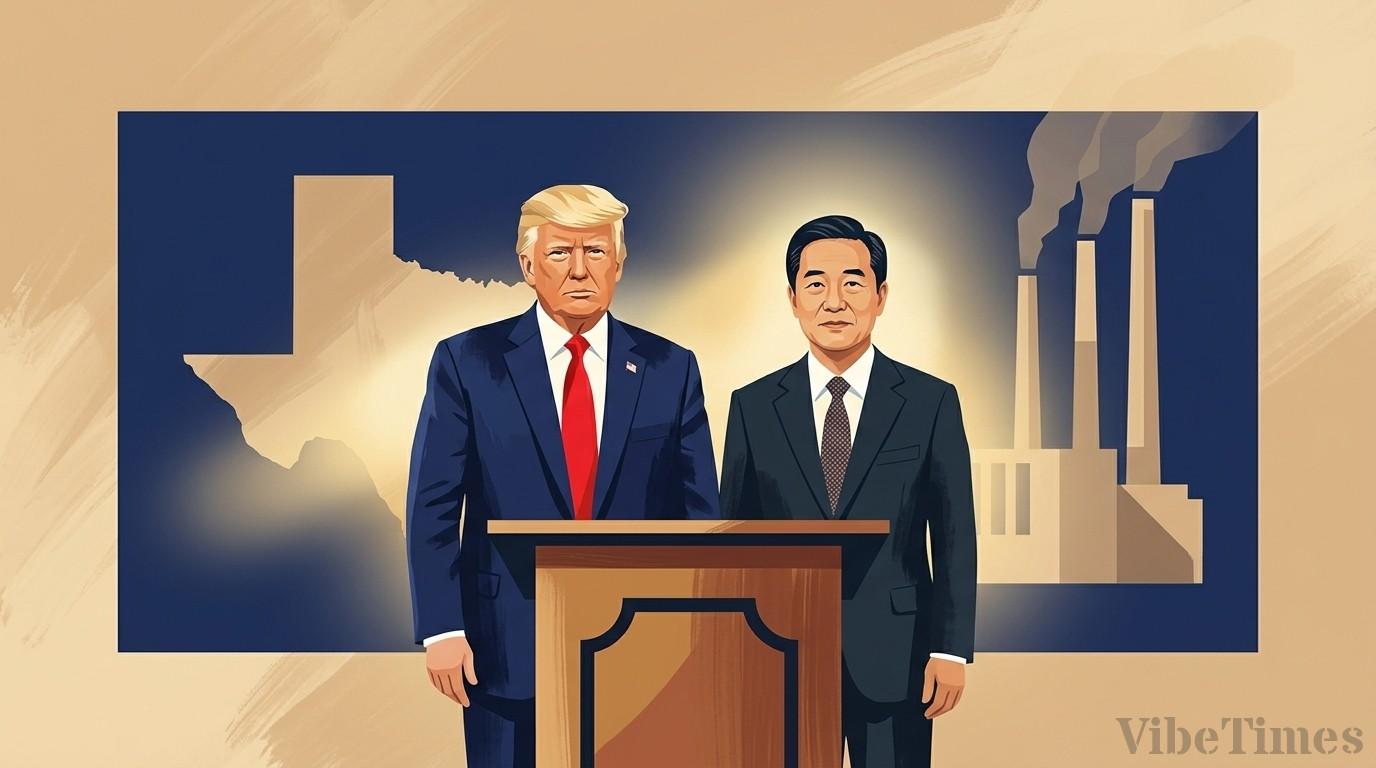
According to the government and ruling party, U.S. President Donald Trump is expected to announce South Korea's first investment project in the United States between the night of the 22nd and the early hours of the 23rd, Korea time. The first project is the Ector County, Texas gas combined-cycle power plant project in the U.S., which involves building a power plant with a capacity of about 6.5 gigawatts (enough electricity for about 6.5 million households) to supply power to data centers (facilities that store and process internet information), with a project cost of $22.3 billion. According to government and ruling party officials, the government projects recovery of approximately $43 billion to $45.4 billion over 20 years and has proposed remitting at least $2.19 billion to the U.S. this year.
According to the government, along with the first investment project, a nuclear power framework and the Alaska liquefied natural gas (LNG) project will also be jointly announced. The nuclear framework is a plan to build eight nuclear reactors in the United States using the Korea-U.S. Strategic Investment Fund. It involves building two Korean-designed APR1400 reactors and six Westinghouse AP1000 reactors, and also includes acquiring a stake in Westinghouse.
In these talks, the Korean government secured priority consideration for the participation of Korean companies, along with the ability to make recommendations on its side. In particular, the agreement includes a provision allowing profits when the Strategic Investment Fund is used for the construction of APR1400 reactors in the U.S., which had been restricted under existing agreements. According to the government, Korea's compensation for participation, including technology licensing fees, service fees, and nuclear fuel costs, amounts to about $2 billion per reactor, with specific conditions to be determined through future negotiations between companies. According to a government official, it was agreed to acquire a 5-10% stake in Westinghouse at a price 10% below the IPO price, and the official said negotiations are underway to acquire 5-7% of voting common shares. The government maintains that a National Assembly consent procedure is required for remittances to the U.S.
The Alaska LNG project was formally proposed by the U.S. on the 23rd of last month. It involves building a pipeline of about 1,250 km from oil and gas fields in northern Alaska to the southern region, and constructing an LNG terminal in the Nikiski area to process and transport 20 million tons of LNG annually. Korea and the U.S. are seeking common ground on reflecting in the joint announcement that the two projects will proceed based on commercial viability and domestic legal procedures. In addition, regarding the carbon capture and pyroprocessing projects demanded by the U.S., the two sides agreed to continue reviewing ways to bolster their commercial viability.
According to the government, the investment structure in the U.S. will be organized under a Korea-U.S. strategic investment memorandum of understanding (MOU) into a single umbrella investment vehicle (I-SPV) and multiple individual project vehicles. The umbrella investment vehicle will handle funding and profit distribution for the overall project, while special purpose vehicles (SPVs) will be established for each project to manage and execute individual businesses. Korean investors will make payments in installments according to the manager's capital calls, with investment limits set at $20 billion annually and $200 billion in total. Funds are to be paid within 45 business days of receiving a capital call.
Profit distribution will divide the revenue from each project between Korea and the U.S. through the umbrella investment vehicle. Until the principal and returns on the investment are recovered, the two countries will each take 50%, and after recovery is complete, the distribution ratio will shift to 10% for Korea and 90% for the U.S. A risk-pooling mechanism will be established to postpone this ratio shift until the principal and returns of the entire project are recovered. The government explained that this was the result of a demand by the Korean government.