Industrial AI Law Opens the Door to Korea's Factory Floors

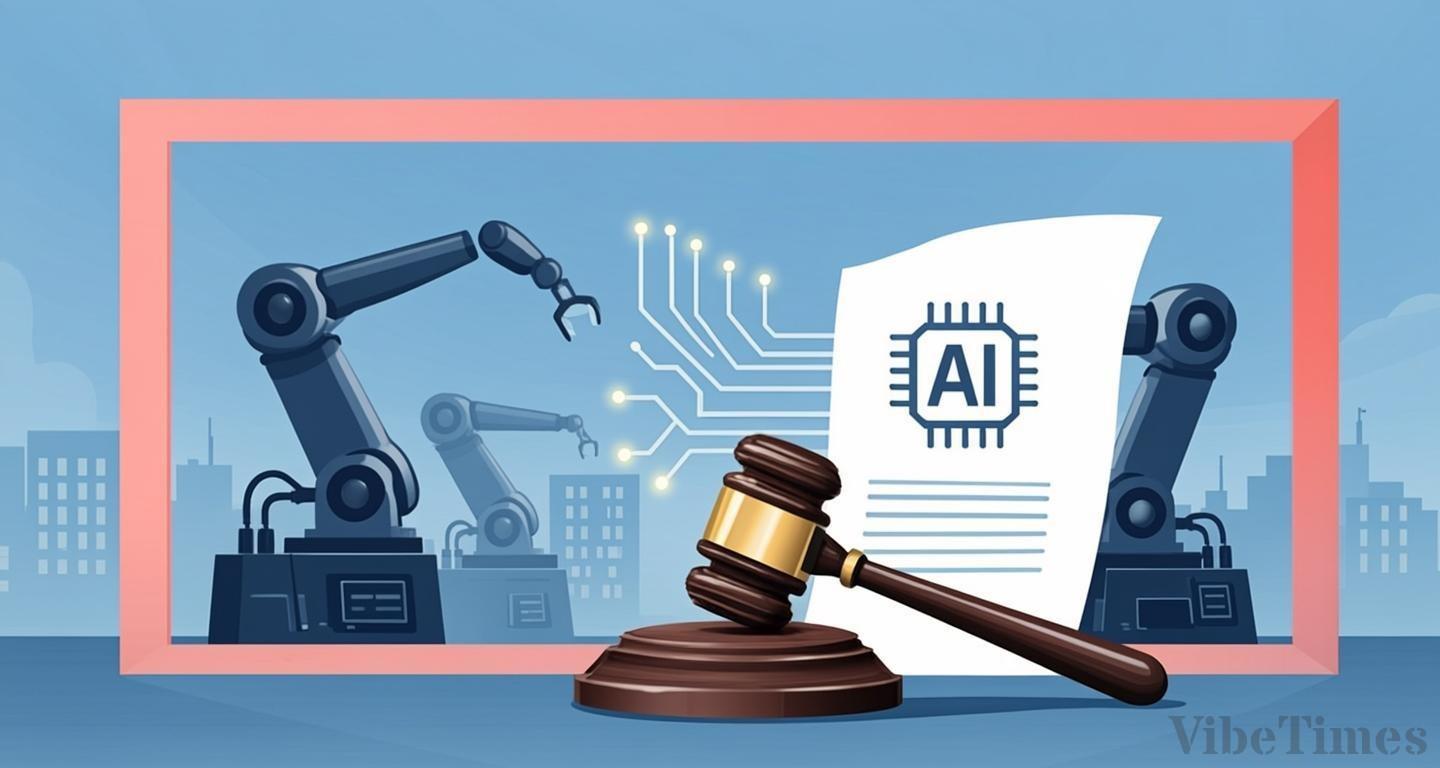
With the law opening the doors of factories, artificial intelligence (AI) is now making a full-scale entry into manufacturing sites.
Efforts to adopt AI in the core arenas of Korean manufacturing—automobiles, shipbuilding, semiconductors, and batteries—are gaining speed on the back of the newly enacted Industrial AI Law. Observers say the barometer of manufacturing innovation has now shifted from the statute books to the factory floor. According to Poli News, manufacturers' AI adoption has become tangible since the industrial AI legislation took effect.
Why an Industrial AI Law Now
Korean manufacturing has long carried structural burdens: rising labor costs, sluggish growth, and intensifying global competition. In particular, semiconductors, batteries, and automobiles face mounting pressure to boost productivity amid escalating US-China technology rivalry. Meanwhile, the existing legal framework had acted as a regulatory barrier to integrating new digital technologies into physical factory spaces.
The Industrial AI Law focuses on lowering these barriers. By establishing a clear legal basis for installing and operating AI systems in factories and for collecting and using data, it allows companies to invest in technology without regulatory uncertainty. For manufacturers, this effectively removes one of the biggest risks that had made them hesitant to adopt AI.
Key Provisions and Scope of Application
The law applies across the full breadth of manufacturing sites. On automobile production lines, AI is being used for defect inspection and equipment anomaly detection, while shipyards see growing potential for automating welding and painting processes. Semiconductor and battery plants also hold high expectations for AI in areas such as yield management and predictive maintenance.
The key point is not the technology itself, but that the institutional framework has embraced it. If every application of AI to a production process had required individual permits or legal review, adoption costs and timelines would have ballooned. With the law's enactment reducing these procedural burdens, a path has opened for small and mid-sized manufacturers to invest in AI as well. That is why small factories that had put off AI adoption due to upfront costs are seen as prime beneficiaries.
Industry Expectations and Remaining Challenges
Industry response has been largely positive. In a structure where productivity gains translate directly into price competitiveness, some analysts argue AI adoption is not a choice but a condition of survival. In particular, the shipbuilding and auto parts industries, struggling with labor shortages, hope AI-based process automation can partly offset the shortfall.
That said, the law opening the door does not mean every factory will immediately enter the AI era. Experts point to the depth of on-site data accumulation, technical talent, and each company's financial resources as the variables that will decide success. Unlike factories affiliated with large conglomerates, small plants with weaker data infrastructure may find it difficult to close the technology gap through legal benefits alone without separate support. Ultimately, the law's enactment is only a starting point—actual results will depend on how quickly each factory adapts AI to its own processes.
Attention now turns to a timetable for judging the real effectiveness of the Industrial AI Law. In the early stages, leading adoption cases are expected to emerge from large manufacturers, followed by a phased spread to smaller factories. If the government and National Assembly roll out additional support measures—such as data infrastructure funding or tax incentives for AI adoption—the pace of diffusion is likely to accelerate.
Conversely, if on-the-ground demand and policy support fail to align, a gap could emerge between legal access and actual adoption. The decisive battleground for manufacturing's AI transition will be fought not in the halls of the National Assembly, but on the factory floor.