Ruling and Opposition Parties Clash Over Public Disclosure of North Korean POW Repatriation

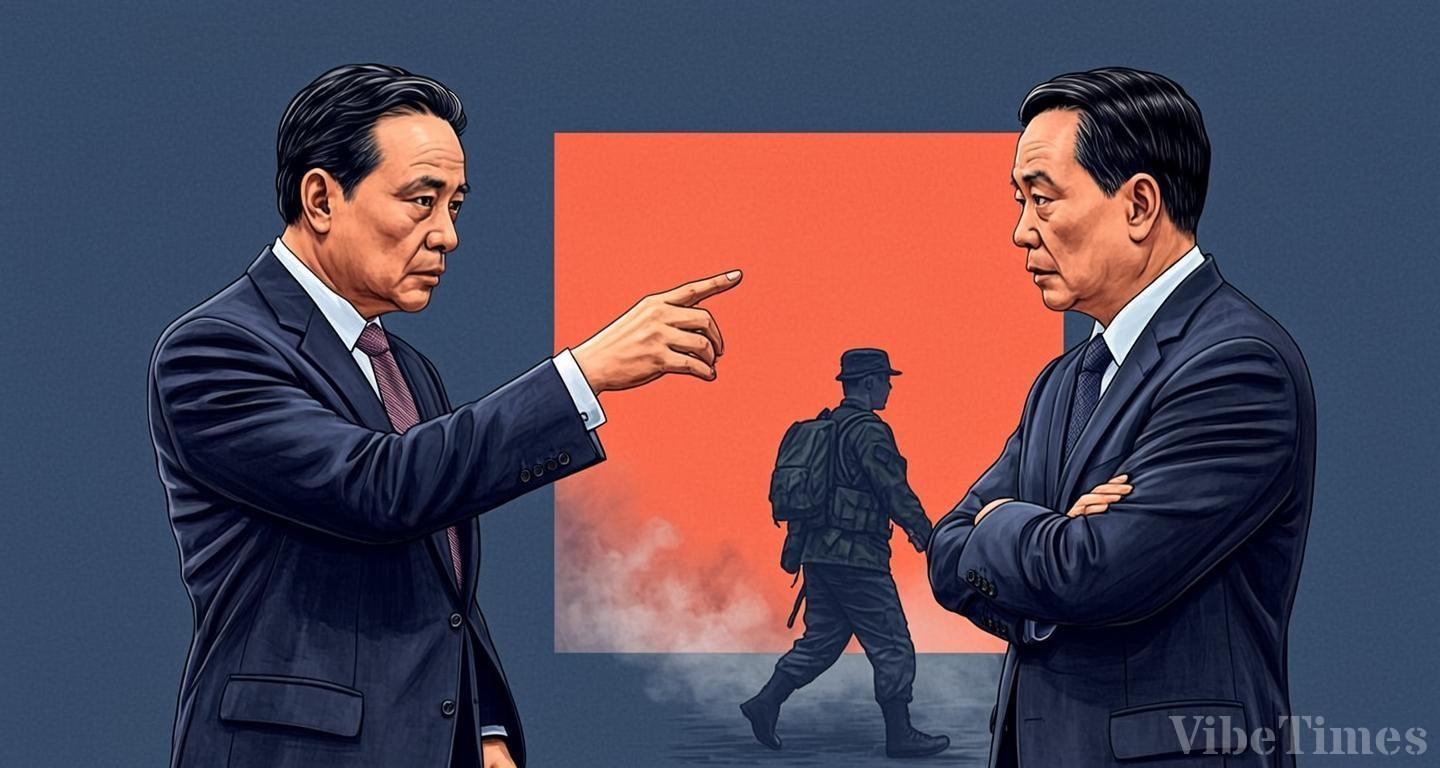
President Lee Jae-myung strongly criticized the People Power Party for questioning his decision to keep the repatriation of North Korean prisoners of war to South Korea undisclosed, branding them with terms like 'murderers' and 'traitors,' as the ruling and opposition parties traded barbs over whether the repatriation should have been made public.
On the 25th, President Lee shared on X (formerly Twitter) an article in which the People Power Party said, 'The government must reveal why it hid the announcement of the North Korean POWs' entry into the country,' and stated, 'The repatriation of North Korean POWs is an extremely sensitive issue that significantly affects diplomacy, security, and the situation on the Korean Peninsula.' He criticized the People Power Party, saying, 'It is wrong to condemn a valid and legitimate decision to keep the matter undisclosed.' He added, 'I do not know what circumstances led the Ukrainian side to breach the confidentiality agreement and disclose the repatriation, but it is deeply regrettable.'
The dispute began with a public statement by Ukrainian President Volodymyr Zelensky. In his address to the United Nations General Assembly on the 23rd (local time), President Zelensky announced that two North Korean POWs captured by Ukrainian forces had recently been sent to South Korea. The two countries had agreed to keep the repatriation confidential.
The Democratic Party of Korea backed President Lee's criticism. In a statement, party spokesperson Shin Hyun-young pointed out, 'President Zelensky's disclosure was a betrayal of trust between the two countries and a dangerous act from a national security perspective.' She demanded, 'The Ukrainian side must fully explain the circumstances of the disclosure to our government and actively cooperate in follow-up measures to ensure the safety of those involved.' The spokesperson added, 'The Lee Jae-myung government has not the slightest intention of bragging about or politically exploiting the repatriation of North Korean POWs,' and urged, 'The People Power Party should not escalate this matter into political strife.'
The People Power Party pressed the government on why it insisted on secrecy. Party floor leader Jeong Jeom-sik wrote on Facebook on the 25th, 'The repatriation of North Korean POWs was simply a matter of timing; making it public was the right thing to do,' asking, 'Why, then, has the government suddenly become obsessed with secrecy?' He retorted, 'Were you so afraid of upsetting Kim Jong-un? Is that fear due to weakness over the cash-for-summit scandal?' He continued, 'When criticized for hiding the repatriation, President Lee lashed out with extreme rhetoric like 'murderer' and 'traitor.' The government is begging the North Korean regime for a fake peace and capitulating to every provocation. The real traitors are you.'
Representative Ahn Cheol-soo also argued on Facebook the same day, 'If we cannot even disclose a POW repatriation on our own initiative for fear of North Korea's reaction, then we are not a proper country.' He added, 'The more the president fawns over North Korea, the more our security is neutralized and our diplomacy rendered impotent.'
With President Lee and President Zelensky having held a summit in Ankara, Turkey, on the 8th (local time), followed by Ukraine's disclosure of the repatriation, the conflict over the government's policy of secrecy and the opposition's demand for disclosure is spreading across the political spectrum.