Most U.S. LNG supply agreements are non-binding promises

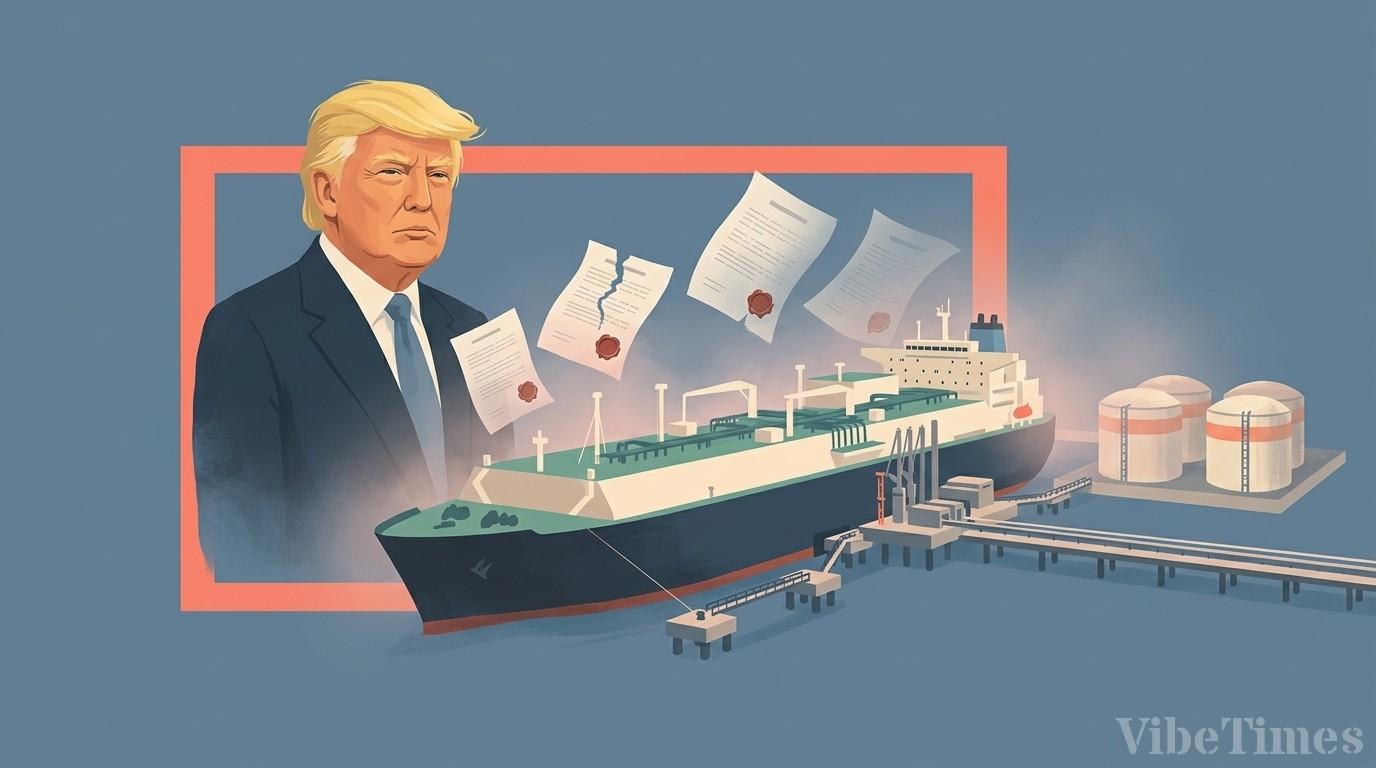
South Korea has committed to investing up to $200 billion (about 272.5 trillion won) in the United States, and the Alaska liquefied natural gas (LNG) project has been cited as a key investment target. However, most of the existing supply agreements have been found to be non-binding promises. On Monday (local time), the White House announced that President Trump also presented eight nuclear power plants in the U.S. and the construction of gas power plants in Texas as investment targets. U.S. Commerce Secretary Howard Lutnick said, "These are projects for which the Korean government will fully fund and bear the costs for the United States."
The Korean government maintains that its investment in Alaska LNG has not yet been finalized. The Korean side selected the Texas gas power plants as its first investment project, leaving Alaska LNG and the nuclear plant projects as subjects of further negotiation. No South Korean government official attended the White House announcement event.
Alaska LNG is a project to transport natural gas produced on Alaska's North Slope through an approximately 1,300-kilometer pipeline to Nikiski in the south, where it would be liquefied and supplied to domestic demand centers and overseas markets such as Asia. The total project cost is estimated at $44.5 billion to $54.5 billion. Glenfarne Group holds a 75% stake, with the state of Alaska holding the remaining 25%. The project aims to produce up to 20 million tons of LNG per year and plans its first export in 2031.
The schedule has already been delayed once. The final investment decision (FID) for the pipeline was originally planned by the end of last year, but it was pushed to this year after Glenfarne failed to secure the LNG purchase volumes it had targeted. The supply agreements Glenfarne has secured with companies from South Korea, Japan, Taiwan, Thailand, France, and elsewhere total 13 million tons per year, most of which are legally non-binding.
Cost burdens are directly tied to price competitiveness. Pipeline construction alone is estimated to cost $13.2 billion to $16.9 billion, and the project requires building the roughly 1,300-kilometer gas line and liquefaction facilities in harsh conditions including extreme cold and permafrost, meaning costs could grow further. Industry analysts note that rising project costs would raise LNG sales prices, potentially weakening price competitiveness compared with U.S. Gulf Coast or Canadian projects.
Brendan Duval, CEO of Glenfarne Group, said at the White House that day: "The pipeline takes three years to build, and construction can begin as soon as financing is secured." He explained that gas could be supplied within Alaska three years after construction begins, with LNG exports possible about two years after that.
By contrast, Larry Persily, who was involved in the Alaska gas pipeline project during the Obama administration, questioned the timeline, noting that building a major gas pipeline in the Arctic Circle requires extensive preliminary work and that material deliveries and the construction season are seasonally limited. Persily called President Trump's announcement "a political event that sounds designed to attract attention and generate headlines." He pointed out, "It is hard to believe that any government or private company would commit to investing $54 billion and yet not attend the announcement event."
The idea of developing Alaska's natural gas has continued for more than half a century since the discovery of a gas field in 1968, but even when ExxonMobil, BP, and ConocoPhillips were involved, it was long delayed over massive costs and economic viability concerns.
The announcement came about a month before the U.S. midterm elections in November. In Alaska, Republican Senator Dan Sullivan is locked in a tight race against former U.S. Representative Mary Peltola.