KAIST Captures 50-Year-Old Debate Over Azobenzene at the Atomic Level

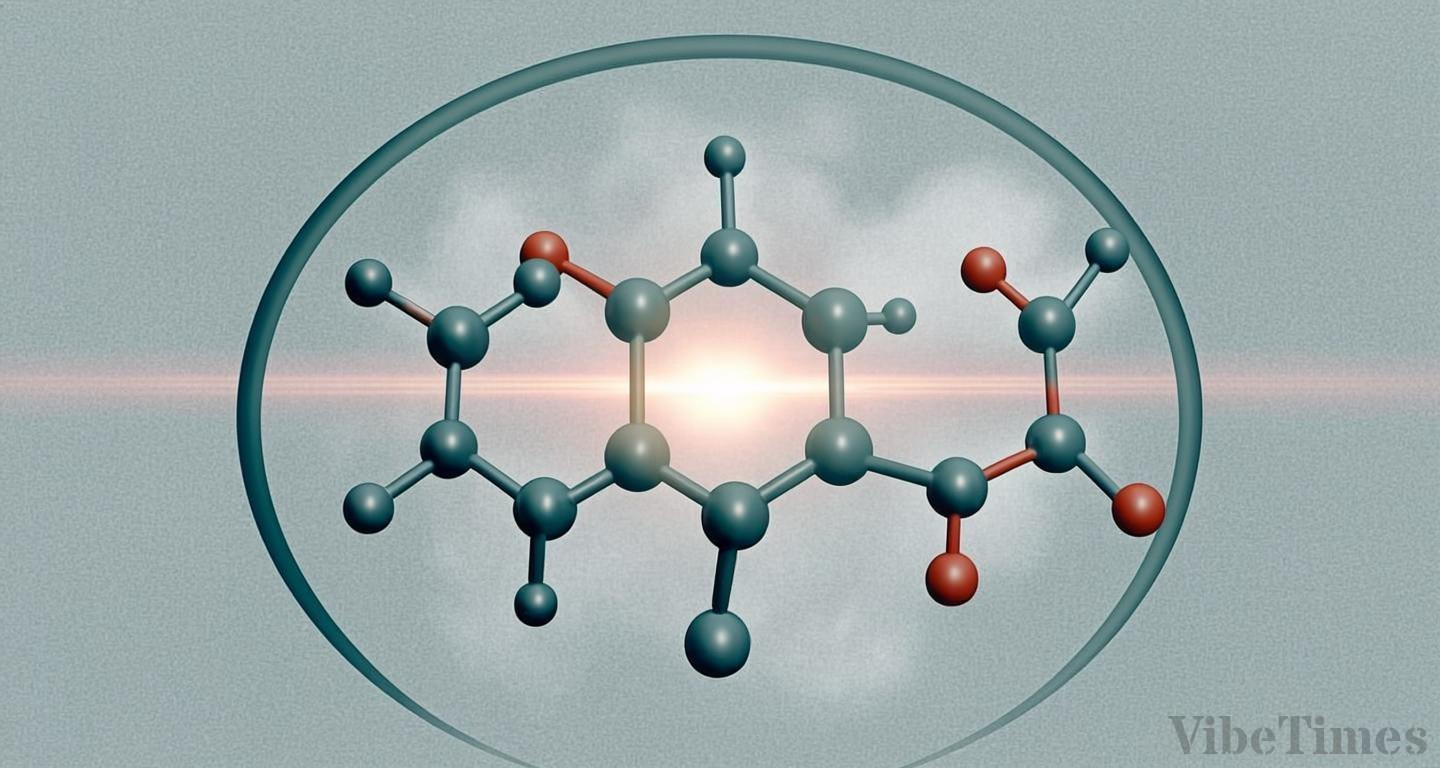
Azobenzene, a 'molecular switch' that changes structure when exposed to light, has now been explained at the atomic level and in chronological order by a KAIST research team, resolving a debate that lasted about 50 years. The team led by Professor Hyotcherl Ihee of the Department of Chemistry, working with the Center for Advanced Reaction Dynamics at the Institute for Basic Science (IBS), published the findings in the international journal Nature on September 30 (local time). Nature introduced the study as one that captured azobenzene's structural transformation at the atomic level.
Azobenzene is a molecule in which two benzene rings are connected by two nitrogen atoms. When exposed to light, it changes from the 'trans' form to the 'cis' form — no atoms are created or destroyed; only their arrangement within the molecule changes. Thanks to this property, it has long been a flagship material for research on light-activated devices such as photopharmacology, smart materials, and molecular machines.
The reaction has been difficult to observe directly because it unfolds on the scale of picoseconds — trillionths of a second. As a result, multiple explanations have coexisted over whether the two benzene rings rotate or whether the nitrogen linkage moves.
The research team (Professor Hyotcherl Ihee, postdoctoral researcher Kim Jung-min, senior researcher Alekos Segalina, and research fellow Ki Ho-seung) initiated the reaction in a methanol solution using the X-ray free-electron laser at the Pohang Accelerator Laboratory, then fired ultrashort X-ray pulses at staggered time intervals to measure the structural changes. Because the solvent signal in solution was far stronger than the molecular signal, the researchers extracted the molecule's subtle changes from the data and stitched together its structure over time.
The results showed that azobenzene does not rotate both benzene rings simultaneously. First, the bond between a benzene ring and the nitrogen linkage twists, and then the two sides move in an interlocking motion around the central nitrogen linkage. The researchers likened this to bicycle pedals turning in opposite directions. The trans-to-cis conversion was measured to take about 17.1 picoseconds.
The key achievement of this study lies not in identifying the final shape, but in determining which part of the molecule moves first in the intermediate stages. The researchers explained that by uncovering not only the starting and ending structures but also the sequence of movements in between, they elucidated the operating principle of the molecule.
The study also revealed that moving around the central axis allows the structure to switch without significantly displacing the surrounding solution, explaining why azobenzene transforms rapidly and largely unaffected by the surrounding liquid. While the research does not immediately produce new drugs or materials, it provides a structural basis for deciding which part of a molecule should be moved first when designing light-driven molecular systems.