After Home Workouts: Foam Roller or Massage Ball for Muscle Recovery?

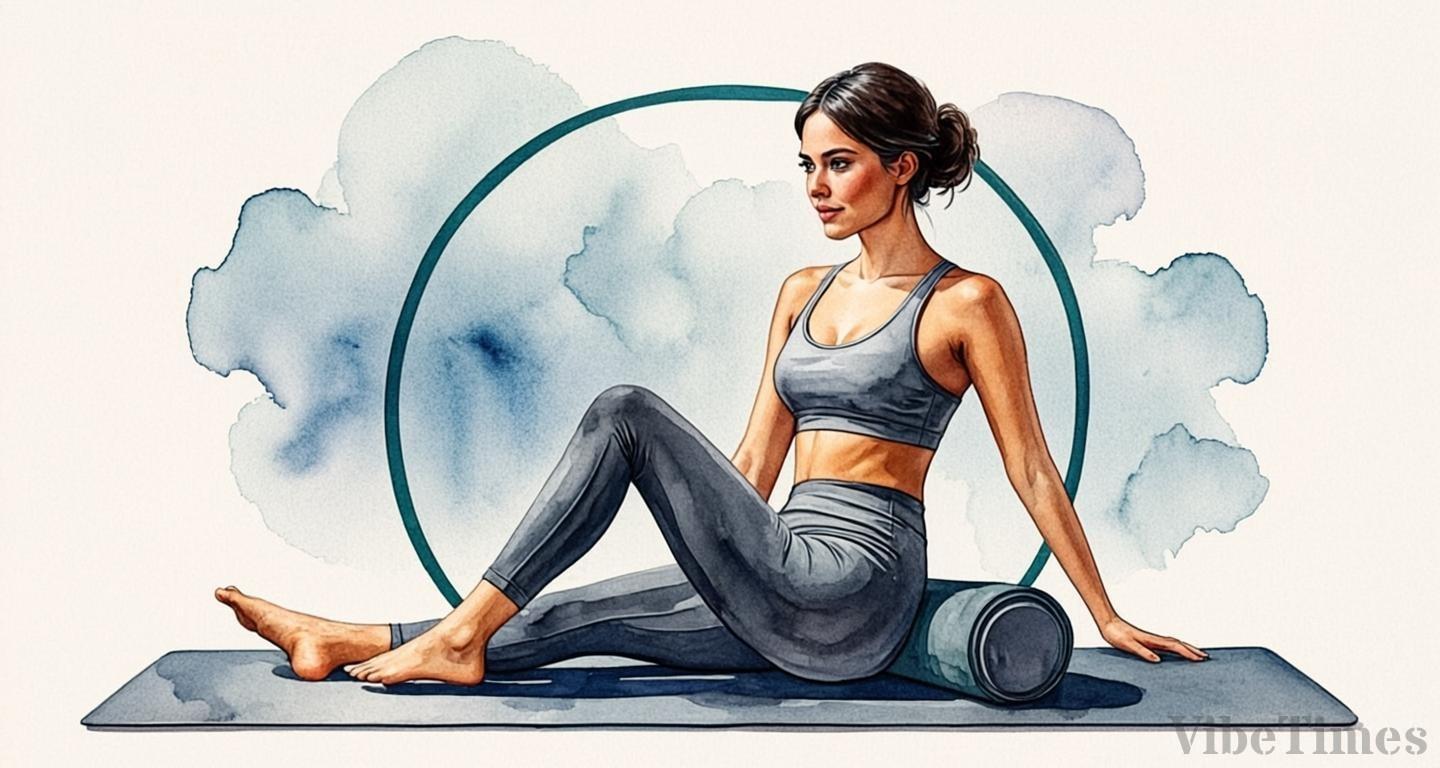
The answer isn't choosing between the foam roller and the massage ball—it's dividing the labor between them.
When loosening up tight muscles after a home workout, the foam roller is a 'surface' tool that covers broad areas, while the massage ball is a 'point' tool that digs deep into narrow spots. Sports physical therapy experts likewise agree that the key is not which tool is superior, but using each according to the body part and purpose. In other words, the question "which tool is better?" is itself the wrong one to ask.
Muscle Soreness Peaks at 24–72 Hours—That's the Golden Window for Home Care
Delayed-Onset Muscle Soreness Slows Recovery If Left Untreated
Muscle soreness that worsens a day or two after exercise rather than immediately is called delayed-onset muscle soreness (DOMS). Pain peaks between 24 and 72 hours after a workout. Recovery management during this window determines pain relief, joint range of motion improvement, muscle fatigue recovery, and injury prevention. As home workouts have grown in popularity, spending on recovery has grown with them, with foam rollers and massage balls at the center of it all.
Both Work on the Same Principle
The shared mechanism of the two tools is self-myofascial release (SMR)—a technique of pressing on the fascia yourself to release tension. The fascia is a thin membrane surrounding the muscles; when it tightens up, flexibility decreases and pain increases. ACSM and NSCA materials also recommend SMR as part of recovery and warm-up protocols.
Foam Roller vs. Massage Ball: Different from the Specs Up
The Foam Roller Sweeps Broadly, the Massage Ball Digs In
The foam roller is a cylinder 30–90 cm long and 10–15 cm in diameter, with a broad contact surface and low-to-medium stimulation intensity. The massage ball is a sphere 6–12 cm in diameter; its narrow contact surface concentrates pressure on a single point even under the same body weight. Prices differ too: foam rollers run 10,000–50,000 won, while massage balls cost 5,000–20,000 won.
The division of roles is clear. Large muscles like the thighs, calves, and hamstrings are handled quickly and efficiently by the foam roller. Meanwhile, for narrow areas like the glutes, the space between the shoulder blades, the soles of the feet, and around the neck, the ball's pinpoint stimulation is advantageous—these are places a foam roller physically can't reach well.
The Skill Barrier: Massage Balls Require Avoiding Bone and Nerves
Foam rollers are safe even for beginners because intensity is easy to control. Massage balls are different. Their localized compression is intense and requires weight management; pressing directly over bones or nerves—such as the spinal vertebrae or the inside of the knee—can cause tingling or radiating pain. In fact, if tingling occurs, you should stop immediately.
What the Research Says: Foam Rollers for Range of Motion, Massage Balls for Local Knots
Foam Rollers: Immediate Range-of-Motion Gains After a Single Session
The body of research is far deeper for foam rollers. Meta-analyses published after a 2017 study by Hughes and Pamment reported that joint range of motion increases significantly immediately after foam rolling. With consistent use for two weeks or longer, the improvement grows even larger. A 2015 randomized controlled trial (RCT) by Pearcey et al. confirmed that foam rolling after high-intensity exercise contributes to reduced pain and faster recovery. Another advantage: unlike static stretching, foam rolling right before a warm-up improves flexibility without reducing muscle strength.
That said, the pain-relief effect of a single session is noted to be short-lived, lasting only about 10–30 minutes. Foam rolling is not a cure-all for recovery.
Massage Balls: A Structural Edge for Releasing Trigger Points
While research on massage balls is scarcer than on foam rollers, studies have reported similar improvements in range of motion and pain reduction for localized areas such as plantar fasciitis and gluteal pain. Their narrow contact surface can stimulate deep tissue, giving the ball a structural advantage for releasing tender points—that is, trigger points. There is still no decisive evidence settling which tool is superior, and researchers recommend using them in a complementary way.
Body-Part Manual: How to Use Them After Today's Home Workout
Lower-Body Routines: 60–90 Seconds of Foam Rolling
Roll from the calves to the hamstrings, quadriceps, glutes, and back. Spend 30–60 seconds per area, repeating gently 2–3 times, at a slow pace of roughly 2–3 cm per 2–3 seconds. Aim for a pain level of 4–7 out of 10—intense pain actually tightens the muscles. Rolling directly on the lower back, or lumbar spine, is not recommended.
Soles, Glutes, and Neck-Shoulders: 30–90 Seconds of Static Pressure with a Massage Ball
Place the ball on the tight spot, apply body weight, and hold for 30–90 seconds. Once the pain gradually subsides, move in small circles. You can also press the ball against a wall to release the area between the shoulder blades, or roll it under your foot while seated. A lacrosse ball or tennis ball works just as well.
The Optimal Answer: Use Both
It's simply a matter of sequence. Release large muscles with the foam roller, then target any remaining knots with the massage ball, and finish with stretching. Spend 5–10 minutes right after your workout, and focus intensively on painful areas before bed. The cost burden is modest, too: a foam roller plus a lacrosse ball totals just 30,000–60,000 won for a complete home care kit.
What Matters More Than the Tool: Consistency and Intensity Control
The Common Mistake Isn't Tool Selection—It's Technique
The difference in effectiveness among SMR tools ultimately comes down to suitability for the body part. Far more common a cause of failure than choosing the wrong tool is using the wrong duration and intensity. The rule of thumb: use them consistently at least three times a week at a pain level of 7 or below, and if flexibility is the goal, combine them with light cardio and stretching to maximize the benefits.
Precautions also apply. Avoid use immediately after acute injuries and on bruises or burns. Patients with osteoporosis or deep vein thrombosis should consult a doctor beforehand. If pain persists for more than three days or worsens, see a specialist.
This article is based on research and expert materials published through early 2025; for specific figures, please consult the original studies.