Kim Yo-jong Mocks President Lee Jae-myung's Détente Policy as a 'Clown Show'

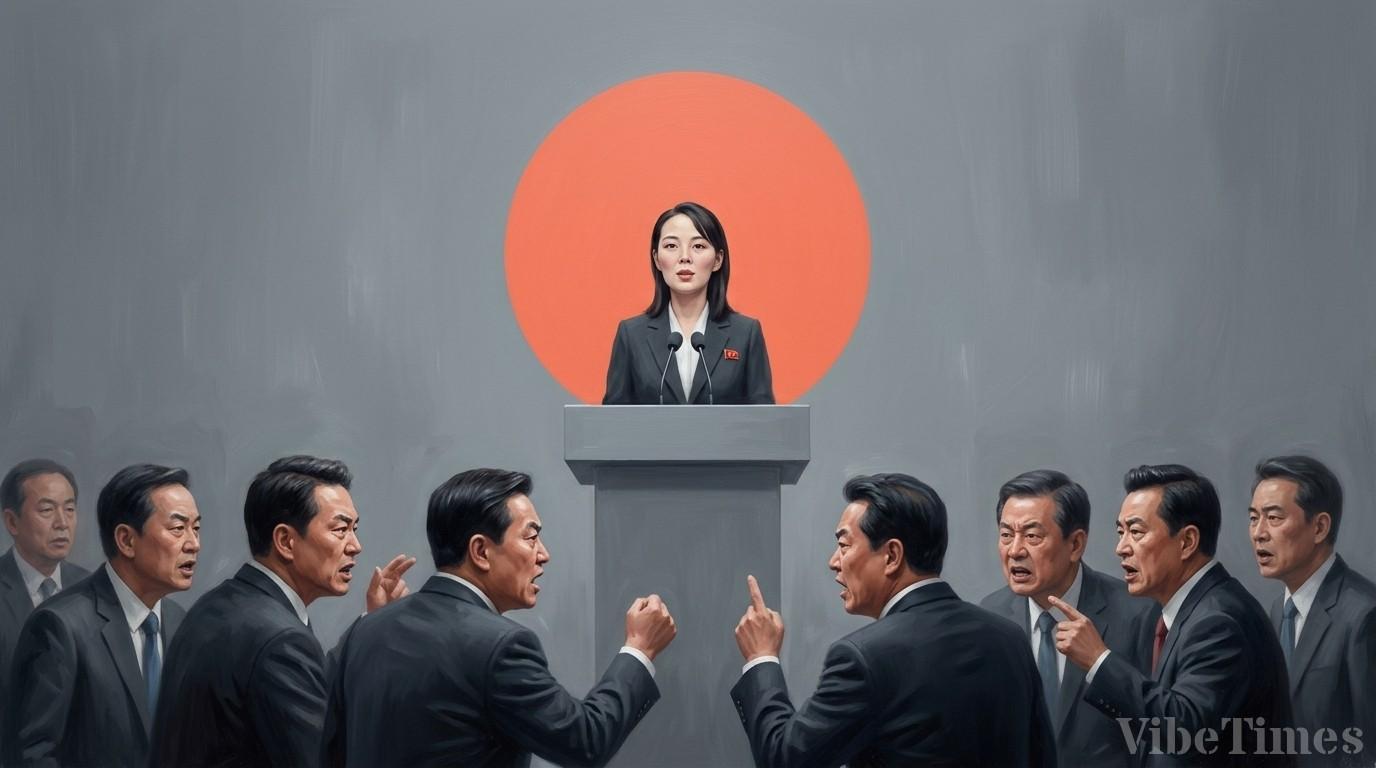
Kim Yo-jong has ridiculed the Lee Jae-myung government's policy of easing military tensions as a 'clown show'.
Kim Yo-jong, a vice department director of North Korea's ruling Workers' Party, is reported to have sneered in a recent statement: "Easing military tensions? The president is giving us the climax of a clown act." The remark is seen as a direct jab at comments President Lee made regarding the landmine explosion in the Demilitarized Zone (DMZ). In his Armed Forces Day address, the president described the incident as an 'unfortunate accident' and said, "We will continue measures to reduce inter-Korean military tensions."
The Chain Reaction Triggered by the Phrase 'Unfortunate Accident'
The controversy began with the choice of words itself. Critics point out that by personally calling it an 'unfortunate accident' before the military authorities had completed their detailed analysis, the president ended up boxing in subsequent assessments of the situation. Some observers argue that North Korea is in fact exploiting the South's softened perception of the incident in an attempt to blur the very nature of its provocation.
Kim Yo-jong's mockery confirms this framing head-on. By directing derogatory language—a 'clown show'—at the very party that declared its intent to ease tensions, she signals that North Korea interprets the South's conciliatory gestures not as grounds for reassurance but as openings for pressure. As the old adage goes, peace comes at no free price; one-sided de-escalation can, paradoxically, lower the cost of an adversary's provocations.
Opposition Onslaught and the Risk of a State Affairs Hearing
The People Power Party has framed the 'unfortunate accident' remark as a matter of flawed security judgment and is stepping up its attacks. The dispute has even escalated into a legal battle, with Rep. Joo Jin-woo filing a complaint against the president with the Seoul Metropolitan Police Agency on charges of disclosing official secrets. The opposition's logic is clear: when the provocation itself remains unclear, a president who pre-emptively labels it an accident will dampen the military's zeal for investigation and confuse the public's security awareness.
Even within the ruling party, the message has not been entirely unified. The president's display of a steadfast South Korea-U.S. alliance—attending the Armed Forces Day ceremony at Gyeryongdae and reviewing troops alongside the defense minister—is being read as a dual signal. In other words, it is a balancing message: keeping the door open to dialogue with Pyongyang while maintaining military readiness.
The Road Ahead and the Political Fallout
For now, the issue is expected to turn into a battle over establishing the facts. If the military's further investigation concludes that North Korea deliberately staged the provocation, the 'unfortunate accident' remark could grow into a political liability. Conversely, if it turns out to be truly accidental, the opposition's security offensive will lose steam. In the end, facts will decide the fight.
Approval ratings are another variable. With observations already circulating that President Lee and the Democratic Party have failed to see a clear rebound since their party convention, a security issue that prompts conservative voters to coalesce would weigh on the ruling camp. At the same time, the more insults Pyongyang hurls, the weaker the criticism of a 'dialogue-only' approach becomes—making this a double-edged sword for both camps.
Ultimately, the key is not how the government answers Kim Yo-jong's mockery, but where it draws the line between principle and flexibility. Only by maintaining its will to ease tensions while consistently signaling that provocations carry costs will the government's North Korea policy be read as a 'strategy' rather than a 'clown show'.