President Lee Jae-myung Calls Jung Chung-rae a 'Comrade' After Four-Hour Dinner

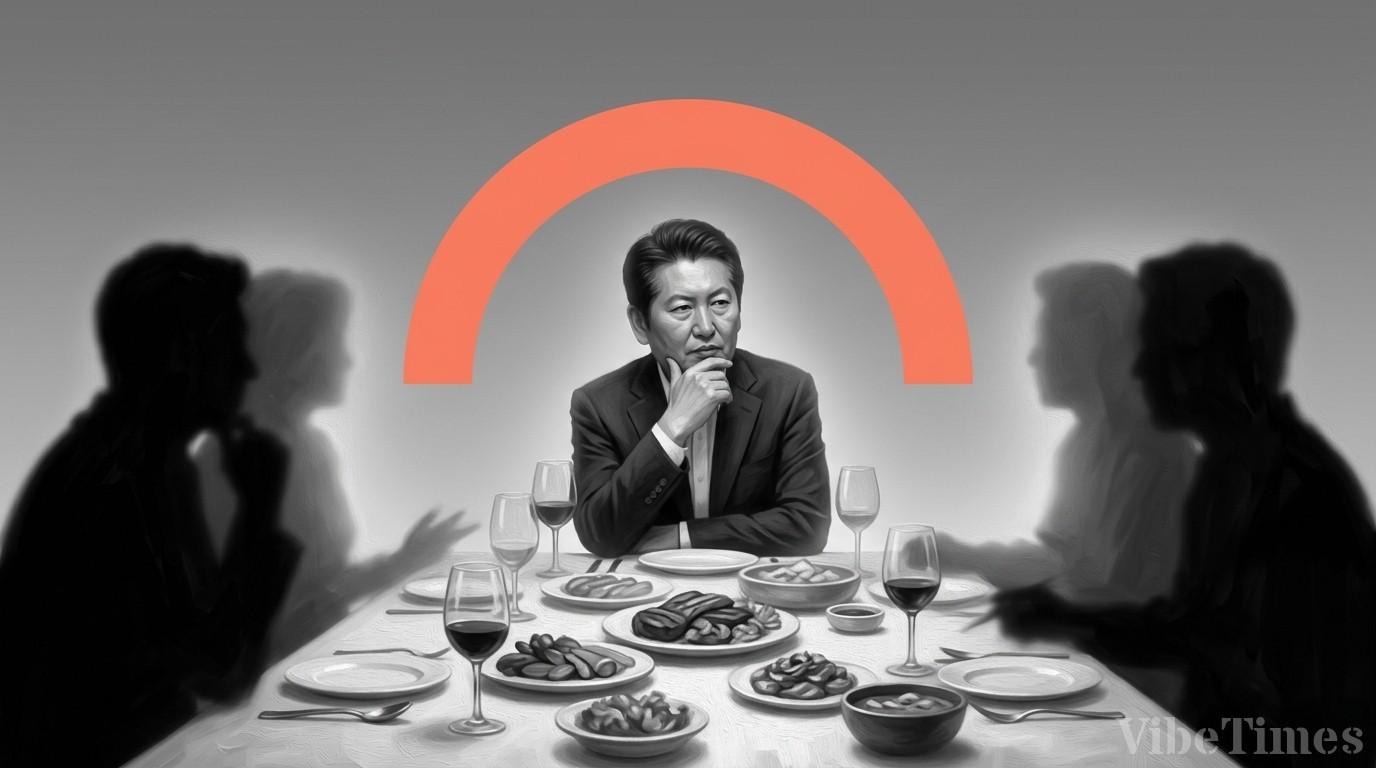
President Lee Jae-myung sat across the dinner table from Democratic Party of Korea leader Jung Chung-rae for four hours.
President Lee, who had promised a meeting while comforting Representative Jung after his hospitalization on the 30th of last month, held a dinner meeting with him at the presidential office on the 1st. The two reportedly found common ground on policy issues and a range of intra-party matters. A four-hour meeting between the president and the ruling party leader is far beyond the usual length of such engagements, leading to interpretations that the very time each side devoted to the other was itself a message.
The Word "Comrade" Draws a Line Under Party-Presidential Office Friction
The key word President Lee deployed at this meeting was "comrade." He described Representative Jung as "a comrade who fought alongside us through the night of insurrection, an era of darkness and death when even our lives were under threat." It was a statement redefining their shared experience of weathering the martial law crisis as a common asset. The remark is read as a clear declaration of intent to resolve head-on the deep rift between the party and the presidential office—friction that had grown over prosecutorial reform and the suspension-of-trial law, as well as the "snub" controversy sparked by Jung's absence from the send-off ceremony for the president's European trip.
Public attention immediately shifted to political interpretations after the meeting. Even within the president's support base, some reacted critically. A typical example was a comment posted on the president's social media reading, "Please stop tormenting Jung Chung-rae." In response, President Lee pushed back directly on X on the 3rd, saying, "He was neither dragged around by me nor tormented by me. Please do not misunderstand or distort things." A president personally replying to an individual supporter's post is an unusual move, and the prevailing view is that it reflects political calculation driven by concern over erosion of his base.
Approval Ratings Fail to Rebound—Will a Dinner Be the Answer?
Behind this meeting lies the cold number of approval ratings. Neither President Lee nor the Democratic Party has found a clear rebounding opportunity since the party convention. Representative Jung had diagnosed the cause of the slump as follows: "Expectations for a hard-working president remain unbroken, but the hearts of the traditional core support base have soured." He also pledged to restore approval ratings to 60 percent or higher upon his election as party leader. In effect, the party leader and the president share the diagnosis that reconsolidating the core base is the key to a rebound, and this dinner can be seen as the first stage of putting that diagnosis into practice.
At the same time, the burden is heavy. Pressure from the pro-Lee faction urging Jung not to run for leadership, along with the lingering backlash from his "the administration won't last long" remark, remain ongoing. The more President Lee shields Representative Jung with the label "comrade," the greater the burden of mediating factional rifts within the party. The very fact that the president had to respond directly to criticism from his own supporters is further proof that internal party conflict is still alive.
Redesigning the Party-Office Relationship Will Change the Pace of Governance
The ripple effects of this meeting are expected to extend beyond the Democratic Party's internal affairs to governance as a whole. With the president and the party leader formally confirming common ground on policy issues and party matters, legislative schedules that had stalled on disagreements between the two sides may gain momentum. Whether the government and the ruling party speak with one voice will be directly tied to the Democratic Party's fate in next year's general election.
That said, it is too early to say a single dinner has pulled out the roots of the conflict. The fact that the president had to personally clarify, "Don't distort things," signals that communication with his support base is still fractured. As John Cracker said of war, political alliances hold no romance; most consist of tedious repetition and endless compromise. Whether the four-hour dinner becomes the starting point of a rebound or ends as yet another staged event will be decided by how quickly the hearts of the core support base come back.
