Skip the Gym, Do Home Workouts: A Practical Guide to Saving on Monthly Membership Fees

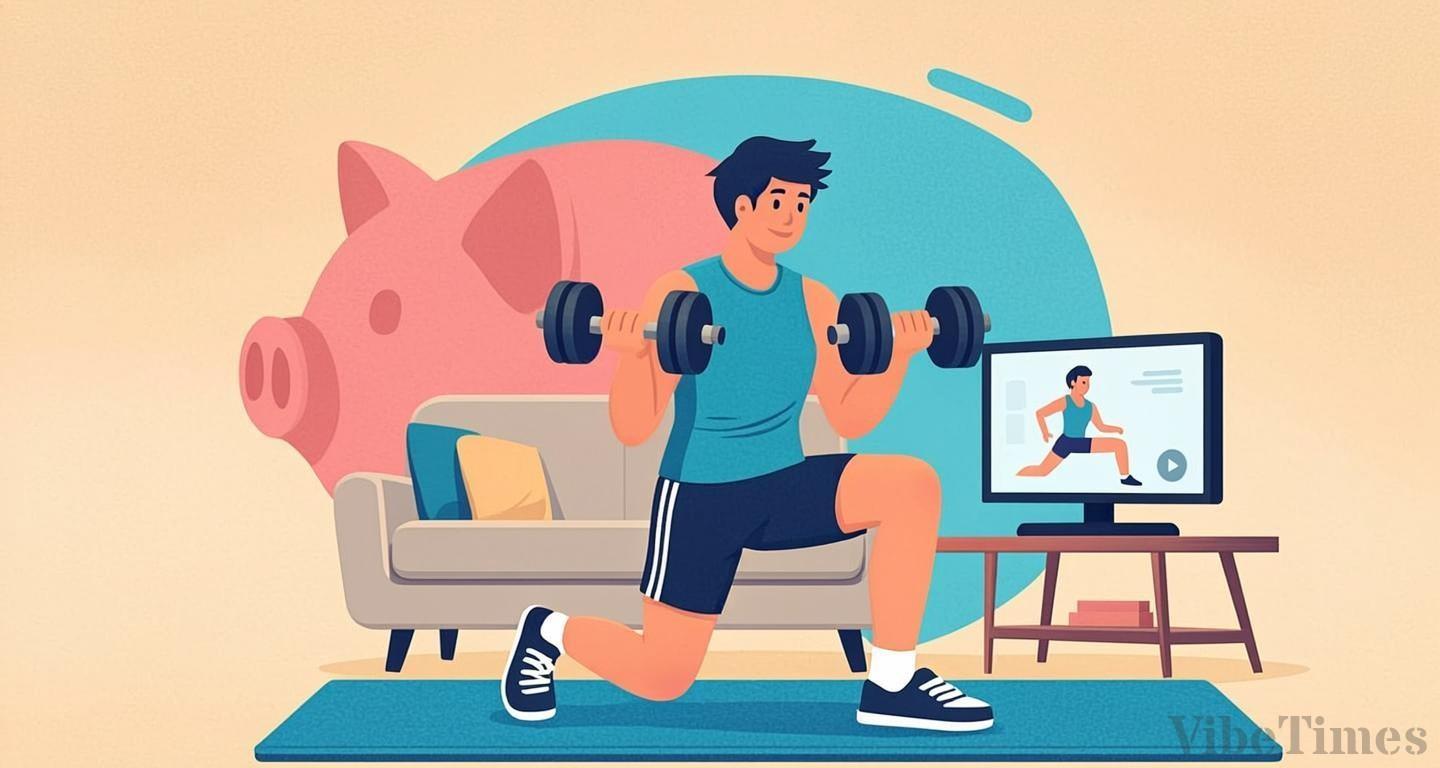
A Difference Worth Over 2 Million Won Over Three Years
From 0 Won in Membership Fees to 600,000-1,800,000 Won a Year: The Money Leaks in Different Places
The moment you quit the gym, 600,000 to 1,800,000 won a year comes back to you. Monthly gym memberships in the Seoul metropolitan area run 50,000-150,000 won, while premium facilities charge over 200,000 won. Add 20,000-50,000 won a month in transportation costs, and personal training (PT) on top of that adds another 400,000-800,000 won a month. It's a structure where fixed costs drain away every month.
Home training, by contrast, costs nothing in membership or transportation fees. The only major expense is an initial equipment outlay of 50,000-500,000 won, and if you need form correction, online coaching is available for 50,000-150,000 won a month—less than a fifth the cost of PT. Over three years, total costs come to roughly 2-5 million won for the gym versus about 100,000-600,000 won for home training, making it more than 80% cheaper.
Your Initial Investment Pays for Itself in 1-2 Years—Pure Savings After That
The break-even calculation is simple. Based on a 600,000-won-per-year gym membership, even a 100,000-300,000 won equipment investment pays for itself within a year, and the higher your previous membership fees, the shorter the payback period. After that, 500,000-1,500,000 won accumulates in savings every year. Since the COVID-19 pandemic, the market for compact home workout equipment has grown more than 10% annually, greatly expanding the range of cost-effective options.
Home Workouts Are Proven Effective—With Conditions
Resistance Training 2-3 Times a Week Is Enough to Build Strength
According to research by the American College of Sports Medicine (ACSM), resistance training just 2-3 times a week produces strength gains. The effectiveness of bodyweight exercises and resistance bands has also been demonstrated. This means that even without expensive machines, you only need to follow the core principle of strength training—progressive overload, or gradually increasing resistance. ACSM emphasizes that "consistency of exercise matters more than location."
The Answer Differs for Beginners and Habitual Exercisers
The consensus in sports science is clear: beginners who need to learn how to use equipment and correct their form are better off at the gym, while those who have already established an exercise habit can achieve strength gains through home training alone. Home training is not automatically the right answer—that's the precondition for saving money. In an environment with a high dropout rate, even the cheapest option is a waste.
A 3-Step Savings Plan You Can Start Today
Step 1: Verify Your Sustainability at Zero Cost First
For the first 2-3 months, build a routine with bodyweight squats, push-ups, and planks—no equipment purchases. Free apps like YouTube home workout channels and Nike Training Club, plus online exercise content from the Korea Sports Promotion Foundation, are more than enough. The point is to confirm whether you can stick with it for three months before spending any money.
Step 2: Once the Habit Sticks, Upgrade With Minimal Equipment
Once your routine holds, add equipment in this order: a yoga mat (10,000-30,000 won), a resistance band set (10,000-30,000 won), and adjustable dumbbells (30,000-100,000 won). Even with a doorframe pull-up bar (20,000-50,000 won) and a foam roller (10,000-20,000 won), the total comes to just 100,000-300,000 won—enough to build a gym-level strength training environment at home. If form correction keeps proving difficult, one or two online coaching sessions are far more economical than PT.
Step 3: Reallocate Your Savings Into Health Investments
Don't just leave the saved membership fees in your bank account—reinvest part of it in equipment upgrades and health checkups. Divide your weekly routine into lower body (squats, lunges), upper body (push-ups, dumbbell rows, pull-ups), and full body plus cardio (HIIT), and use a free workout log app to record weights and reps so you can apply progressive overload and avoid plateaus.
Caveats and a Hybrid Strategy
Three Pitfalls: Injury, Waning Motivation, and Plateaus
Poor form can lead beginners to injury. For the first 1-2 months, it's safer to follow along with videos in front of a mirror or take an online coaching session once. Working out alone can sap motivation, so try challenges with friends or app reminders. Apartment dwellers should choose low-impact exercises instead of jumping movements to avoid issues with noise between floors.
Doing Both Is Also an Answer—Choose Based on Your Goals
Change up your routine every 6-12 months to break through plateaus, and if needed, take just a few gym PT sessions to refine your technique. A hybrid strategy combining home workouts with a budget gym in the 30,000-won-a-month range is also a sensible option. If your goal is general health and weight management, home training alone is enough; if you're targeting serious muscle hypertrophy or powerlifting, adding gym time makes sense. As Nolan Vincent Peel put it, "If you spend a lot of time with yourself, you should find satisfaction in that relationship"—ultimately, whether you save money isn't decided by money itself, but by how long you can hold on to yourself.