Seoul High Court chief says suspension of President Lee's trials is based on Constitution Article 84, 'not unlawful'

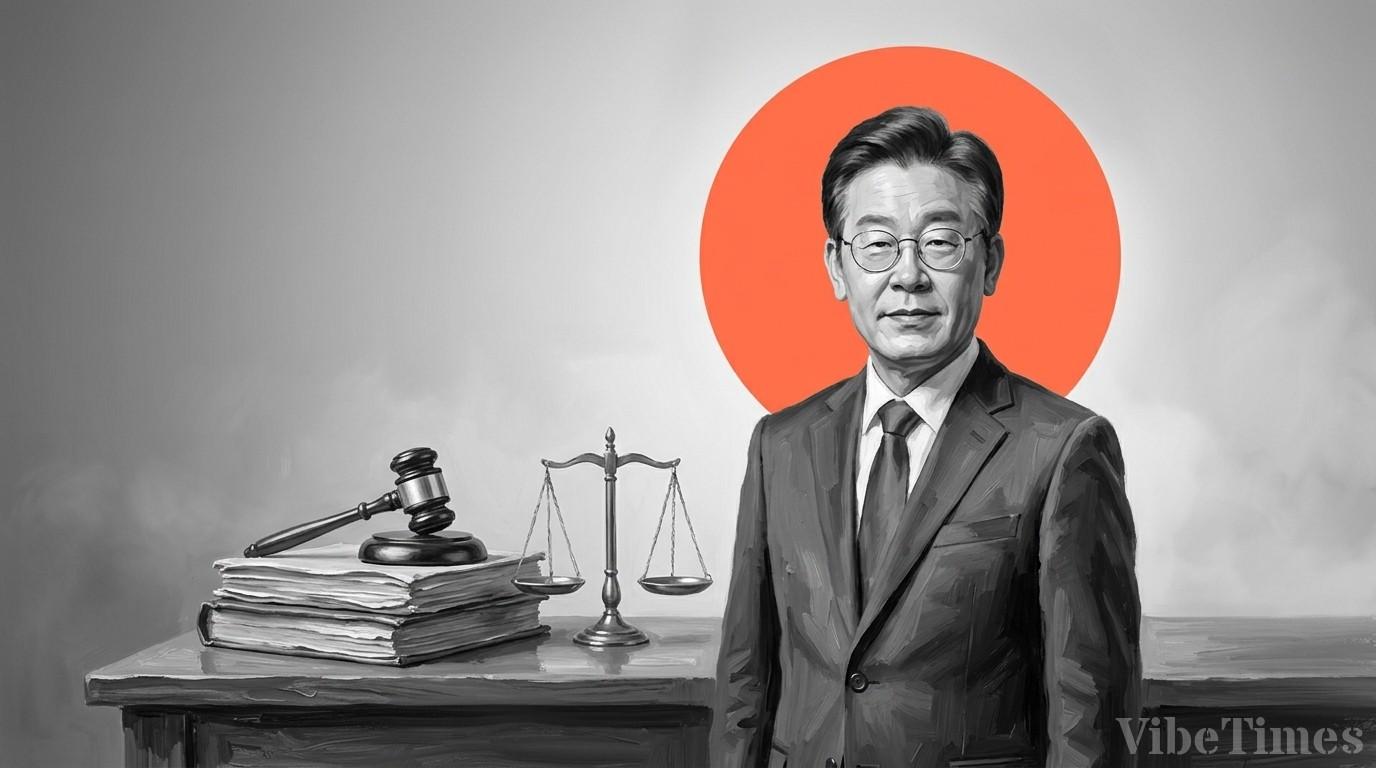
Kim Dae-woong, chief judge of the Seoul High Court, said the suspension of President Lee Jae-myung's criminal trials was 'based on a constitutional provision' and was therefore not unlawful. Kim made the remark on the 16th during a National Assembly Legislation and Judiciary Committee audit of the Seoul High Court and other institutions, in response to People Power Party lawmaker Kim Tae-kyu's question of whether 'the court could be seen as derelict in its duty or abusing its authority to direct proceedings.' The ruling and opposition parties clashed over the validity of the trial suspension that day.
Rep. Kim Tae-kyu pointed out that 'although there is no system for suspending trials, President Lee's case for violating the Public Official Election Act, sent back on remand, has been suspended,' arguing that 'since Article 84 of the Constitution does not provide grounds for declaring a trial suspension, the court is using a workaround by repeatedly rescheduling hearings without setting new dates.' In contrast, Democratic Party lawmaker Kim Han-gyu asked whether the court's use of indefinite postponement without a formal suspension declaration was unlawful, and whether a new trial suspension system should be created.
Since the president took office, the trial panels in five cases in which he was indicted — the remanded election law case, the Daejang-dong development scandal, and the Ssangbangwool remittance-to-North-Korea case — have postponed hearings on the basis of Article 84 of the Constitution. Postponement refers to changing or delaying hearings without setting a date for the next one.
On the dispute over the re-nomination of Supreme Court justices, Seoul High Court chief Kim Dae-woong took the position that there is no hierarchy among the chief justice's power to nominate, the National Assembly's power to consent, and the president's power to appoint, and that mutual respect is needed. When People Power Party lawmaker Yoon Sang-hyun raised the presidential office's explanation of the nomination power, Kim replied, 'I do not think there is any hierarchy among the nomination, consent, and appointment powers.' This aligns with the view expressed by Chief Justice of the Supreme Court Jo Hee-de at a National Assembly audit that the three powers should each be respected in accordance with their constitutional meaning, and Kim also indicated regret over the prolonged vacancies on the Supreme Court bench.
Lawmakers from both parties united in criticizing the shortage of ballot papers during the June 3 local elections. People Power Party lawmaker Kim Tae-kyu raised suspicions of 'courts protecting their own,' noting that courts had repeatedly rejected search and seizure warrants during the investigation by the election commission. In response, Oh Min-seok, chief judge of the Seoul Central District Court, explained, 'The judges handling warrants carefully examine case records and the facts, and apply the relevant legal principles,' adding, 'The warrants were thoroughly reviewed for necessity.'
Judge Oh went on to apologize, saying, 'I feel sorry about the various problems caused by the ballot paper shortage.' Regarding the issuance of warrants in pending cases, he answered that judges may do so on their own authority, but only if grounds for detention are recognized.