Oct. 27 Legislative Report: Dinner with Rep. Lee Jun-seok and 8 Lawmakers

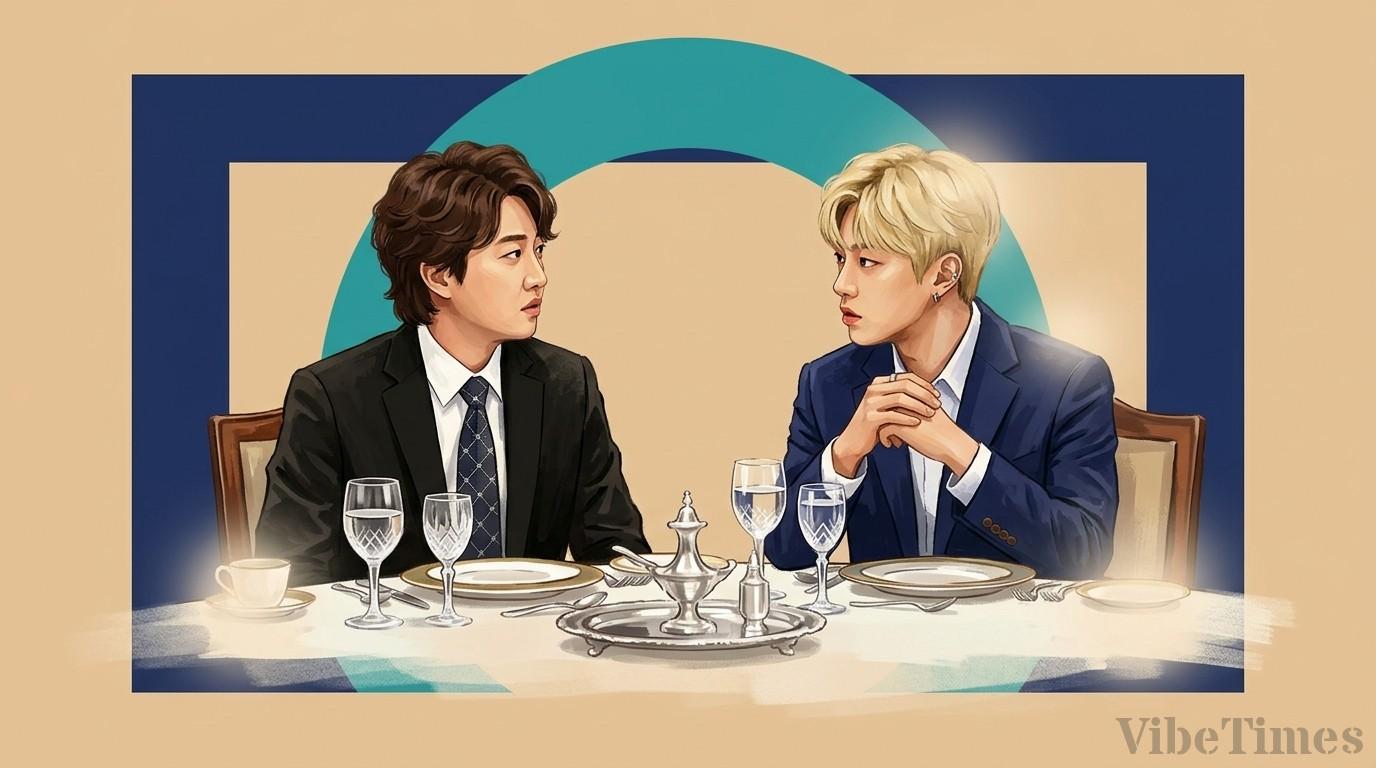
Eight lawmakers of the People Power Party spent 1 hour and 40 minutes with Lee Jun-seok at a residence in Hannam-dong.
The dinner took place at 7 p.m. on the 26th at the official residence of Seoul Mayor Oh Se-hoon in Hannam-dong, Yongsan District, Seoul. Lee Jun-seok of the Reform Party and eight lawmakers from the People Power Party attended, sharing a meal and conversation for roughly one hour and 40 minutes. Lee was among the lawmakers who appeared at court on the 23rd for the appellate ruling in Oh Se-hoon's case over allegations of illicitly fronting money for opinion polls conducted by Kim Man-bae associate Nam Kyung-pil. With two public and semi-public appearances coming back to back, the political world is treating the weight of this meeting as anything but a casual social gathering.
A Bond That Carried From the Courthouse to the Residence
Lee Jun-seok's trajectory over the past few months has been unusual. At the appellate ruling on the 23rd, he showed his support for Oh in action by appearing at court in person, and just three days later he joined the dinner at the mayor's official residence. The key point is that eight People Power Party lawmakers were also present. Eight seats is not large by negotiating-bloc standards, but the meeting carries a different significance in that it created natural common ground between the Reform Party and part of the People Power Party at a time when both could hold the casting vote in the run-up to the next general election.
The 1-hour-40-minute duration is also worth noting. That is long enough for substantive discussion, not a brief exchange of greetings. The list of attending lawmakers and the specific agenda were not disclosed, so firm conclusions cannot be drawn. Still, given that Mayor Oh is expanding his political activities following his acquittal on appeal, the gathering could well be seen as the shape of a new rally forming around him.
Floor-Vote Defections Reveal Cracks in the Landscape
The roll-call results from the National Assembly plenary session over the same period lay bare the fractures within both camps. On the amendment to the Special Account Act for Rural Community Improvement, passed on October 1, the Democratic Party recorded 86 votes in favor and 16 against. Sixteen members — Kim Jeong-ho, Kim Hyun, Jung Il-young, Cho Seung-rae, Jin Sung-joon, Lee Ki-heon, Park Ji-won, Kim Young-hwan, and others — broke with the party line. The numbers confirm a structure in which the ruling party walks a tightrope between the rural vote and local public opinion.
The People Power Party's split runs deeper. On the same rural community improvement bill, four members — Lee Man-hee, Lee Sang-hwi, Kwon Young-se, and Kim Yong-tae — voted in favor even though the chamber's majority, at 40 votes against to 4 in favor, effectively opposed it. On the alternative Emergency Medical Services Act as well, ten members including Yoon Young-seok, Yu Young-ha, and Choi Eun-seok cast dissenting votes, producing a 14-to-10 split within the party. On the Broadcasting Act amendment, three members including Choi Soo-jin, Kim Min-jeon, and Lee Jin-sook voted against the party line, and three others — Song Eon-seok, Lee Jin-sook, and Han Ki-ho — did the same on the alternative Eco-Friendly Agriculture and Fisheries Act.
Notably, Rep. Lee Jin-sook defected on two consecutive bills. This is a recurring pattern of defection, not one easily dismissed as marginal. A leadership problem is ultimately a problem-solving problem. When a party leadership fails to absorb individual members' regional and vested interests into the legislative process, floor-vote defections repeat.
A Reshaping Legislative Landscape and Its Implications
Taken together, this current can be read along two lines. One is the formation of an informal network linking Lee Jun-seok, Oh Se-hoon, and part of the People Power Party. The presence of the eight members is not yet enough to call it an organized faction, but it shows points of contact increasing within the conservative camp after Oh's appellate acquittal removed a political constraint.
The other is that party discipline is weakening in both parties. At the same time, cross-party legislation is proceeding as well — the Democratic Party's plan to push a special counsel bill on alleged prosecutorial fabrication through the regular session, and the two parties' joint sponsorship of a special tax act promoting domestic EV production, which the People Power Party has proposed handling in November. It is a dual dynamic in which cooperation outside the party and defection within it proceed simultaneously.
The point to watch going forward is the subsequent legislative and voting behavior of the dinner attendees. If co-sponsored bills that diverge from party lines continue to emerge in the areas where defections have clustered — rural affairs, broadcasting, and health care — it would signal the informal gathering converting into a de facto legislative bloc. Conversely, if it ends as a one-off social event, the eight members' presence will sink beneath the surface. Either way, the roll-call map in the final stretch of the December regular session is expected to provide the answer.
