Prosecutors Again Seek Death Penalty for Yoon Suk-yeol in Appeal Trial

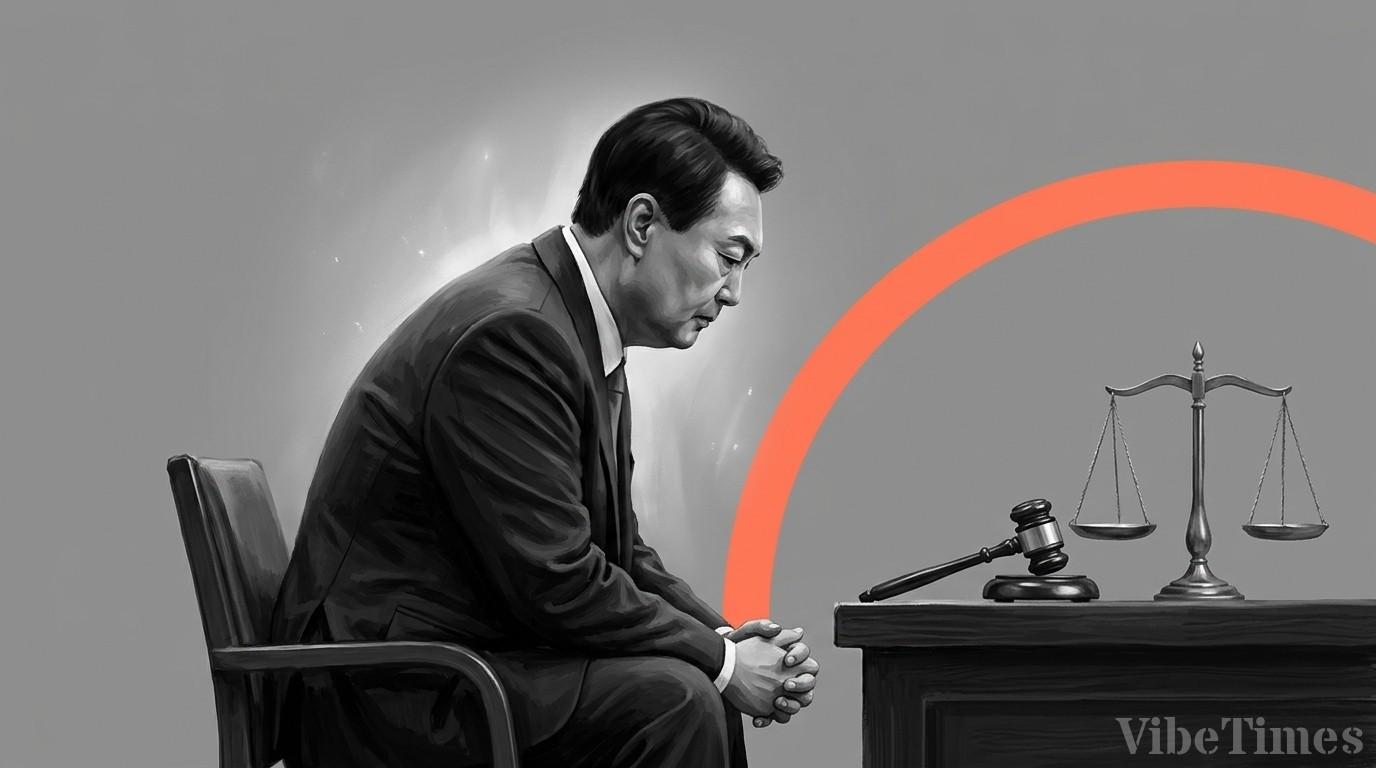
Former President Yoon Suk-yeol, indicted on charges of insurrection ringleading, has once again faced a demand for the death penalty in his appeal trial.
On the 29th, the special counsel investigating the December 3 martial law crisis (Special Prosecutor Cho Eun-seok) asked the Seoul High Court's Criminal Division 12-1 (Presiding Judge Lee Seung-cheol), at the appeal hearing, to impose the statutory maximum penalty of death, just as in the first trial. The former President was sentenced to life imprisonment in the first instance. The call for the death penalty for a former head of state is being described as an unprecedented event in South Korea's judicial history.
Course and Key Issues of the Trial
Former President Yoon was indicted on charges including insurrection ringleading in connection with the martial law declared on the night of December 3, 2024. The special counsel has not backed down from its position that the martial law declaration was a serious criminal act that threatened the constitutional order. The first-trial court found him guilty on most of the charges and sentenced him to life imprisonment; both the former President's side and the special counsel appealed, leading to the second trial.
The central issue is whether the martial law declaration met the requirements set by the Constitution. The defense argued it was a lawful act of governance, but the special counsel countered that insurrection should be recognized, citing the paralysis of the National Assembly and an attempted takeover of the National Election Commission. The repeated demand for the death penalty is seen as the special counsel's effort to underscore the gravity of the crime and the weight of responsibility.
Sentencing Debate and Public Reaction
Opinions are divided on the demand for the death penalty. Some view it as the natural conclusion given the severity of the offense, while others argue it is excessive considering the practical likelihood of execution and the principle of proportionality in punishment. With no executions carried out in South Korea since 1997, some analysts say the demand itself amounts to little more than a symbolic message.
In legal circles, the prevailing view is that the second-trial ruling is likely to uphold the first-trial sentence. However, some predict that how the appellate court interprets the elements of the insurrection offense could carry the legal issues to higher courts. The outcome is expected to set a precedent shaping the standards of criminal liability for official acts by public officials.
Ripple Effects on Politics and Legislation
The trial is also affecting the political calendar. The ruling Democratic Party, using the trial's outcome as a catalyst, is pushing to overhaul laws related to insurrection and is preparing to accelerate legislation to protect the constitutional order. Meanwhile, some members of the People Power Party are raising concerns about the trial's political neutrality, suggesting confrontations in the National Assembly will continue as well.
Also drawing attention is that the special counsel's activities are proceeding on multiple fronts during this period, with the ballot-inspection investigation by the special counsel on the National Election Commission (Special Prosecutor Lee Tae-han) concluding and 2.47 million ballots being removed. With the judiciary's judgment directly tied to political trust and discussions on reforming the next election system, the weight of this single trial has never been heavier.
The timing of the second-trial verdict is expected to depend on the court's proceedings. Attention is focused on whether arguments will be closed ahead of the final statements and sentencing. If the former President's side maintains its plan to fight a guilty verdict all the way to the Supreme Court, a final resolution of the case is likely to take considerable time. Like the old adage that truth remains unchanged over time, the final judgment in this case must await the judiciary's conclusion.
