Alliance Diplomacy Where Warships Become the New Currency

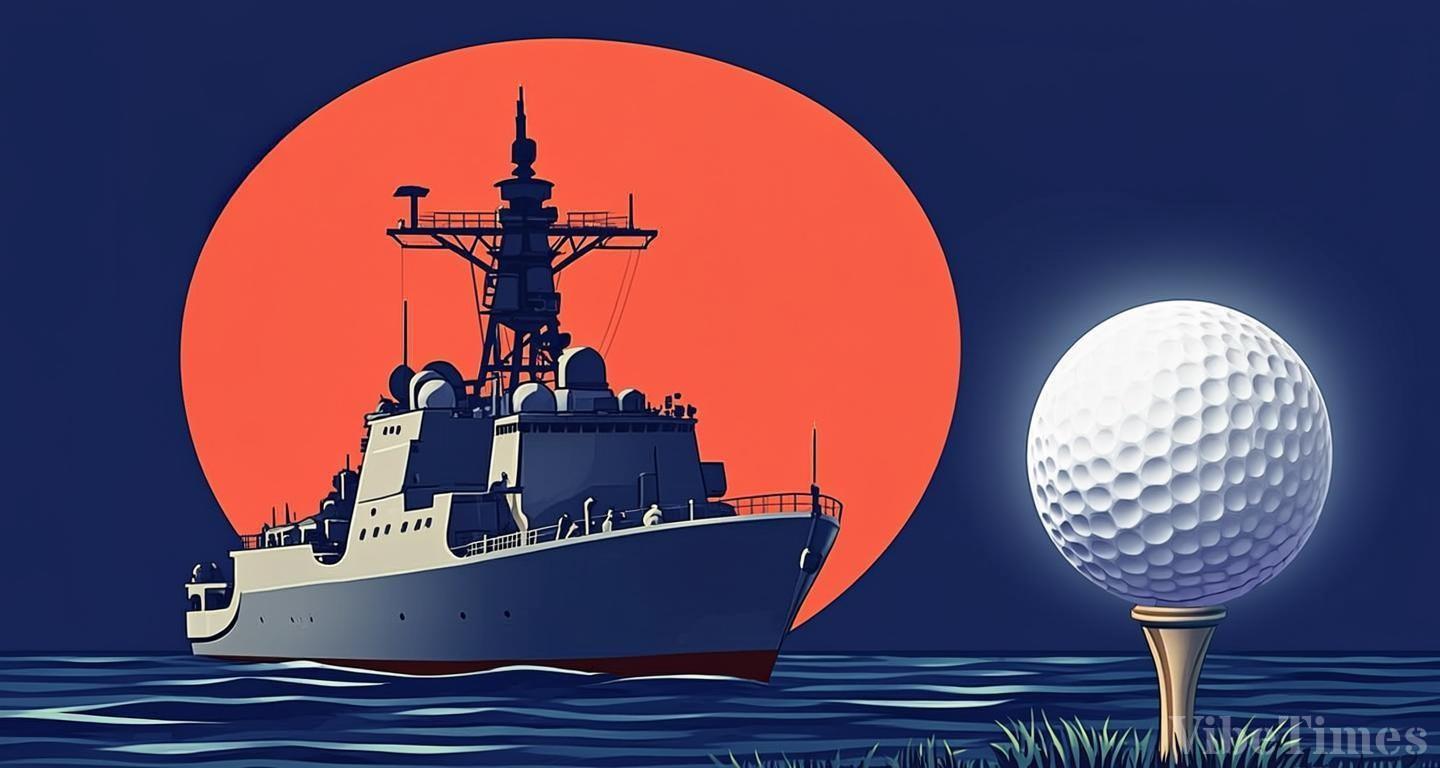
Warship construction is becoming the new currency of the South Korea-U.S. alliance.
President Lee Jae-myung, visiting New York to attend the UN General Assembly, showcased an "investment diplomacy" that ties economics and security together, discussing shipbuilding cooperation, including strategic vessels, during his summit with U.S. President Donald Trump. Immediately after the meeting, Lee said he had discussed shipbuilding cooperation, including warship construction, with President Trump and expected concrete results. At the meeting, held in New York on the 22nd (local time), Trump reportedly opened with a question about the First Lady's well-being and even mentioned a round of golf in December.
Shipbuilding as the Future of the Alliance
At the heart of the cooperation talks is the construction of U.S. strategic vessels at Hanwha's shipyard in the Philippines. President Lee emphasized that a Korean company is already building strategic vessels—core assets of the U.S. Navy—as tangible proof of cooperation with Washington. Meanwhile, a Texas power plant project supplying electricity to the U.S. AI and semiconductor industries is being pursued as the leading candidate for strategic investment in the United States, giving shape to an investment package built on shipbuilding and energy.
At the "Korea Investment Summit 2026" held in New York on the 23rd, Lee met with Wall Street financial leaders and declared that "the Korea-U.S. alliance, evolving toward the future, is the foundation of shared prosperity." The schedule, which linked shipyards building warships with Wall Street's capital in a single day, was clearly deliberate: the strategy is to leverage security cooperation as a bond of trust for attracting investment. The interests align—the U.S. needs Korea's overseas shipbuilding capabilities to rebuild its shipbuilding industry, while Korea can use massive investment in the U.S. as a negotiating card.
The Significance of the Shift to 'Nuclear-Free Korean Peninsula'
Another pillar of the trip was lowering the threshold on North Korea policy. In his address to the 81st UN General Assembly at UN headquarters on the 22nd, Lee called for "reconnecting a divided world" and presented three visions for a "K-Initiative," along with three directions for Korean Peninsula policy: inclusive peaceful coexistence, stable peaceful coexistence, and peaceful coexistence contributing to world peace. Notably, the speech used the phrase "nuclear-free Korean Peninsula" instead of the existing "denuclearization of North Korea"—a signal seen as an attempt to break the ice in North Korea-U.S. relations, which have been frozen since the end-of-war declaration.
In an interview with The New York Times, Lee went further, saying that easing sanctions on North Korea would be worth exchanging for a halt to its further development of nuclear weapons and intercontinental ballistic missiles (ICBMs). It is a deal-making approach that conditions on a freeze rather than complete denuclearization. Lee reiterated that "we should demand a freeze, not denuclearization, and both Korea and the U.S. should keep the door open for dialogue with North Korea." He reportedly asked Trump at the summit to help facilitate North Korea-U.S. dialogue and received the response that he would do so.
Diplomatic Wins and Domestic Political Strain
While things are flowing smoothly in New York, domestic approval ratings are moving in the opposite direction. Positive assessments of the government's performance fell 1.1 percentage points to 37%, the lowest since taking office, with the top reason for disapproval being the "withdrawal of prosecution indictments." Acting Prosecutor General Lee Jung-hyun said the results of a fact-finding review would need to be examined regarding the possible withdrawal of indictments in criminal cases involving the president, leaving judicial risk still casting a shadow. A conflict with Chief Justice Jo Hee-de over re-nominating Supreme Court justice candidates has also escalated to the point where the presidential office expressed "deep regret," calling it an effort to "neutralize the president's appointment powers."
The government's challenge is that domestic political trust is wearing down as fast as diplomatic achievements are accumulating. If the U.S.-bound investment, symbolized by warships and power plants, translates into real contracts and jobs for Korea's shipbuilding and energy industries, it could provide justification to offset the pressure of falling approval ratings. Conversely, if the investment remains merely declarative and dialogue with North Korea fails to progress, both foreign and domestic affairs could grow heavier at once.
The December Golf Course as the Next Decision Point
What to watch in the short term is the December golf outing mentioned by President Trump. The informal channel of personal rapport between leaders is likely to become the decisive factor on substantive issues such as tariffs, investment, and North Korea policy. Key points to watch in the coming months are whether shipbuilding cooperation is formalized into concrete contracts and timelines, and whether sanctions relief discussions actually make it onto the UN Security Council agenda. Businesspeople often say that success is easily reduced to three seconds of cheers and that what comes next is what really matters. For President Lee, the applause in New York is less an ending than the start of the real game.